
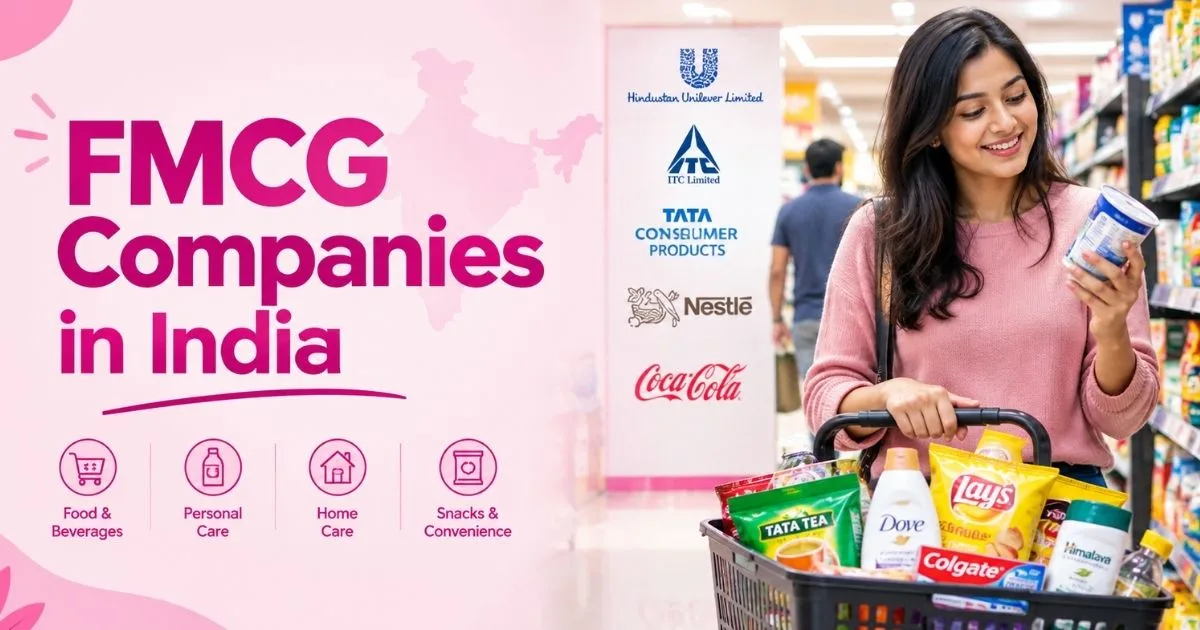
India is one of the fastest-growing Companies market in the world. Companies are those that supply items that people consume daily, such as toothpaste, candy, shampoo, oils, household cleaning solutions, and drinks. This sector is crucial because Indians purchase these regularly and thus it is a stable and profitable business opportunity. Companies are going to villages and towns, working to digital shopping and developing new products for modern Indian families in 2026.
Middle class in India is expanding, people have more money to spend and they want better quality products, which has given impetus to the market. FMCG Companies in India are not merely selling goods, they are altering the lifestyle of Indians, their eating patterns, and how they take care of themselves. This article examines the Best 20 Companies based on market value and popularity of the brand. We will examine the leaders, products that they produce and where the sector is going in 2027. Companies are a fundamental piece of knowledge whether you are an investor, a part of this industry or you just need to know about business in India.
What Is the FMCG Sector and Why It Matters in India
FMCG Companies in India are responsible for the sale of products which are consumed and replaced frequently. You might think about it, you purchase a new tube of toothpaste every few months, a new bottle of shampoo or snacks for your family. That’s the FMCG business. The term “fast-moving” refers to their fast sales and “consumer goods” to the fact that the general public purchases them for day-to-day use.
FMCG Sub-Sectors: Food & Beverage, Household Care, Personal Care, Health
The FMCG Companies in India can be divided into four major categories:
- Food & Beverage – Packaged snacks, biscuits, noodles, beverages, oils, spices and ready to eat meals. This is the area occupied by companies such as Britannia and Nestlé. This segment is the largest one in terms of spending on food products by Indians.
- Household Care – These include cleaning products, detergents, soaps and disinfectants. Godrej and HUL are some of the top companies in this segment because these are required in every home at regular intervals.
- Personal Care – Shampoos, toothpaste, skincare creams and grooming products. This segment is doing super fast growth due to India’s increased concern on personal appearance and wellness.
- Health & Hygiene – vitamins, supplements, health drinks and wellness products. This is the latest and rapidly expanding area of Companies .
India’s FMCG Market Size & 2027 Growth Projection
As of 2026, the Companies market value was estimated to be ₹40-45 trillion (₹40-45 lakh crore). Experts estimate that it will increase at 8-10% annually. The India FMCG Companies are expected to be valued at ₹48-50 trillion by 2027. This is the reason for this growth:
- Increased urbanization.Urbanisation increase.
- Rural India is becoming wealthier
- With the advent of e-commerce, shopping is becoming easier.
- Consumers are looking for high quality and organic products
- Health awareness is increasing
Top FMCG Companies in India by Market Cap (Listed)
| Company Name | Listed/Private | Market Cap (₹ Crore) | Founded | Key Brands | Primary Segment | HQ City |
| Hindustan Unilever (HUL) | Listed (NSE/BSE) | 6,80,000 | 1956 | Surf, Dove, Lipton, Sunsilk, Close-Up | Household, Personal Care, Food | Mumbai |
| ITC Limited | Listed (NSE/BSE) | 4,20,000 | 1910 | Aashirvaad, Sunfeast, Engage, Vivel | Food, Household, Personal Care | Kolkata |
| Nestlé India | Listed (NSE/BSE) | 2,80,000 | 1959 | Maggi, Nespresso, KitKat, Milkybar | Food & Beverage | Gurugram |
| Britannia Industries | Listed (NSE/BSE) | 2,10,000 | 1892 | Tiger, Marie, Bourbon, Nutrichoice | Food & Beverage | Kolkata |
| Godrej Consumer Products | Listed (NSE/BSE) | 1,85,000 | 1897 | Godrej Goodknight, Nutrela, Cinthol | Household, Personal Care | Mumbai |
| Dabur India | Listed (NSE/BSE) | 1,65,000 | 1884 | Dabur Chyawanprash, Amla, Hajmola, Real | Food, Ayurveda, Health | Delhi |
| Marico Limited | Listed (NSE/BSE) | 1,45,000 | 1990 | Parachute, Saffola, Set Wet, Mediker | Personal Care, Health | Mumbai |
| Colgate-Palmolive India | Listed (NSE/BSE) | 95,000 | 1948 | Colgate, Palmolive, Basmati Rice | Personal Care, Food | Gurugram |
Top 20 FMCG Companies in India – Verified List
1. Hindustan Unilever (HUL)
Founded: 1956
HQ: Mumbai
Listed Status: NSE/BSE (HINDUNILVR)
Market Cap: ₹6,80,000 Crore
Website: https://www.hul.co.in
Hindustan Unilever is India’s largest FMCG player, and one of the largest consumer goods groups in Asia. With its extensive product range, HUL serves 1 billion Indians every single day. It is a company in the areas of household care, personal care and food & beverages. Product quality, brand strength and innovation are hallmark of HUL. Innovative distribution models have helped FMCG Companies such as HUL massively enter into the rural market in India. The company is keen on sustainability and digital transformation. HUL has a far-reaching supply chain and is a truly pan-India brand.
Key Products:
- Surf Excel (Laundry Detergent)
- Dove (Personal Care)
- Lipton (Tea & Beverages)
- Sunsilk (Hair Care)
- Close-Up (Toothpaste)
Also Read: Dropshipping Suppliers India
2. ITC Limited

Founded: 1910
HQ: Kolkata
Listed Status: NSE/BSE (ITCL)
Market Cap: ₹4,20,000 Crore
Website: https://www.itcportal.com
ITC Limited is a conglomerate wherein FMCG is one of the major business segments. ITC began as a cigarette business, and expanded to food, personal care, and hotel business. The FMCG Companies in India segment offers popular brands that Indian people are familiar with. ITC brands are found in practically every Indian kitchen and bathroom. The company puts emphasis on quality sourcing, modern manufacturing and environmental responsibility. ITC has one of the biggest distribution chains in India and is continually innovating with new varieties.
Key Products:
- Aashirvaad (Flour & Grains)
- Sunfeast (Biscuits & Snacks)
- Engage (Deodorants)
- Vivel (Soap & Personal Care)
- Classmate (Stationery – related segment)
3. Nestlé India

Founded: 1959
HQ: Gurugram
Listed Status: NSE/BSE (NESTLEIND)
Market Cap: ₹2,80,000 Crore
Website: https://www.nestle.in/
Nestlé India is a part of Swiss company and is a leading food and beverage company in Companies . Nestlé is known for its reliability and quality, and they have a range of products from instant noodles to high-quality chocolates. The company specializes in nutritional products and health food. Companies such as Nestlé spend huge budgets on conducting research on the tastes and preferences of Indians. The company enjoys wide market presence, both in urban and rural areas. Nestlé is strongly committed to sustainable sourcing and the environment.
Key Products:
- Maggi (Noodles & Instant Foods)
- Nescafé (Coffee)
- KitKat (Chocolates)
- Milkybar (Confectionery)
- Cerelac (Baby Food)
4. Britannia Industries
Founded: 1892
HQ: Kolkata
Listed Status: NSE/BSE (BRITANNIA)
Market Cap: ₹2,10,000 Crore
Website: https://www.britannia.co.in
Britannia is the oldest biscuit and food company in India, having more than 130 years of experience in the industry. The brand is known for its quality and reliability among Indian families. Britannia’s Companies products include biscuits, cakes, breads and chocolates. The company has successfully shifted its traditional biscuit business to the healthier snack business. Britannia and other Companies are venturing into the nutrition business of children and young people. The company is quite strong in the rural market, and is still continuing to innovate by incorporating local tastes and flavors.
Key Products:
- Tiger (Biscuits)
- Marie (Light Biscuits)
- Bourbon (Chocolate Biscuits)
- Nutrichoice (Health Biscuits)
- Fun Center (Kids Biscuits)
5. Godrej Consumer Products Limited
Founded: 1897
HQ: Mumbai
Listed Status: NSE/BSE (GODREJCP)
Market Cap: ₹1,85,000 Crore
Website: https://www.godrejcp.com/
Godrej Consumer Products comes under the 125+ year old Godrej Group. This company tops the household care segment and personal care segment. Godrej Companies have embedded themselves in the Indian families with trusted products. From mosquito coils to air-care and personal hygiene products, the company makes all of them. Godrej is looking at innovative solutions, particularly in the insect control and hygiene product segments. The company has built up a big business in e-commerce and direct to consumer. Godrej products are available in various countries and thus it is a global brand with India as its center.
Key Products:
- Godrej Goodknight (Mosquito Control)
- Nutrela (Soy Products)
- Cinthol (Soap)
- Hit (Insecticide)
- Aer (Air Freshener)
6. Dabur India Limited

Founded: 1884
HQ: Delhi
Listed Status: NSE/BSE (DABUR)
Market Cap: ₹1,65,000 Crore
Website: https://www.dabur.com
Dabur is the biggest Ayurvedic brand and one of the largest FMCG brands in India. Companies like Dabur blend traditional knowledge of India with scientific research. The company offers health tonics, juices, oils and wellness products. Chyawanprash is Dabur’s product which is familiar to everyone in health care in India. It operates in 120+ countries, is very much rooted in Indian traditions. Dabur is known for its natural ingredients and health benefits. Companies such as Dabur are seeing huge growth in the health and wellness segment.
Key Products:
- Dabur Chyawanprash (Health Tonic)
- Amla (Hair Oil & Juice)
- Hajmola (Digestive Candy)
- Real (Juices)
- Honitus (Cough Syrup)
7. Marico Limited

Founded: 1990
HQ: Mumbai
Listed Status: NSE/BSE (MARICO)
Market Cap: ₹1,45,000 Crore
Website: https://www.marico.com
Marico is a modern FMCG company which began with the production of coconut oil and evolved into diversified consumer goods business. The brand specializes in personal care, health and nutrition. FMCG Companies in India, such as Marico, are aware of the preferences in different areas and tailor the product to suit these preferences. The company is well established in South and West India, and is growing across the country. Marico’s focus is on wellness, natural products and digital innovation. The company conducts research and development on product innovation. Marico is known to be the business entrepreneur in Companies .
Key Products:
- Parachute (Coconut Oil)
- Saffola (Edible Oils & Health Foods)
- Set Wet (Hair Styling)
- Mediker (Anti-lice Shampoo)
- Nihar (Hair Care)
8. Colgate-Palmolive India
Founded: 1948
HQ: Gurugram
Listed Status: NSE/BSE (COLPALIND)
Market Cap: ₹95,000 Crore
Website: https://www.colgate.co.in
Colgate-Palmolive India dominates the oral care category in India. Colgate is the benchmark of Companies in the personal care segment. It is a company that is known for providing quality toothpaste, toothbrushes and mouthwash. Colgate is branching out into personal hygiene and household products. The brand has good penetration in the rural areas and is trusted brand in the household of Indian. Colgate is a FMCG Company in India that does dental health awareness programs. The company is still continuing in the field of innovation, extending to the formulation of whitening, sensitivity and advanced care products.
Key Products:
- Colgate Toothpaste (Various Variants)
- Palmolive Soap
- Colgate Toothbrush
- Colgate Mouthwash
- Colgate Basmati Rice (Food)
9. Varun Beverages Limited

Founded: 1999
HQ: Gurugram
Listed Status: NSE/BSE (VBL)
Market Cap: ₹85,000 Crore
Website: https://www.varunbeverages.com
Varun Beverages is the PepsiCo bottling partner for India and takes care of the flagship brands. Varun Beverages is the leader in the beverage industry among the Companies . It has the largest distribution network of beverage products in India. VBL is a manufacturer, bottle maker and distributor of Pepsi, 7Up, Gatorade and Tropicana. FMCG Companies in India such as Varun are moving into the beverages category which is more health oriented, such as water and juices. The company has a considerable amount of investment in Sustainable Packaging & Manufacturing. Varun Beverages is one of the fastest growing market cap Companies .
Key Products:
- Pepsi (Soft Drinks)
- 7UP (Soft Drinks)
- Tropicana (Juices)
- Gatorade (Sports Drinks)
- Aquafina (Bottled Water)
10. Procter & Gamble India
Founded: 1964
HQ: Mumbai
Listed Status: NSE/BSE (PGIND)
Market Cap: ₹75,000 Crore
Website: https://www.pgeveryday.com
Procter & Gamble is one of the leading Companies . P&G is a company that specializes in producing home care, personal care and health care products. The company is recognized for being innovative and of high quality in all its categories. Indian FMCG Companies like P&G do spend a significant amount of money to know the needs of consumers and their behavior. P&G brands are used in Indian homes in laundry care, dish care and personal hygiene. The company’s sustainable and environmental commitment is highlighted. P&G is rolling out its product portfolio to cater to the changing preferences of the Indian consumers.
Key Products:
- Ariel (Laundry Detergent)
- Tide (Laundry Detergent)
- Whisper (Feminine Hygiene)
- Olay (Skincare)
- Gillette (Shaving Products)
11. Reckitt Benckiser (India)

Founded: 2000 (in India)
HQ: Mumbai
Listed Status: Listed
Market Cap: ₹65,000 Crore
Website: https://www.reckitt.com/
Reckitt Benckiser is an international company specializing in health and hygiene solutions, and has a significant presence in India in the FMCG Companies. The business is specialized in disinfection, hygiene and health related products. During the pandemic, many Companies experienced unprecedented growth, with an increased focus on hygiene awareness. The company produces household products, personal care products and medicines. Reckitt invests in research for developing effective and safe products. Companies are continuously growing their health and wellness line of business, like Reckitt.
Key Products:
- Dettol (Disinfectant)
- Lysol (Surface Cleaner)
- Harpic (Toilet Cleaner)
- Strepsils (Throat Lozenges)
- Durex (Personal Care)
12. Amul (GCMMF)

Founded: 1946
HQ: Anand, Gujarat
Listed Status: Private (Cooperative)
Market Cap: ₹60,000+ Crore (Estimated)
Website: https://amul.com/
Amul is the biggest dairy cooperative firm and among top 10 Companies . Amul is a private company and yet its market value is higher than many of the listed companies. The brand is a symbol of the cooperative movement and rural development in India. Companies such as Amul unite millions of farmers with consumers. Amul manufactures milk, butter, cheese, ice cream and dairy based products. The company has emerged as an iconic company of India for its quality and affordability. Amul, one of the Companies is venturing into value added products such as chocolate and flavored milk.
Key Products:
- Amul Milk (Fresh & Packaged)
- Amul Butter (Dairy)
- Amul Cheese (Dairy Products)
- Amul Ice Cream (Frozen Desserts)
- Amul Chocolate Drinks (Beverages)
13. Parle Products
Founded: 1929
HQ: Mumbai
Listed Status: Private
Market Cap: ₹50,000+ Crore (Estimated)
Website: https://www.parleproducts.com
Parle products India is one of the biggest biscuit producers in the world and a key player in the FMCG Companies in India. Private, Parle is worth billions of rupees and is available to 85% of Indian households. In India, FMCG Companies like Parle have established an amazing distribution system in the villages and cities of the country. Parle products are of high quality and low price, therefore it is accessible to every Indian family. The company has several production sites producing biscuits, candies and snacks. Companies like Parle target the masses and regular use.
Key Products:
- Parle-G (Glucose Biscuits)
- Monaco (Snack Biscuits)
- Hide & Seek (Cream Biscuits)
- Kismi (Candy)
- Parle Pop (Candy)
14. Patanjali Ayurved
Founded: 2006
HQ: Haridwar, Uttarakhand
Listed Status: Private
Market Cap: ₹45,000+ Crore (Estimated)
Website: https://www.patanjaliayurved.com
Patanjali Ayurved is India’s fastest growing Companies brand and a game-changer in wellness sector. The company was established by Yoga Guru Baba Ramdev and it is a blend of traditional Ayurvedic knowledge and modern manufacturing. Indian FMCG Companies such as Patanjali target health-conscious customers who are looking for natural products. The company carries out its operations in the food, healthcare, personal care and home care segments. Patanjali has experienced a phenomenal growth, pushing established Companies brands to the corner. The company focuses on the notion of nationalism, the use of natural ingredients and the philosophy of yoga and wellness.
Key Products:
- Patanjali Chyawanprash (Health)
- Patanjali Honey (Natural Products)
- Patanjali Noodles (Food)
- Patanjali Toothpaste (Personal Care)
- Patanjali Flour (Food Grains)
15. Jyothy Labs

Founded: 1983
HQ: Kochi, Kerala
Listed Status: NSE/BSE (JYOTHYLAB)
Market Cap: ₹40,000 Crore
Website: https://www.jfsl.in/
Jyothy Laboratories is a Companies company based in South India and has national aspirations. The company’s business is household care and personal care products. Companies have become strong for their innovative marketing and low price of the products such as Jyothy. The company produces laundry and floor cleaning powder and personal hygiene products. Jyothy puts a lot of emphasis on building brands and increasing their reach. India’s FMCG Companies with a local and cost-efficient approach are able to compete effectively with the global giants like Jyothy.
Key Products:
- Ujala (Fabric Softener)
- Maxo (Mosquito Repellent)
- Henko (Laundry Detergent)
- Margo (Neem Soap)
- Nippon (Paint – related segment)
16. Emami Limited

Founded: 1974
HQ: Kolkata, West Bengal
Listed Status: NSE/BSE (EMAMILTD)
Market Cap: ₹38,000 Crore
Website: https://www.emamiltd.in/
Emami Limited is an India-based diversified Companies manufacturer, specializing in personal care and healthcare. The company is well-established in the beauty, personal care and health markets. FMCG Companies in India such as Emami highlight on using natural ingredients and Ayurvedic formulations. Emami is a trusted and popular brand for oils, creams and beauty products in the Indian households. The firm has grown internationally and started to establish itself in international markets. Emami, a leading FMCG Company in India, is exploiting the wellness craze.
Key Products:
- BoroPlus (Antiseptic Cream)
- Fair and Lovely (Fairness Cream – rebranded)
- Navratna (Ayurvedic Oil)
- Zandu Balm (Pain Relief)
- BabyOil (Baby Care)
17. CavinKare
Founded: 1983
HQ: Chennai, Tamil Nadu
Listed Status: Private
Market Cap: ₹35,000+ Crore (Estimated)
Website: https://www.cavinkare.com
CavinKare is a leading Companies from South India. The company’s business lines are in the personal care and hair care and food. Innovativeness in the distribution and pricing have helped the Companies like CavinKare to reach the rural market to a great extent. CavinKare products are recognised for their quality and efficiency at affordable prices. The company is producing personal care products, shampoos, and oils. Indian FMCG Companies like CavinKare follow the local preferences and make changes in their product.
Key Products:
- Meera Shampoo (Hair Care)
- Cavinkare Oil (Hair Oil)
- Chik Shampoo (Hair Care)
- Dhandusri (Home Care)
- Sakthi Rice (Food)
18. Honasa Consumer (Mamaearth Parent)

Founded: 2016
HQ: Gurgaon, Haryana
Listed Status: NSE/BSE (Listed 2024)
Market Cap: ₹32,000 Crore
Website: https://honasa.in/
Honasa Consumer is the latest beauty and personal care India unicorn direct to consumer companies. The company has digital-first brands that cater to millennials and gen-Z consumers. Honasa is among the new wave of D2C (Direct to Consumer) Companies . The company is known for its commitment to clean beauty, natural ingredients, and sustainability. By cutting out the traditional retail, Honasa has overturned the conventional Companies . The company has been growing at an exponential rate in the categories of wellness and beauty.
Key Products:
- Mamaearth (Beauty & Personal Care)
- Derma Co (Dermatology)
- Aqualogica (Skincare)
- Traya Health (Hair Health)
- Belief (Skincare)
19. Hindustan Foods Limited

Founded: 2002
HQ: Delhi
Listed Status: Private/Listed
Market Cap: ₹28,000 Crore
Website: https://www.hindustanfoodslimited.com/
Hindustan Foods Limited is a major Companies player and is engaged in the manufacture of packaged foods. The company specializes in spices, grains and food ingredients. Companies such as Hindustan Foods have established good distribution in tier 2 and tier 3 cities. The company is servicing retail and institutional market. Hindustan Foods takes food safety, food quality and traceability as its core values. Organized food market in India is a boon to Companies like Hindustan Foods.
Key Products:
- Sungold (Spices)
- Shan (Spice Mixes)
- Wheat Flour (Grains)
- Edible Oils (Cooking Oils)
- Pulses (Legumes)
20. Honitus & Hamdard Laboratories
Founded: 1906
HQ: Delhi
Listed Status: Private
Market Cap: ₹25,000+ Crore (Estimated)
Website: https://www.hamdard.in
Hamdard Laboratories is among the senior Unani medicine businesses and a significant FMCG Companies in India for good health. The company has got a line on manufacturing of Ayurvedic, Unani and herbal products. Indian FMCG Companies such as Hamdart are tapping into the traditional knowledge and the trends in wellness. The company has been making health tonics, syrups and wellness products that are trusted for generations. Hamdard is well established in India and abroad. The increasing health awareness and appeal for natural remedies have been a boon for Companies like Hamdard.
Key Products:
- Honitus (Cough Syrup)
- Rooh Afza (Health Drink)
- Joshina (Cough Remedy)
- Khamira Abresham Hamdard (Health Tonic)
- Sharbat Aar-E-Hayat (Health Drink)
Major FMCG Companies & Brands NOT on the Stock Market (Private/Unlisted)
Parle Products
Collectively, Parle Products is one of the largest biscuit manufacturers in India estimated to be worth of ₹50000+ crore. Parle is a private and unlisted brand which reaches 85% of Indian households. The company operates in India with several factories and has well-established supply chains throughout India which produce world-class biscuits such as Parle-G. The company continues to be in family ownership and emphasises constant quality and price.
Amul (GCMMF)
Amul is the largest dairy co-operative in India with estimated market value of ₹60,000+ crore. Amul is technically a private (cooperative structure) organization but it brings 3 million farmers in contact with consumers. Amul is a model of rural-urban integration with cooperative approach. It’s a brand that’s iconic in Indian culture and one that you can trust for quality. Amul’s business model has been emulated across the world and is taught in business schools.
Patanjali Ayurved
Patanjali is India’s fastest growing FMCG Companies in India whose estimated value is ₹45,000+ crore. As a brand founded by Ramdev, Patanjali also came into the market with some Ayurvedic products at pocket friendly prices. Private, Patanjali’s growth rate is faster than most of the listed companies. The nationalistic sentiments and health-conscious consumers are the ones that the company is talking to. The success of Patanjali has compelled the well-established Companies to change and diversify into the wellness products.
Procter & Gamble India (Subsidiary Structure)
P&G India is listed, but the parent company is a private company (based in US). P&G has a strong Companies footprint in the household and personal care segment in India. The company has world class manufacturing plants and R&D centers in India. Premiumization and digital transformation are P&G’s strategies. It is one of the biggest employers in the manufacturing sector in India.
FMCG Companies by Category (Which Company Leads Which Segment)
- Food & Beverage Segment Leaders: Nestlé, Britannia, ITC and Varun Beverages are the top Indian FMCG Companies in this segment that manufacture instant noodles, coffee, grains and soft drinks. These firms control the food market worth of ₹20+ lakh crores. Patanjali and Amul are fast emerging as competitors in certain food segments.
- Household Care Segment Leaders: Household care segment is led by detergent, cleaners and disinfectants by Household Care Segment Leaders – HUL and Godrej. Jyothy Labs is a strong competitor with Reckitt Benckiser. It is due to these Companies that they are enjoying the benefit of rapid urbanization and an awareness of hygiene. The household care market is expanding by 6-8% every year.
- Personal Care Segment Leaders: Marico, Colgate-Palmolive, P&G, ITC (toothpaste, shampoo, soap). Emami and CavinKare are good regionals. The segment of Personal Care is growing fastest at 10-12% annually. Premium and natural product brands entering the market.
- Health & Wellness Segment Leaders: Dabur, Patanjali, and Hamdard lead the health and wellness category. This includes Ayurvedic products, health tonics and supplements. This segment is growing at over 15% per year. Consumers have made health a priority, and with this emphasis on health, Companies are making it a priority for their products to be about wellness.
Rural vs. Urban FMCG Growth Trends in 2026
Urban FMCG Growth
65% of the market value of Companies is generated by the cities. Cities have a greater purchasing power and preference for premium products. Urban markets have a high rate of ecommerce penetration, giving an advantage to ecommerce first brands of the Companies . New products and brands are trialed by urban consumers. Premiumisation and special products are responsible for the urban growth of 8-10% per annum.
Rural FMCG Growth
In India, 35% of FMCG Companies in India is rural and increasing at the rate of 10-12% per year. The rural markets are getting richer, and they are consumption-oriented. The Companies are spending huge amount of money on distribution in rural areas with the help of their village shops and fairs. Rural consumers will choose value for money products and brands that they know and trust. The country’s rural market is less saturated and provides ample growth potential to the Companies .
Growth Drivers
- Increased incomes in the rural sector as a result of better agricultural practices
- Increased purchasing power of the farmers in the villages due to Government schemes such as MGNREGA
- Access to mobile and internet technology to support Rural e-Commerce
- Traditional Companies extending distribution in Tier 2 & Tier 3 cities.Traditional Companies increasing the distribution in Tier 2 & Tier 3 cities.
- A new product line of inexpensive products available in flexible packaging for the rural market.
How These Companies Are Adapting: Sustainability, D2C & Digital Transformation
- Sustainability Initiatives: FMCG companies are cutting plastic consumption, cutting carbon emissions and implementing more recyclable packaging and renewable energy.
- Direct-to-Consumer (D2C) Strategy: D2C brands are sold directly to customers via online channels, allowing businesses to increase margins, know their customers, and have the control of their brands.
- Digital Transformation: Businesses leveraging AI, data analytics, automation, e-commerce, and digital marketing for greater efficiency and customer penetration.
- Product Innovation: FMCG firms are creating healthier, natural, plant-based, low-sugar and convenient products to meet consumer shifting tastes.
- Health & Wellness Focus: As people become more conscious of their health, companies are investing in immunity, hygiene, organic, Ayurvedic, functional food and wellness products.
How to Evaluate an FMCG Stock or Company (For Investors)
- Market Share and Brand Value: Review a company’s market share, brand recognition, and customer loyalty to gain insight into their competitive standing.
- Profitability and Margins: Analyze EBITDA margin and compare to its peers to understand operational efficiency and pricing power.
- Growth Rate and Revenue Trends: Benchmark the growth of the revenue and sales with the overall performance of the FMCG industry to understand the growth performance of the company.
- Debt and Financial Health: Analyze debt levels, cash reserves, and free cash flow to determine the company’s financial stability.
- Dividend Yield and Shareholder Returns: Analyze dividend payments and returns to gain insights into the company’s dividend policy.
Conclusion: Which FMCG Company Should You Watch in 2026?
The FMCG Companies in India sector offers multiple investment and business opportunities. HUL and ITC are the safe stocks to consider. Both the Godrej and Dabur stocks can provide a reasonable dividend yield with moderate growth. Varun Beverages is poised to be the growth story in the beverage sector. Patanjali has seen high growth, but has posed execution risk because of its growth. Two companies that are doing digital transformation in Companies , are Mamaearth and Honasa. Conservative investors can rely on the brands such as HUL, Nestlé and Britannia as they are stable Companies .
Growth stocks such as Varun Beverages and Honasa provide a greater upside for the growth investors. Value investors would prefer to invest in companies that have a good fundamentals but low valuation. Rural focused Companies have the advantage of having the tailwinds of rural prosperity.
The future is with Companies that innovate, adapt to digital and are wellness focused. Companies working in sustainability and D2C will be the leaders of the future 10 years.
Explore Some Food Franchise Options:
- Mother Dairy Safal Franchise
- Pizza Hut Franchise Cost in India
- Burger King Franchise Cost
- Starbucks Franchise Cost
FAQs
1. Which is the No. 1 FMCG company in India by market cap?
Hindustan Unilever (HUL) with ₹6,80,000 crore marketcap is the leading FMCG company that touches 1 billion Indian consumers each day with its wide range of products.
2. What are the top 4 Companies ?
The top 4 Companies by market cap are: 1) HUL (₹6,80,000 Cr), 2) ITC (₹4,20,000 Cr), 3) Nestlé India (₹2,80,000 Cr), 4) Britannia Industries (₹2,10,000 Cr).
3. Is Patanjali considered an FMCG company?
Patanjali Ayurved is indeed an FMCG company with a value of ₹45,000+ crore with fast growth in the health, personal care, food and home care industry.
4. What will be the estimated size of FMCG market in India by 2027?
The market size for FMCG products in India is estimated to be at ₹40-45 trillion in 2026, with the market projected to grow at 8-10% CAGR to reach ₹48-50 trillion by 2027.
5. Which FMCG brand has the largest brand portfolio in India?
Among Companies , HUL has the maximum number of branded products with various iconic brands across household care, personal care, and food & beverages.
6. Are Amul and Parle publicly listed companies?
Yes, both Amul (cooperative) and Parle (private family business) are unlisted but their value of estimated market value is more than many listed Companies i.e. ₹60,000+ Crore and ₹50,000+ Crore respectively.
7. What is driving FMCG growth in rural India?
The growth enablers in the rural markets are on the positive side such as increase in rural income, government welfare programmes, mobile penetration and the Companies ‘s rural markets are expanding their distribution reach in tier 2-3 cities with products at affordable price points.
8. How is the FMCG sector categorized in India?
Based on product types and consumer usage pattern, Companies can be segmented as: Food & Beverage, Household Care, Personal Care and Health & Wellness.
9. Which FMCG stocks have given the best 5-year returns?
Companies with good growth and profitability expansion are showing strong 5-year returns for investors, such as Varun Beverages, Honasa Consumer, Jyothy Labs, and Colgate-Palmolive.
10. What is the difference between FMCG and consumer durables?
Companies are more recession resistant due to the stability of their demand; quick consumption of FMCG products when compared to consumer durables, which are consumed over a longer period.
