

Having a cafe in India is a profitable business proposition for those with a passion for food, coffee and comfortable customer spaces. Cafes are no longer just places for getting quick food or drinks, they have become a popular place to gather in a social group, have a casual meeting, work remotely, or relax. This is creating prospects for various kinds of cafe businesses in smaller cities as well as in metros in India.
But what it takes to be a successful cafe is more than just making a good cup of coffee and a great cup of tea. Entrepreneurs must do thorough market research, choose an appropriate site, know their customers, acquire the necessary licences, equipment, trained employees and have enough working capital to cover their regular expenses. Understanding the How to Start a Cafe Business in India can help you make a better plan and make sure that you are not in the wrong.
If you’re looking to start a small coffee stall, cloud kitchen, casual dine-in coffee shop, or upscale coffee venue, it’s important to select the right business model. Other factors include start-up expenses, legal requirements, pricing, labour, day-to-day and promotional tactics. This guide provides an overview of the key factors, expenses, qualifications and marketing strategies to consider prior to setting up and running a coffee shop in India.
Cafe Industry in India: Market Size & Opportunity (2026)
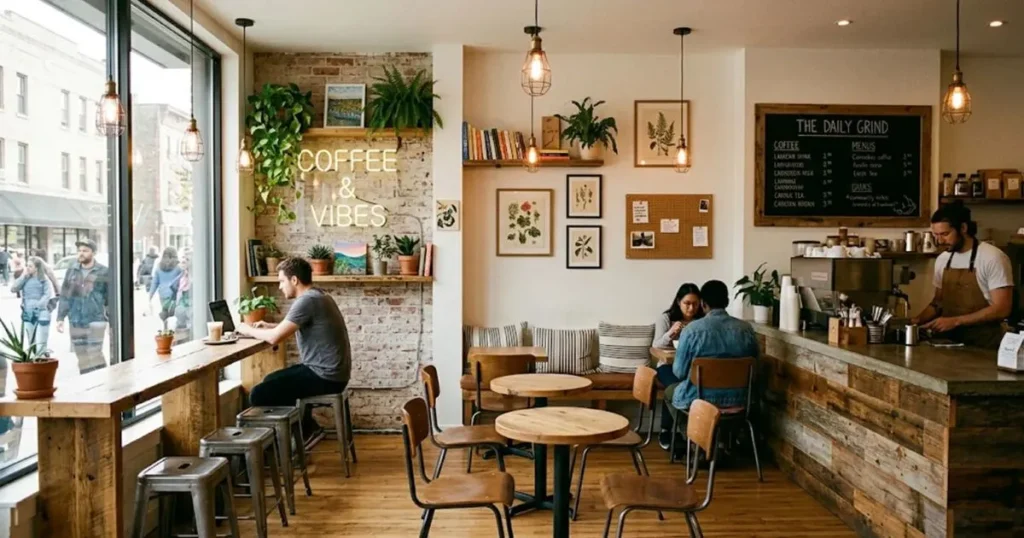
It is important to understand the reasons behind the rapid growth of the café industry across India before looking at the steps required to start a café business in India.To understand the steps required How to Start a Cafe Business in India, it is essential to understand the reasons for the rapid growth of the café industry across India.
Market Size & Growth
India has witnessed substantial growth in café and coffee culture in recent years. The trend is no longer limited to major cities, as Tier-2 and Tier-3 cities such as Lucknow, Indore, Jaipur and Coimbatore are also seeing growing demand for modern cafés. Young customers are increasingly looking for trendy spaces that offer quality food and beverages along with a comfortable ambience and social experience.
The market potential is also reflected in its growth. According to IMARC Group, the India coffee shops and cafés market was valued at USD 424.6 million in 2025 and is projected to reach USD 1.15 billion by 2034, growing at a CAGR of 11.14% during 2026–2034.
This growing demand is encouraging both established chains and independent café owners to expand into smaller cities. Rising café culture, urbanisation, changing consumer preferences and demand for premium coffee experiences are creating opportunities for entrepreneurs looking to start a café business in India.
You MIght Like: Starbucks Franchise Cost in India
Why Cafes Are Booming
The booming growth of cafes can be attributed to two main reasons:
- Social-hub trend – Today, cafes have become more than just a place to purchase coffee. These are now commonplace venues for socializing, holding informal get-togethers, working from home, dating, studying, or simply relaxing. A café has become a happy “third place” for many customers, in addition to their homes and their workplaces.
- Greater disposable income – As salaries have risen, urbanisation and lifestyles have changed, people are eating out more, snacking more, drinking more and buying more experiences. If the coffee is of good quality, the environment is pleasing, and the service is friendly, the customer is willing to pay around ₹150-300 or more at the cafe.
Combined these trends have provided good business opportunities for new café ventures. For those looking to embark on the journey of entrepreneurship, 2026 may be the perfect year to learn the art of how to open a cafe in India and come up with a viable idea that resonates with the local customer base.
Choose Your Cafe Format & Business Model
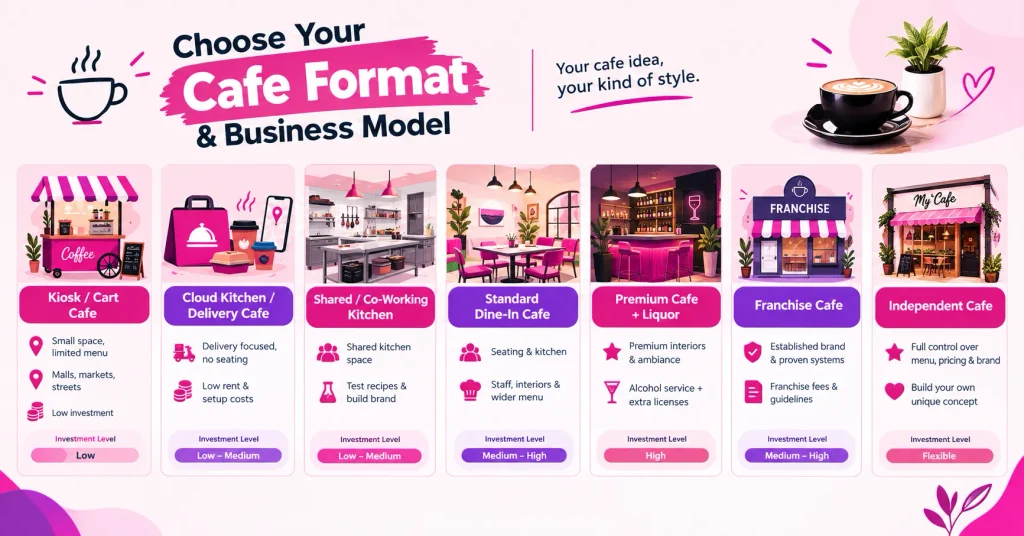
The first step towards setting a budget is to determine what type of cafe you are looking to open. It is an essential factor when it comes to the questions of how to start a café business in India because your Cafe format will largely impact investment, licensing, staff, equipment, space and location.
| Cafe Format | Key Features | Investment Level |
|---|---|---|
| Kiosk / Cart Cafe | Small space, limited menu, suitable for malls, markets & busy streets | Low |
| Cloud Kitchen / Delivery Cafe | Delivery-focused, no seating, lower rent & setup costs | Low–Medium |
| Shared / Co-Working Kitchen | Shared commercial kitchen, ideal for testing a food concept | Low–Medium |
| Standard Dine-In Cafe | Seating, kitchen, staff, interiors & wider menu | Medium–High |
| Premium Cafe + Liquor | Premium interiors, larger team, alcohol service & additional licenses | High |
| Franchise Cafe | Established brand, proven systems, franchise fees & guidelines | Medium–High |
| Independent Cafe | Full control over menu, pricing, branding & concept | Flexible |
Kiosk or Cart Cafe
One of the easiest ways to start a cafe is to use a kiosk or a cart. A small outlet can be installed in a mall, market, food court, college and/or in a busy street. Lease or purchase of the space and equipment is typically less expensive than a full-sized café due to the size and space limitations. This is an appropriate model for newbies who want to try out new things and gauge customers’ interest.
Cloud Kitchen or Delivery-Only Cafe
No need for a dining area for a delivery cafe. The kitchen is used to prepare food, coffee, snacks and beverages, which are sold through platforms like Swiggy and Zomato. If you aren’t looking to invest in a lot of seats, interior or a perfect spot for customers to face, this model can help cut down on the rental and setup costs. It can also be beneficial for entrepreneurs who would like to focus primarily on online ordering.
Shared or Co-Working Kitchen
This is a shared kitchen rental model where several food businesses share the same kitchen space. It enables you to create and sell your menu without having to build an entire commercial kitchen from the ground up. This can be an effective strategy to test recipes, gauge consumer acceptance, and develop a food brand prior to opening a permanent cafe.
Standard Dine-In Cafe
Traditional dine-in cafe has customer seating, a dedicated kitchen/preparation area, employees, interior and a larger food and beverage menu. This is what most people think of when they are thinking about how they can begin their own cafe business in India. While more expensive, a properly planned dine-in area can offer an inviting space for customers to come in and meet friends, work, study or relax.
Premium Cafe with Liquor License
A high-end café can be a fusion of the following: food, specialty beverages, high end ambiance and alcoholic beverages. This arrangement typically demands much more capital investment due to high quality interior design, more employees, improved technology and extra licenses and compliance to serve alcohol. Business owners should thoroughly review the state and local laws that apply to this option before making a decision.
Franchise or Independent Cafe
Another crucial choice is whether to open your own coffee shop or invest in a franchise from a well-known brand like Chaayos or Third Wave Coffee. A franchise offers proven brand recognition, operations and systems, but often comes with franchise fees and unique requirements. There is more freedom to select the menu, price, brand and concept at an independent cafe, but it takes longer and more marketing to build customer trust and brand recognition.
Also Read: Mio Amore Franchise Cost
How to Start a Cafe Business in India (2026) | Step By Step Guide
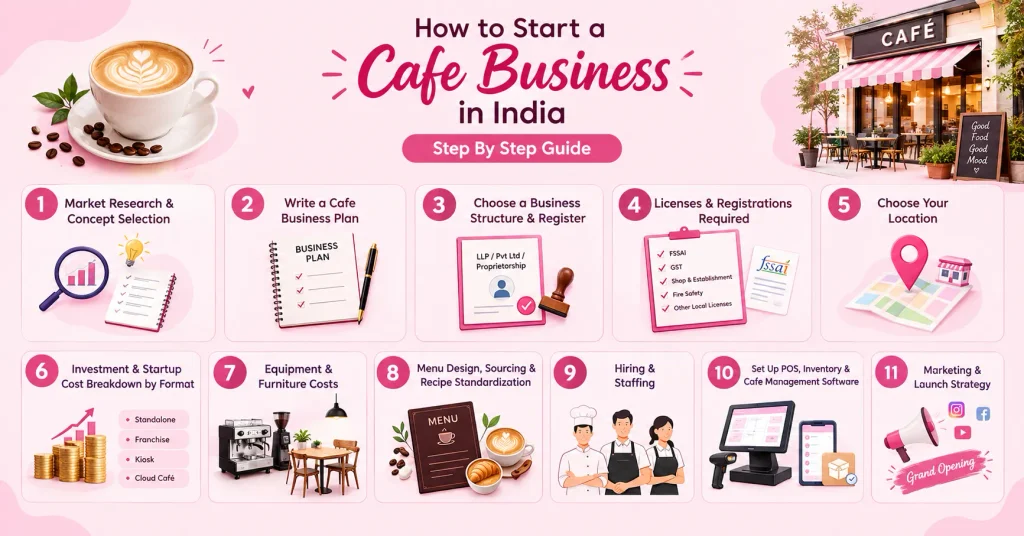
Now let’s go step by step. This is the true answer to how to start a cafe business in India.
Step 1: Market Research & Concept Selection
Take time to learn about the local market before investing in your cafe. Go to cafes in and around your favorite area, and note who your patrons will be. Students are seeking inexpensive study spaces, professionals are looking for fast food, families are looking for casual dining, and couples are looking for comfortable spaces. Notice what the popular items are on the menu, how much the average price is, what items customers like the most, and what services competitors offer. Most important of all, find out what is lacking in the area. For instance, there might be nowhere to get a good cup of coffee with a secure internet connection, a good breakfast, healthy food, or a quiet place to work.
This void may allow you to develop something new that is distinctive from present companies. Assess the local demand and consider opening a café, bakery café, theme café or a health-food café that specialises in coffee. Your idea should not only be something you enjoy doing but it should also be something that customers are willing to pay for.
This is an essential step in learning how to start a cafe business in India as location or concept is a factor that can cause issues even if you’re prepared with a solid budget and an appealing layout.
Step 2: Write a Cafe Business Plan
A cafe business plan is a simple document which puts your business idea into a clear and organized format. Some key points to include are: target audience, food and beverage menu, price strategy, approximate startup costs, what you expect to earn, the competition, and your marketing plan.
The 50-page report is not required. If you have a clear plan that is about five or six pages long, then this will be sufficient to explain your concept and to inform the decisions you will make. It’s also helpful if you need to secure a business loan or get a bank loan.
More important, a business plan keeps you on target and also helps you see how your various aspects of your café will cooperate. It allows you to identify possible challenges, calculate your financial requirements, and make changes before investing your savings. This is something that many new business owners forget to do and begin spending money without a plan.
But before one starts planning How to Start a Cafe Business in India, it is important to first take a look at the business plan as it will bring up many issues and problems that may arise later and prove to be a colossal disaster.
Step 3: Choose a Business Structure & Register
You’ll need to select a legal business structure and register your cafe before it opens. Common options include:
- Sole Proprietorship – This is one of the easiest and least costly of small businesses for a single operator in a small cafe or kiosk. There is less paperwork, but the owner personally assumes liability and debts of the business.
- A partnership – is suitable for two or more persons to be the founders of the cafe, more often than not friends or family. Profit, responsibilities and decision-making may be split among the business partners based on the partnership agreement.
- Private Limited Company – This structure could be best suited to larger cafe ristorante enterprises or those shareholders who intend to expand to other outlets. It sets up a distinct legal entity for the business and can offer more protection for the owners’ assets.
The structure of a cafe business can have a significant impact on a number of aspects of running a business in India, including taxation, financial obligations, legal liabilities, funding options, and growth potential, so choosing the right structure is crucial for the success of a new business. Before deciding on a structure, take into account your investment, number of owners, level of risk, and future plans for growth.
Step 4: Licenses & Registrations Required
This is where most people end up getting confused. Now, here are the key licenses you’ll need:
- FSSAI License – This is compulsory for any food business. The fee is dependent on your turnover (Basic, State, Central), typically from Rs.100 per annum for very small businesses to some thousand rupees for larger businesses.
- GST Registration – Filing it is necessary when your annual turnover exceeds the threshold determined by the government, or you would like to get tax credit as well as legally charge your customers for your products/services.
- Shop & Establishment Act Registration – This is a local state registration to enable you to operate a shop or a commercial establishment legally.
- Health Trade / Municipal License – Given by your local municipal corporation to confirm your cafe follows hygiene and health rules.
- Fire Safety NOC – Fire Department NOC confirming that your cafe has the right fire safety equipment.
- Liquor License – if you are intending to serve alcohol, this is a required license. This is expensive and has a longer approval process.
- Signage License – This is required from the local authority to place a signboard outside of your cafe.
It is one of the crucial steps in learning How to Start a Cafe Business in India to get all these licenses right, otherwise you might be hit with fines or your café will be closed altogether.
Step 5: Choose Your Location
One of the most crucial choices while setting up a coffee shop in India is the choice of location. Ideally, a cafe should be available in a location where lots of people visit regularly. Common sites are around Universities, Corporate offices, shopping malls, busy markets, and residential areas. Prior to deciding on a property, you should take into account things like day to day passing, road visibility, parking, accessibility and the competition in the area. Another big consideration to take into account is rent.
Although a low-rent property might appear appealing, it is hard to get the traffic where it’s needed if there is little traffic in the area. Conversely, it could be better to invest a little more in a well-connected area that sees frequent customer activity, in exchange for higher sales and long-term profits.
It’s also important to learn about the target customers of the area. For instance, if the cafe is geared towards students, it might be better located close to a college, whereas a high-end cafe might do better in a business or high-end residential area. Before signing a lease, make sure to check the spot at various times and on various days. An accessible and clearly visible spot can help build your cafe’s foundation for success.
Step 6: Investment & Startup Cost Breakdown by Format
The total cost of the investment will be dependent mainly on the type of a cafe model you have chosen in the previous step. There are varying types of formats and the amount of money involved will differ, so it is necessary to make sure you choose the one that will be appropriate for your finances. So, for a general rule:
| Cafe Format | Typical Setup | Estimated Investment |
|---|---|---|
| Kiosk / Cart Cafe | 100–250 sq. ft., takeaway-focused | ₹5–12 lakh |
| Cloud / Delivery Cafe | 200–600 sq. ft., no seating | ₹5–15 lakh |
| Shared Kitchen | Shared commercial kitchen, limited setup | ₹3–10 lakh |
| Standard Dine-In Cafe | 500–1,000 sq. ft., seating + kitchen | ₹18–35 lakh |
| Premium Dine-In Cafe | 900–1,500+ sq. ft., premium interiors | ₹35–60 lakh+ |
| Cafe + Liquor | Premium setup + bar/licensing | ₹50 lakh–₹1 crore+ |
| Franchise Cafe | Brand fee + setup + deposit + working capital | ₹20–60 lakh+ |
| Independent Cafe | Depends on concept, location & scale | ₹10–60 lakh+ |
- Kiosk or Cart: ₹3–8 lakh
- Cloud Kitchen: ₹5–12 lakh
- Small Dine-In Cafe (500–800 sq. ft.): ₹12–25 lakh
- Premium Cafe with Liquor License: ₹40 lakh or more
The estimated cost figure could include costs of the property security deposit, property set up, kitchen and cafe equipment, licenses and registrations, furniture, and initial inventory. Other costs such as staff salaries, marketing expenses, electricity, working capital etc. should also be taken into account when creating your budget.
Knowing these expenses is one of the essentials of How to Start a Cafe Business in India. The size and shape of the budget you can allocate to your cafe will dictate the type of cafe you can launch and how much money you have to set aside to run it. Establishing a financial plan in advance of investing can help you prevent unforeseen expenses and keep an adequate budget through the first few months of business.
Step 7: Equipment & Furniture Costs
To run a cafe, one will need to invest in the proper equipment and furniture so that daily operations will run smoothly. Typical equipment would be a coffee machine, coffee grinder, fridge, oven, billing machine and a range of kitchen utensils. There will also be furniture including tables, chairs, service counters and appropriate lighting to provide a pleasant customers’ area. Espresso machines come in all range of costs, depending on the brand, features, and size.
The price of a basic one can go up to ₹40,000 and a higher capacity or professional machine can cost up to ₹3 lakh or even more. It is also vital to invest in good kitchen equipment and refrigeration equipment to ensure the quality of food and beverages is maintained along with the coffee machine.
While lower cost equipment might cut down on upfront costs, substandard equipment can result in frequent downtime, repairs, and maintenance costs. It is, therefore, a worthwhile investment to invest in more expensive and reliable machinery. Investing in quality equipment from the start of your set-up can help prevent issues with your equipment and make your cafe more efficient in the long term.
Step 8: Menu Design, Sourcing & Recipe Standardization
Keep the menu simple and narrow, don’t go overboard on the menu at first. More ingredients means there’s higher ingredient costs, operational confusion and food waste. Choose reliable suppliers of key materials like coffee beans, milk, bakery products and other raw materials to ensure quality standards. You should also make sure you have the same recipes and techniques. All coffee, snack, and meal items should be the same flavor, quantity, and style regardless of who prepares them. Develop consistent recipes with specific quantities and how it is made so that staff can replicate the process each time.
This kind of consistency will be beneficial for your customers to know what to expect the next time they come into your cafe. If everyone gets the same quality and taste on each visit, they will like your brand more and will keep coming back and recommend it to their friends. So a well-managed menu, quality suppliers and standardised recipes can be significant factors in establishing a successful cafe.
Step 9: Hiring & Staffing
When a small cafe is using 3 to 5 staff they are most likely to have a small team. Depending on the size of your café and the volume of business, you may require a barista, cook/kitchen assistant and one or two staff to assist with customer service and billing. As your business expands, you can add more employees, depending on the demand and operating hours of your business. Ensure that all employees are duly trained before being opened.
Staff should be familiar with the basic food hygiene, cleanliness, customer service, billing procedures and with the standard recipes of your cafe. Clear training ensures consistency in service and food, and allows workers to operate efficiently.
The attitude of employees is also an integral component of the overall customer experience. With friendly, polite and attentive service, customers can feel comfortable and appreciated. Poor service will deter people from returning even if the food and drinks are good. Conversely, a friendly staff can ensure that customers return and recommend the restaurant to others. Hence, the selection of appropriate personnel and training of them must become a vital component of your cafe’s preparation.
Step 10: Set Up POS, Inventory & Cafe Management Software
One of the vital tools for a cafe to run everyday tasks is a POS (Point of Sale) system. It enables you to generate bills in a few moments, log transactions, track daily sales, and maintain stock logs. By using POS software, the cafe owner can arrange their sales and stock more efficiently, rather than doing it manually.
In India, there are many low-cost cloud-based point-of-sale systems available which are crafted particularly for small cafes and food businesses. These can minimize billing errors, save time and help keep up good business records.
A sales analysis is another valuable function offered with a person system. It is possible to determine which food and drink items are the best sellers and which products are less in demand. It can guide you in determining what to sell, what to tweak, and what to take off from the menu. When you can use sales data to make decisions, you can better manage stock, cut down on the waste, and plan your cafe’s menu based on what the customers are looking for.
Step 11: Marketing & Launch Strategy
Begin marketing your cafe even before the opening, with pro-cafe pages on Instagram and Facebook. Share a photo of your menu, your interior, your opening offers, or anything behind the scenes that’s attractive to draw attention and get people interested in your restaurant. It’s also important to establish and confirm your Google Business Profile to make it easier for customers to find your cafe on Google Search and Maps, and leave reviews. A straightforward loyalty program will also help to bring customers back again. You might, for instance, have some sort of free coffee after 5 orders, or give special discounts to returning customers. These can be used to foster customer relationships over the long-term.
If you have more sales, there is some place where you can register your cafe on food delivery sites like Swiggy and Zomato. But remember to account for platform fees and commissions when calculating what you will charge for deliveries. The commission rates may differ from platform to platform and from agreement to agreement; do the math before you determine your menu prices. Your delivery pricing needs to account for food price, packaging, platform cost, and other costs, with room left over for profit.
How Much Does It Cost to Open a Cafe in India?
In general, starting a café in India in 2026 can cost around ₹10 lakh to ₹50 lakh, depending on the location, café size, interiors, equipment, rent deposit, licenses, staff, and initial working capital. For a typical small-to-medium independent café, a realistic budget is around ₹15–30 lakh. This usually covers the basic setup, kitchen and coffee equipment, interiors, licenses, initial inventory, branding, and a few months of working capital.
Prime locations in major cities can push the investment significantly higher, especially because of rent and security deposits.
How to start a cafe business in India is always the question that comes to the fore. Here are the main cost factors:
- Location & Rent – The rent deposit and monthly rent will differ significantly from city to area, this is typically the highest fixed cost.
- Interior & Furniture – The price of a good looking cafe interior ranges from ₹3 lakh to ₹15 lakh based on its size and design.
- Equipment Cost – The coffee machines, ovens and refrigeration equipment will account for 20-30% of your total budget.
- Licenses & Legal Fees – The price of licenses and consultants could come to ₹50,000-1.5 lakh, depending on the number of licenses.
- Working Capital – This is the additional cash flow requirement – typically 3-6 months of operating cash flow requirement – needed to operate your cafe until you are profitable.
Break-Even Timeline & Profit Margins
- Break Even Time – 12-24 months is the average time it takes for a small to medium sized cafe in India to break even, depending on location and management.
- Profit Margins – The net margin that a well-managed cafe can expect to make is approximately 10-20% (after rent/ employee cost/ raw material cost).
- Seasonal Effect – Prices may fall in extreme summer or monsoon months, so ensure cash flow is managed accordingly.
- Repeat Customers Matter – break even sooner with cafes that develop a loyal, repeat customer base.
- The Delivery vs Dine-in Mix – Cafes that provide both Dine-in and delivery options are likely to pay off sooner than those that rely solely on one or the other.
Common Mistakes to Avoid
- Failure to carry out adequate market research – Avoid opening a cafe at the wrong site without considering footfall.
- No Licenses – Some new owners choose to operate without full licenses and may face substantial penalties or closure later if they aren’t fully licensed.
- Going over budget on Interior – It is easy to overspend on your interior but then not have anything left for marketing or working capital.
- Complicated Menu – A long menu will cause a lot of food waste, make it difficult for the kitchen team to know what to prepare and reduce speed of service.
- Lack of Staff Training – If you have a great coffee and food service, but poor service due to untrained staff, your customer experience will be ruined.
Conclusion
How to Start a Cafe Business in India is not a tough task if you break it down into small steps – Research, Planning, Registration, License, Location, Investment, Equipment, Staffing, and Marketing. The cafe industry in India is booming and seems to be a great opportunity for those looking to enter the business in the coming years, particularly in tier-2 and tier-3 cities. With the cafe industry in India experiencing rapid growth, especially in tier-2 and tier-3 cities, it may be a good time to join this industry in the near future in 2026.
By following this step-by-step approach with caution, budgeting correctly and maintaining steadfast quality and customer service, your cafe could well become a success. This is actually the easiest approach to get knowledge of how to begin the cafe business in India and make the dream cafe come true.
Explore more Business Niches:
FAQs
What licenses are mandatory to start a cafe in India?
The required licenses are FSSAI license, GST registration (where applicable), Shops & Establishment Act registration, health trade/municipal license and fire safety NOC. If you are not going to serve alcohol, no liquor license is required.
What is the price of FSSAI licence for a cafe?
The fees are dependent on the company size and turnover. The cost of getting the basic FSSAI registration may start as low as ₹100 per year, and for bigger cafes, it may be a few thousand rupees along with consultant fees if you decide to hire someone to help with the process.
Is a cafe business profitable in India?
Yes, a cafe business can be profitable in India, if well managed. Once a café reaches break-even point, it typically has a profit margin of 10-20%, particularly if it has a strong reputation and customer base.
What is the break-even time of a cafe?
Depending on the locality, the amount of investment, the quality of the management and the speed with which the regular customer base is established, on an average a cafe takes anywhere between 12 months to 24 months to break even in India.
Is a cafe in need of a liquor licence?
No, a liquor license isn’t a must if you want to serve alcohol at your cafe. This license is not required for a conventional cafe serving coffee, tea and food – a dine-in or delivery establishment.
Cafe vs. cloud kitchen — which is cheaper to start?
A cloud kitchen typically is more affordable to launch since they don’t need to invest in the dining room, interior design or a prime high-rent location. The traditional dine-in restaurant requires more investment in furniture, interior and rent, but it also provides a better social experience and brand visibility.
