6 Essential Project Management Tools for Small Business Success
Navigating project management in a small business can feel daunting. But with the right tools, success is within reach.
Here are six essential project management tools that will help you streamline tasks, enhance collaboration, and boost efficiency.
List of Essential Project Management Tools for Small Business
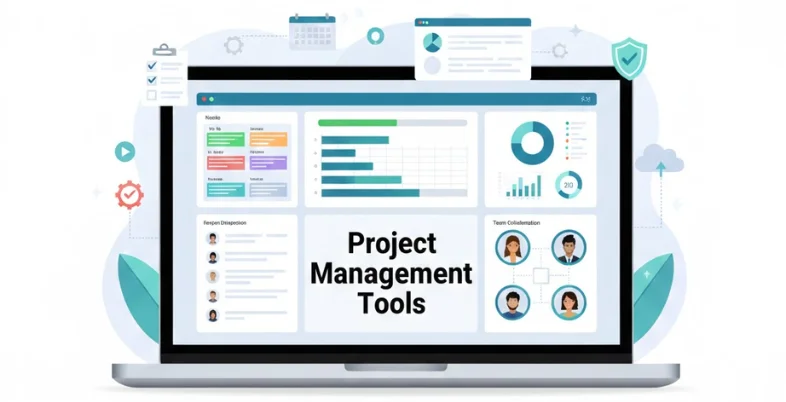
1. Task Management Software for Streamlining Workflows
Task management software helps organize, prioritize, and track tasks effectively.
Small businesses benefit by having a centralized platform to manage projects.
It simplifies assigning duties to team members, ensuring clarity in roles. Imagine it as a digital bulletin board where every task has its place.
By providing deadlines and status updates at a glance, it reduces miscommunication. Plus, many platforms integrate with other tools you already use.
This seamless coordination enhances productivity by allowing teams to focus on work rather than managing chaos.
As everything is documented and easily accessible, project goals are clearer – leading to successful outcomes for your business.
2. Time Tracking Tools for Boosting Efficiency
Time tracking tools monitor the hours spent on tasks and projects. For small businesses, this offers insights into productivity and helps optimize time management. By accurately recording work durations, businesses can identify areas where efficiency could improve.
Such tools provide detailed reports on employee activity, highlighting time-consuming tasks that may require process adjustments.
This data aids in setting realistic project timelines and budgets.
Also, it enhances accountability among team members by offering transparency in how working hours are utilized.
Ultimately, effective use of time tracking ensures resources are well-spent leading to increased profitability for your business.
3. Collaboration Platforms for Enhancing Teamwork
Collaboration platforms are digital spaces where team members communicate and share information efficiently.
For small businesses, these tools facilitate real-time interaction regardless of location, ensuring that everyone stays connected. They integrate chat, video calls, and file sharing in one place.
By using these platforms, teams can coordinate better on projects with reduced delays from miscommunication or information silos – and allows for seamless integration with other software used by your business.
Such streamlined communication improves decision-making processes and enhances overall productivity.
When everyone works together harmoniously on a single platform, the chances of project success increase significantly for your business.
4. Invoicing Software for Simplifying Payments
Invoicing software automates the creation and management of invoices.
For small businesses, especially those hiring freelancers for projects, this tool ensures timely and accurate billing. It tracks outstanding payments and sends reminders automatically.
Using quality invoice processing software reduces manual errors that are common in paperwork.
Also, it can integrate with accounting systems to streamline financial management further.
Such tools offer custom invoice templates to fit various project needs, making them flexible for different client requirements.
Efficient invoicing not only speeds up cash flow but also maintains professional relationships by ensuring transparent financial dealings, which is crucial for successful project execution.
5. Resource Planning Applications for Optimizing Utilization
Resource planning applications help allocate and manage business resources, such as personnel and equipment.
These tools allow small businesses to foresee project demands accurately. By identifying available resources and assigning them efficiently, companies can prevent overbooking or underutilization.
Detailed scheduling features enable precise tracking of resource usage. This helps in adjusting allocations dynamically according to project needs, reducing wastage and enhancing productivity.
Furthermore, these applications provide insights into workload distribution across projects. This balance ensures no team member is overwhelmed, promoting a healthier work environment.
Effective resource management ultimately leads to successful project outcomes for your business.
6. Document Sharing Services for Facilitating Seamless Access
Lastly, document sharing services provide a secure way for teams to store, access, and collaborate on project documents.
These platforms allow small businesses to centralize their data, making information retrieval swift and easy.
Team members can update files in real time, ensuring everyone has the latest versions.
Such services enhance collaboration by enabling users to comment directly on documents, reducing the need for lengthy email chains. They offer robust security features like encryption and access controls to protect sensitive business data from unauthorized use.
By organizing files systematically within folders or categories specific to projects, businesses will maintain a clear structure that supports efficient workflows.
The ability to share large files effortlessly further ensures smooth communication between clients and team members – leading your projects toward successful completion.
