Top 15 Patient Management Software for Clinics and Hospitals in 2026
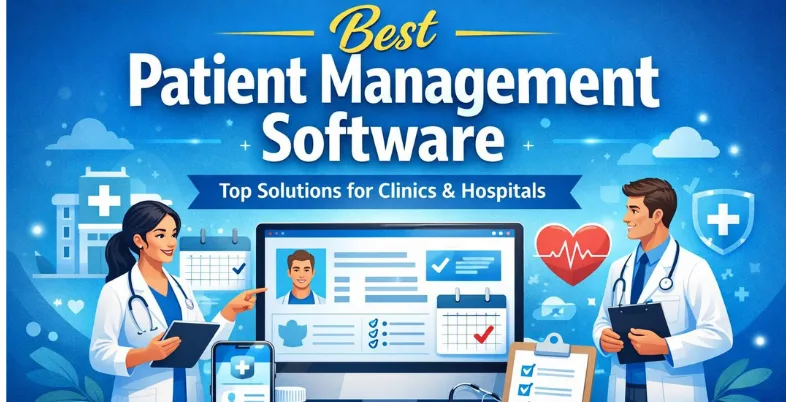
Managing patient records, appointments, and billing manually can quickly become overwhelming for healthcare providers. Paper-based systems and disconnected tools often lead to errors, misplaced records, long waiting times, and poor coordination between departments. As patient volumes grow, maintaining accuracy, ensuring data security, and delivering timely care becomes even more challenging.
This is where Patient Management Software comes in as a reliable solution. It helps healthcare organizations digitize and streamline their daily operations by centralizing patient data, automating appointment scheduling, managing billing, and improving communication across teams. With everything organized in one system, clinics and hospitals can reduce errors, save time, and enhance the overall patient experience. Patient Management tools not only improves operational efficiency but also enables healthcare providers to focus more on delivering quality care.
What is Patient Management Software?
Patient management software (PMS) is an online application that is used to optimize healthcare processes, focusing on centralizing major administrative and clinical processes, including appointment booking, patient enrollment, electronic health records (EHR) management, billing, insurance claims verification, and confidential communication between staff and patients.
It serves as a centralized point that minimizes paperwork, lowers the number of mistakes, and increases the efficiency of the workflow to enable the provider to pay more attention to the patient than to the process. PMS will increase coordination among front-desk, clinical, and billing teams and guarantee the accuracy of the data and compliance with the regulatory standards by embedding such features as patient portals where the latter can self-service, access real-time data, and use compliance tools.
Benefits Of Patient Management Software?
Patient management platforms simplifies patient management in healthcare by computerizing patient records and automating business processes. It increases efficiency, quality of care, and cost-saving among providers.
Key Benefits
- Improves patient care through the central access of information to informed choice and individual plans.
- Increases the efficiency of the operations through automated time schedules, invoicing, and reminders, which minimizes workload and errors among the employees.
- Ensures that the data is accurate in the digital format, which rules out all possibilities of manual mistakes, and also allows checking the vital signs and pasts, in real-time.
- Lowers expenses through paperless operations, minimizes administrative problems, and puts resources to good use.
- Improves patient satisfaction not only regarding the reduction of waiting time, but also through automated reminders to reduce no-shows and effective communication.
- Enables analytics to predict insights on patient health trends, enhancing retention and preventing care.
- Facilitates the billing and financial management, and connects it with the tracking and insurance.
- Encourages medication adherence and compliance by tracking and displaying graphs of health at regular, evenly spaced intervals.
List of 15 Best Patient Management Software
1. Epic Systems
Website: https://www.epic.com.
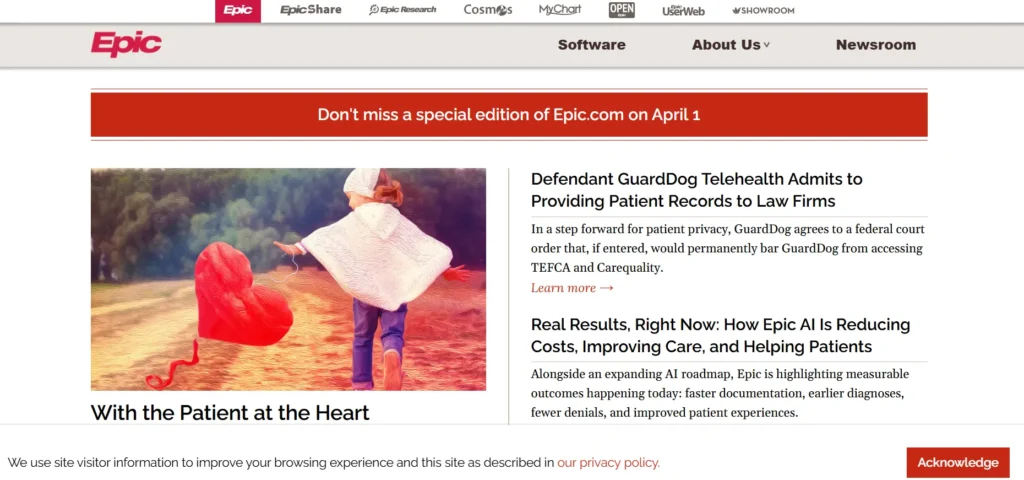
Epic Systems is a dominant patient management platform,electronic health record (EHR), and services like patient management are mainly offered to large hospitals, health systems, and ambulatory practices, and the suite of integrated modules is provided to streamline clinical processes, patient data, billing, scheduling, and analytics in care environments.
Key Features:
- MyChart patient portal has access to mobile applications (app) to make appointments, access records, and messaging.
- Clinical workflow tools such as documentation, order entry, e-prescription, and voice recognition.
- Planning and reservation through the Cadence module.
- Billing, revenue cycle, insurance verification, and claims processing.
- Risk analysis and care gaps: Healthy Planet Population health management.
- Data exchange, lab integration (Beaker), specialty module, such as OpTime (surgery) and Stork (obstetrics) interoperability.
- Telehealth, AI analytics, and reporting features.
Pros:
- Very adaptable and expandable to complicated organizations
- Powerful interoperability and data security are utilized in the leading U.S. health systems.
- Patient-oriented services such as portals enhance interaction and management of care.
Cons:
- Very expensive to implement, time-consuming
- Complex learning process and the lack of flexibility in customizing small-sized practices.
- High maintenance fees, proprietary nature, vendor lock-in.
Pricing:
- NA
2. eClinicalWorks
Website: eclinicalworks.com
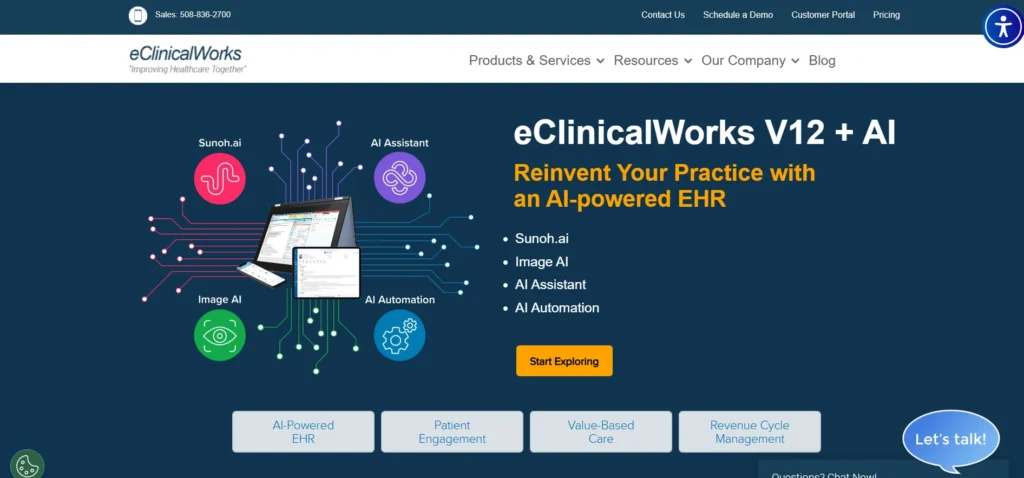
eClinicalWorks is a practice management/cloud-based EHR, created to assist healthcare providers by streamlining the care delivery process of seeing patients, both in terms of scheduling/intake, documentation/billing, as well as telehealth and follow-up,p with other features such as patient portals and artificial intelligence (AI) present.
Key Features
- 24/7 patient portal access, booking of appointments, and sending secure messages.
- Remote visits and health tracking, Telehealth, and Healow applications.
- E-prescribing, laboratory integration, and revenue cycle management.
- These features are customizable templates, voice recognition, and analytics/reporting.
- Population health, interoperability, and compliance tracking.
Pros:
- Remote-access and efficiency through the clouds.
- Powerful patient interaction instruments.
- Full-scale EHR/practice management.
Cons:
- Steep learning curve
- There are some glitches in the interface.
Pricing:
- EHR :$449/mo per provider
- EHR with Practice Management: $599/mo per provider
3. NextGen Healthcare
website: https://www.nextgen.com/
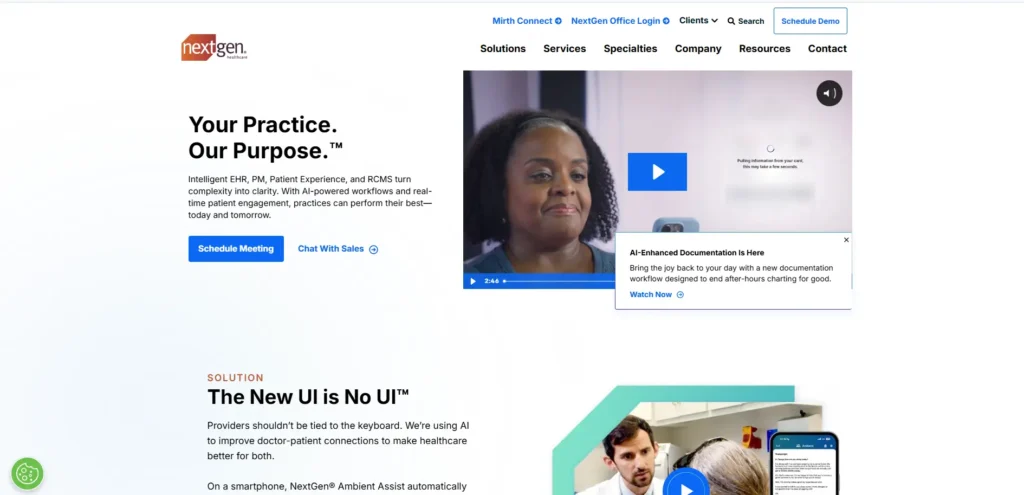
NextGen Healthcare is a practice management software that is a full-fledged cloud-based EHR, and that specialty practices rely on to automate their workflow, beginning with patient and patient scheduling and intake and ending with billing, telehealth, and care coordination. It can be customized with AI capabilities, including the ability to automatically add notes to the discussions with the assistance of the Ambient Assist, and is interoperable with payers. As a Healthcare Management Software, it supports efficient operations and improved patient care across practices.
Key Features:
- Electronic Health Records (EHR) clinical documentation and data management.
- Practice Management (PM) includes scheduling, reminders, and workflow automation.
- Financial Processes (RCM), e.g., billing and claims processing.
- Online scheduling, refills, and payments for patients, as well as a communication portal.
- Online and video conferencing using mobile care.
- Artificial Intelligence-based Ambient Assist of SOAP notes and coding recommendations.
- Analytics and care gap population health management.
Pros:
- The ability to customize templates and a user-friendly interface.
- Effective patient-interaction instruments.
- Extensive RCM and continuous assistance.
Cons:
- Individual pricing (no predefined rates).
- Difficult learning curve for some users (implied by reviews).
Pricing:
- customized quotes
4. Athenahealth
Website: https://www.athenahealth.com/
Athenahealth patient management software, which is mainly delivered using the athenaOne platform, is an AI-based, cloud-based solution consolidating electronic health records (EHR), revenue cycle management (RCM), practice management, and patient engagement to simplify clinical workflows, billing, scheduling, and care delivery of medical practices of all sizes.
Key Features:
- Scheduling and management of the appointments.
- Denial resolution, Billing and revenue cycle management.
- Self-service patient portal to records and appointments.
- Real-time insight-driven clinical workflows and gap identification of care.
- Combined telehealth and mobile application.
- Personalized reporting and analytics based on a huge provider network.
- Documentation voice recognition and dictation.
Pros:
- Strong network information to condense billing regulations.
- Extremely customizable reporting and EHR.
- Good interoperability and AI-based insights.
Cons:
- Not transparent pricing; practice-specific.
- No free trial available.
- Some users have a steep learning curve.
Price:
- NA
5. AdvancedMD
Website:https://www.advancedmd.com/patient/portal-software/
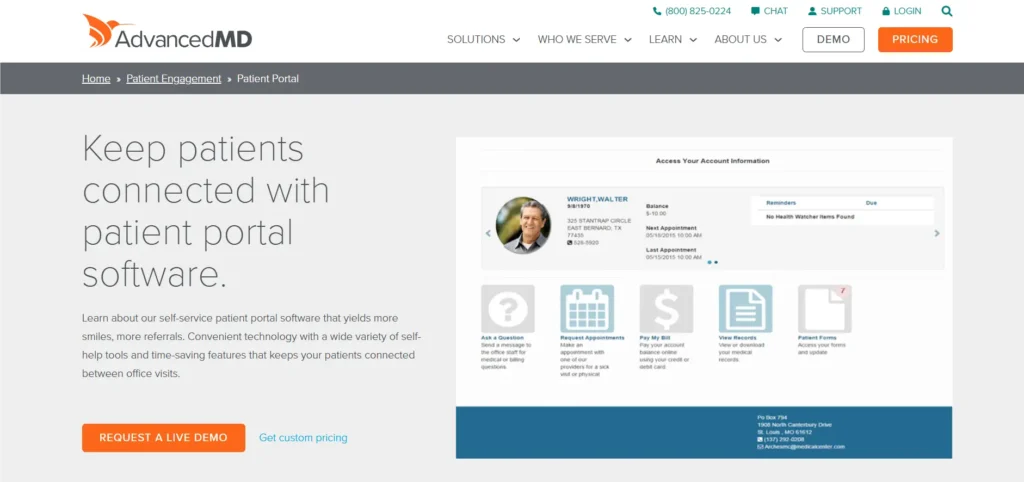
AdvancedMD is a multifunctional and cloud-based medical practice software that is used to coordinate the work and introduce efficiency to the practice of any size by using electronic health records (EHR), billing, scheduling, patient engagement, and revenue cycle management.
Key Features
- Clinical note: Ambient listening and customizable clinical workflows are built into EHR.
- Self-service booking, safe communication, and prescription retrieval.
- Automated coding, eligibility verification, error avoidance, billing, and claims management.
- Video visit and remote monitoring telemedicine devices that do not require additional equipment.
- On-the-go Personalized schedules, patient data, and payments, accessed through mobile applications.
- Financial optimization, revenue cycle management (RCM), and analytics.
Pros:
- Customizable to a large degree to different specialties.
- Mobile-friendly user-friendly interface.
- Firm EHR, billing, and patient integration.
Cons:
- Gets sold at high prices with establishment costs
- Customization has the potential to have a steep learning curve.
Price
- available upon request.
6. DrChrono
website:https://www.drchrono.com/
DrChrono is an AI-based, cloud-computed electronic health record (EHR) and patient management software and practice management system available to both large and small medical practice management to consolidate patient scheduling, clinical documentation, and medical billing with telehealth into a single platform, along with Telehealth Software features, to simplify workflows and enhance efficiency.
Key Features
- Customizable 20+ specialty Electronic Health Records (EHR).
- Practice management, such as appointment making and a patient portal that is HIPAA compliant.
- Revenue cycle management that has automated billing and submission of claims (96%+ clean claims) and eligibility checks.
- Video visits through telehealth are directly out of the EHR.
- E-prescribing, EPCS support, and speech-to-text charting.
- Native iOS/Android applications and patient self-check-in kiosks.
- Real-time reporting, denial fixing, and integrated payments.
Pros:
- A combination of EHR, billing, and telehealth.
- User-friendly interface that is mobile-friendly.
- Powerful small/ medium practices that have high claims accuracy.
Cons:
- Price is custom/quote-based, and can be increased for fancy features.
- Complexity is involved in learning to use complicated billing arrangements.
- Poor customization of certain reporting tools.
Price:
- custom/quote-based
7. RXNT
website:https://www.rxnt.com/
RXNT is a cloud-based and small to mid-sized medical practice-focused integrated healthcare software suite. It offers e-health records (EHR), practice management (PM), e-prescribing, medical billing, scheduling, and patient portal support to streamline the clinical practice, revenue cycle, and patient care organization.
Key Features:
- EHR with customizable templates, live patient charts, and uploading of lab results.
- e-prescribing certified by EPCS to securely administer prescriptions and access history.
- Scheduling, auto reminders, insurance eligibility check, and claims submission.
- Communicate with the patient portal, send bills, make appointments, and e-sign documents.
- Revenue cycle management, telehealth video sessions, analytics, and reporting.
- Mobile access, HIPAA compliance, MACRA/MIPS certification, and specialty-specific workflows.
Pros:
- Simple and cost-effective interface.
- On-demand and 24/7 accessibility.
- Good e-prescribing and billing software.
Cons:
- Poor advanced reporting level.
- Sometimes there can be delays in customer service.
Price:
- Full Suite:$ 319 / month
- PM Bundle:$ 207 / month
- EHR Bundle:$ 118 / month
8. Pabau
Website:https://pabau.com
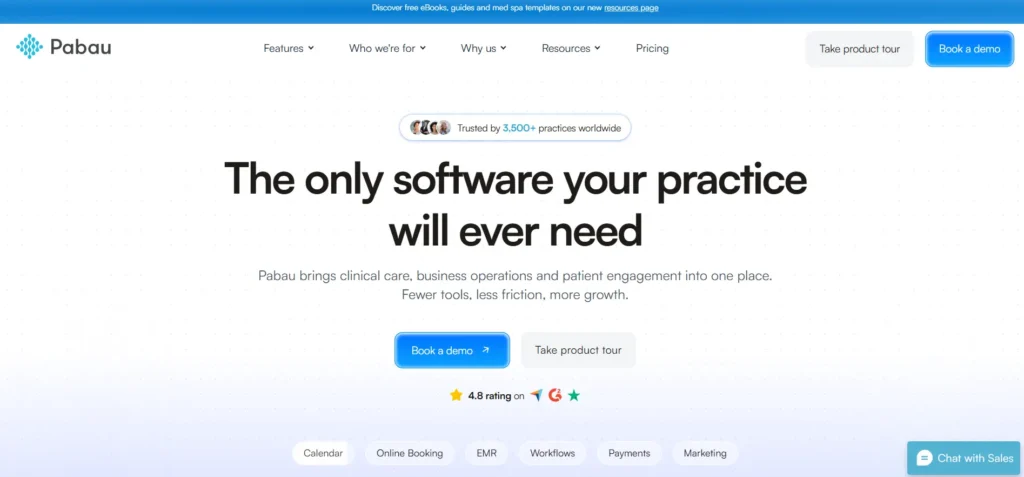
Pabau is a practice management software that is cloud-based, an all-in-one patient management software application, and geared toward clinics, medical spas, and health care providers to consolidate operating functions such as appointment booking, medical records, billing, inventory, and marketing into one HIPAA-compliant application.
Key Features:
- Online booking and a drag-and-drop calendar in terms of appointment scheduling.
- Self-management portal where patients update their booking, records, and information.
- EMR notes, photos, forms, and AI dictation (EchoAI).
- Reminders and instructions of pre/post-care and secure message.
- Billing/POS, inventory management, reporting, and marketing tools.
- Online meetings, laboratory interventions, and personalized online questionnaires
Pros:
- Easy-to-use scheduling and customer support
- Extensive features and no per-patient charges.
- Good security and compliance (HIPAA).
Cons:
- Extensive features have steep learning curves.
- Prices are based on each user and location.
Pricing :
- Begins at approximately £50/$59 -$69 per user/month.
9. Practice Flow
website:https://practiceflow.io
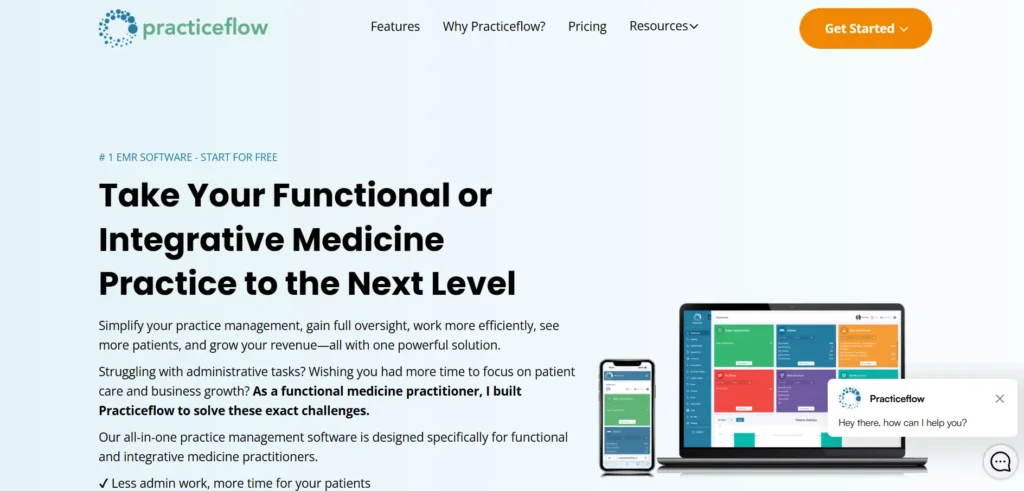
Practice Flow is a practice management software and cloud-based EMR/EHR designed to support functional and integrative practices and simplify the process of managing patients, planning patient treatment, scheduling, and billing, combining them into a single system.
Key Features:
- Online booking and scheduling, SMS/email appointments, and patient portal self-service.
- Tailor-made multi-therapeutic care plan consisting of e-prescriptions, supplements, laboratory, infusions, and follow-up.
- Records, SOAP notes, journal, and drag-and-drop forms for client management.
- Reporting, ONC-ATCB-certified, and collaborative multi-provider (HIPAA-compliant).
- Tightly coupled medical billing and patient interaction solutions.
Pros:
- Fast billing and coding with user friendly interface.
- Saves administration headache through automation.
- Seamless updates of cloud-based.
Cons:
- Catering primarily to functional medicine, not a good fit for the general practices.
- Pricing information unavailable to the market (contact necessary).
Price:
- Starter:€0per month
- Beginner:€49 per month
- Growth:€79 per month
- Advanced:€139 per month
- Unlimited:€249 per month
10. Practo Ray
Website:https://www.practo.com/ray
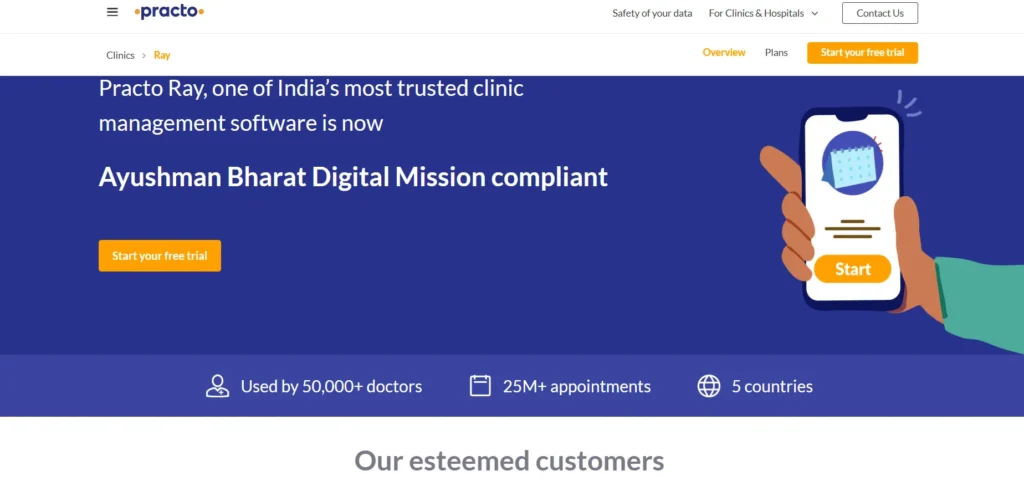
Practo Ray is a doctor, clinic, and hospital practice management software created by Practo, which is designed to automate activities of scheduling appointments, digitizing records of patients, billing, and analytics of multiple locations. It allows flexible access through web and mobile applications, electronic medical records (EMR), and telemedicine, as well as automated patient communication to promote efficiency and patient experience.
Key Features:
- Scheduling of the appointments and SMS/email notifications.
- Registration of patients and access to the portal.
- EMR and prescription administration.
- Billing, invoicing, and inventory control.
- Integration and reporting/analytics of the lab.
- Multi-location and telemedicine.
- Role-based access to doctor/staff management.
Pros:
- Automates clinic workflows
- Enhances patient interactions.
- Cloud access anywhere
Cons:
- Pricing may vary by plan
- SMS in local languages is restricted to superior plans.
- Online booking of Prime clinics only.
11. Kareo
website:https://www.kareo.com
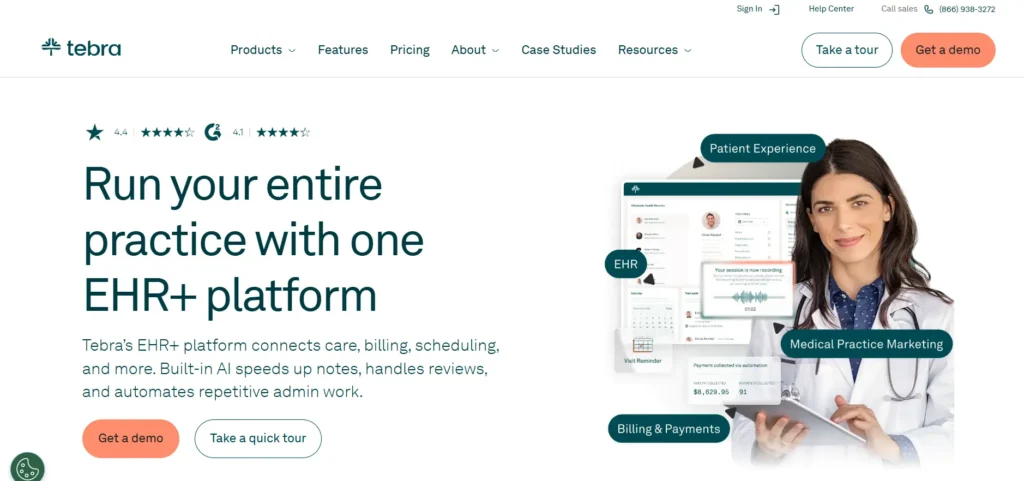
Kareo, a patient-management technology, patient management software, practice-management technology is designed specifically to meet the needs of small and midsize independent medical practices, and is a combination of electronic health records (EHR), scheduling, billing, and patient-engagement tools on one platform to simplify workflows and reduce the number of administrative tasks. It will enable the providers to do appointments, claims, and end-to-end patient record reviews.
Key features:
- Patient charts, medical history, allergies, and medications 2. Cloud-based EHR.
- online appointment booking and appointment reminders to decrease no-shows.
- ICD-10-based integrated medical billing and claims management.
- Secured access to patient records, laboratory results, and messaging.
- Registration, workflow coordination, and reporting practice-management tools.
- Equipment for telemedicine-like visits and virtual house calls.
Pros:
- Single system (EHR, billing, scheduling) of a small practice.
- On-the-cloud, as such, it is everywhere that there is the internet.
- Effective patient-interaction tools and an alert system.
- Developed to fit the needs of independent outpatient practices.
Cons:
- There is no transparent pricing, and it can be expensive even for very small clinics.
- Certain users complain of minimal mobile-app functionality.
- Learning curve and periodic struggle with niche working processes.
Price:
- quoted on request
12. Health Gennie
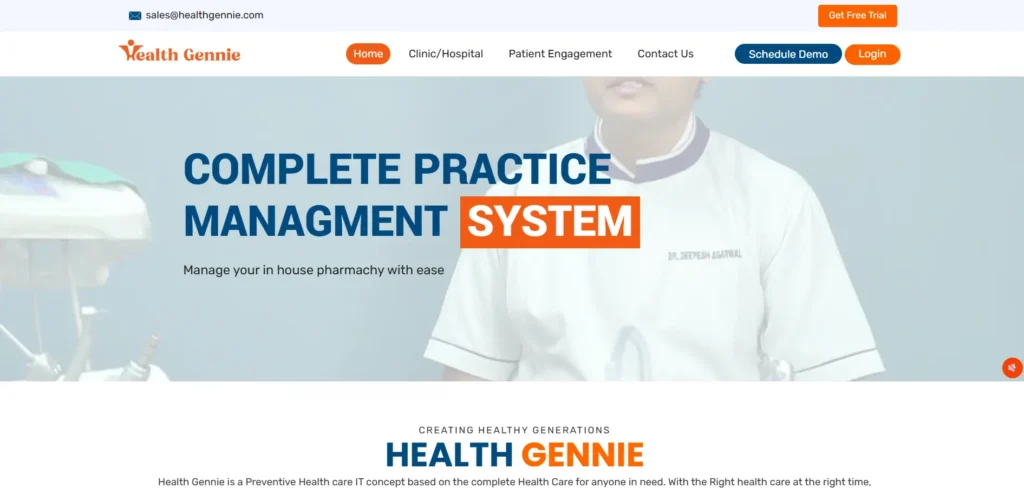
Website: https: // doc.healthgennie.com
Health Gennie is a complex patient care and administrative hospital and clinic software that provides both cloud and offline deployment, as well as efficient patient care. Designed by FitKid Health Tech Private Ltd., it simplifies OPD/IPD operations, pharmacy, lab/radiology operations, billing, inventory, and patient interactions with the help of digital prescriptions, EMR, and communication systems, such as SMS/email.
Key Features:
- Enrolling patients and booking an appointment with a reminder.
- Computerized prescriptions and Electronic Health Records (EMR/EHR).
- Billing, inventory, pharmacy, lab H, and radiology.
- Integration of Doctor/nurse/ward/OT management and insurance.
- Patient portal, telemedicine, reporting/analytics, and mobile app.
- SMS/email alerts, feedback, and role access.
Pros:
- Customizable for workflows.
- Free trial available.
- Multi-platform (online/offline/mobile).
- Powerful patient interaction instruments.
Cons:
- Prices fluctuate; inquire about a price.
- A small number of reviews on scalability by the community.
- The costs of potential customization are extra.
Pricing:
- contact the vendor to be quoted. Free trial offered.
Comparision Table
| Software | Key Strengths | Main Weaknesses | Pricing (per provider/month unless noted) |
| Epic Systems | Interoperability, patient portal (MyChart), analytics | Expensive, steep learning curve | NA |
| eClinicalWorks | Telehealth, AI features, patient engagement | Interface glitches, learning curve | EHR: $449; EHR+PM: $599 |
| NextGen Healthcare | AI note generation, RCM, customization | Custom pricing, learning curve | Customized quotes |
| Athenahealth | Network insights, reporting, and telehealth | No transparent pricing, no free trial | NA |
| AdvancedMD | Mobile access, ambient listening, RCM | High costs, customization curve | Available upon request |
| DrChrono | Mobile apps, high claims accuracy, and telehealth | Quote-based, billing complexity | Custom/quote-based |
| RXNT | Affordable, e-prescribing, patient portal | Limited reporting, support delays | Full Suite: $319; PM: $207; EHR: $118 |
| Pabau | Scheduling, marketing tools, HIPAA compliance | Per-user pricing, learning curve | ~$59-$69 per user |
| Practice Flow | Functional medicine focus, automation | Niche (not general), contact for price | Starter: €0; Beginner: €49; up to €249 |
| Practo Ray | Multi-location, EMR, telemedicine | Limited SMS languages, Prime-only booking | Varies by plan |
| Kareo | All-in-one for small practices, reminders | No transparent pricing, mobile limits | Quoted on request |
| Health Gennie | Multi-platform, free trial, customizable | Scalability concerns, extra customization costs | Contact vendor (free trial) |
Conclusion
Choosing the most appropriate patient management software such as Epic Systems, eClinicalWorks, or the India-friendly ones like Practo Ray and Health Gennie, all depends on the size of your clinic, budget, and the requirements, such as the ability of high-level EHR to be used in large hospitals or the ability to afford very affordable cloud-based software to manage the processes of scheduling, billing, telehealth, and patient portals.
The solutions will turn the hectic processes into productive ones, reduce mistakes, save money, increase patient satisfaction with a reminder and the self-service, and allow you to work on the care, not on the document. Begin by trying free of charge the scalability of such platforms as RXNT or Pabau to find your ideal match and improve your practice today.
FAQs
Q1. What Is Patient Management Software?
Patient management tools is a digital tool used by healthcare providers to manage patient records, appointments, billing, and medical data efficiently in one system.
Q2. Why Do Clinics Need It?
Clinics need it to efficiently manage patient data, appointments, billing, and daily operations, improving accuracy, saving time, and enhancing patient care.
Q3. What Are The Most Important Features To Consider?
The most important features to consider are ease of use, scalability, integration options, security, customization, automation, and reliable customer support.
Q4. Is It Able To Cope With Large Numbers Of Patients?
Yes, it is capable of coping with large numbers of patients. The system is designed to handle high volumes efficiently by automating processes, organizing patient data, and enabling quick access to information. This helps reduce delays, improves workflow, and ensures that patient care remains smooth even during peak times.
Q5. Does It Support Telehealth?
Yes, it supports telehealth, allowing patients and healthcare providers to connect remotely through features like video consultations, online appointments, and digital communication tools.
