

You might only get two honest answers when you ask ten people which bank is the largest in the country. State Bank of India (SBI) is the largest bank in India by balance sheet, with an asset size of ₹ 76.23 lakh crore as of 31 March 2026. However, on the stock market, HDFC Bank has the top spot with a market capitalization of approximately ₹10.87 lakh crore as of 13th October 2026, which is higher than ICICI Bank and SBI. So, the term “biggest” is subjective, depending on which measure is used: assets, market value, branches or customers.
In this guide, we break down every yardstick, rank the top 10 banks with skewed data and sources, compare SBI with HDFC Bank and give reasons why they are constantly changing ranks. It is written in plain English, making it easy for students, depositors and investors to follow.
Quick Answer: Which Is the Largest Bank in India?
| Metric | Largest bank | Runner-up | Figure | Source | As-of date |
| Total assets | SBI | HDFC Bank | ₹76.23 lakh crore vs ₹43.65 lakh crore | SBI FY26 results; HDFC Bank Form 6-K | 31 Mar 2026 |
| Market capitalisation | HDFC Bank | ICICI Bank | ₹10.87 lakh crore vs ₹9.62 lakh crore (SBI is third at ₹8.69 lakh crore) | Tapetide (NSE/BSE data) | 13 Oct 2026 |
| Branches | SBI | Punjab National Bank | About 23,265 vs 10,324 | SBI FY26 data; GlobalData (PNB) | 31 Mar 2026 |
| Employees | SBI | HDFC Bank | 2,45,131 vs 2,11,178 | SBI FY26 data; HDFC Bank Form 6-K | 31 Mar 2026 |
| Largest private bank (assets and market cap) | HDFC Bank | ICICI Bank | ₹43.65 lakh crore assets; ₹10.87 lakh crore market cap | HDFC Bank Form 6-K; Tapetide | Mar 2026 / 13 Oct 2026 |
| Largest public sector bank | SBI | Punjab National Bank | ₹76.23 lakh crore vs ₹20.33 lakh crore assets | SBI FY26 results; GlobalData | 31 Mar 2026 |
Largest Bank in India by Total Assets
The size of a bank’s balance sheet is represented by total assets: loans, investments, cash and so on. In this aspect, SBI is the biggest bank in India with a wide margin. In FY2026, its total assets were ₹76.23 lakh crore, increasing by approximately 6.4% from the last quarter, while its total business surpassed ₹109 lakh crore.
HDFC Bank is followed by ₹43.65 lakh crore (standalone), and ICICI Bank is at the third spot with consolidated funds of ₹29.14 lakh crore. SBI’s balance sheet is almost 1.75 times that of HDFC Bank in simple terms. This scale is the result of deposits of ₹59.8 trillion and advances of ₹49.3 trillion, across seven decades and one great merger.
Largest Bank in India by Market Capitalisation
The share price times the number of shares is the stock market’s valuation of a bank, known as market capitalisation. In this measure, HDFC Bank has the largest number with approximately ₹10.87 lakh crore on 13 October 2026. ICICI Bank is in second place with ₹9.62 lakh crore, and SBI is third with ₹8.69 lakh crore.
Why is the asset value of SBI greater than its market value? Investors pay more for a bank that has a higher profit margin, a faster growth rate and cleaner loans. The market capitalization also fluctuates daily. HDFC Bank dropped by approximately 26% in January-March 2026 but retained the top spot, while SBI briefly touched the ₹10 trillion mark in July 2026.
Also Read: Private Banks in India
Largest Private Bank vs Largest Public Sector Bank
| Parameter | Largest private bank: HDFC Bank | Largest public sector bank: SBI |
| Total assets | ₹43.65 lakh crore (standalone, 31 Mar 2026) | ₹76.23 lakh crore (31 Mar 2026) |
| Market cap | ₹10.87 lakh crore (13 Oct 2026) | ₹8.69 lakh crore (13 Oct 2026) |
| Branches | 9,689 (31 Mar 2026) | About 23,265 (31 Mar 2026) |
| ATMs / cash machines | 21,172 | 64,245 (including deposit-withdrawal machines) |
| Employees | 2,11,178 | 2,45,131 |
| Net profit, FY26 | ₹74,671 crore (standalone) | ₹80,032 crore |
| Gross NPA | 1.15% | 1.49% |
| Ownership | Widely held private shareholders | Government of India holds about 55.5% |
Top 10 Banks in India (Table)
| Rank | Bank | Sector (PSU/Private) | Total assets | Market cap | Branches | Source/date |
| 1 | State Bank of India | PSU | ₹76.23 lakh crore | ₹8.69 lakh crore | ~23,265 | SBI FY26 results; Tapetide, 13 Oct 2026 |
| 2 | HDFC Bank | Private | ₹43.65 lakh crore | ₹10.87 lakh crore | 9,689 | HDFC Bank Form 6-K, Mar 2026; Tapetide |
| 3 | ICICI Bank | Private | ₹29.14 lakh crore (consolidated) | ₹9.62 lakh crore | 7,511 | ICICI Bank Q4 FY26 review; Tapetide |
| 4 | Punjab National Bank | PSU | ₹20.33 lakh crore | ~₹1.35 lakh crore | 10,324 | GlobalData, Mar 2026; market cap 14 Aug 2026 |
| 5 | Bank of Baroda | PSU | ₹20.19 lakh crore | ~₹1.28 lakh crore | 8,000+ (approx.) | Mar 2026 balance sheet; market cap 14 Aug 2026 |
| 6 | Axis Bank | Private | ₹19.46 lakh crore | ₹3.90 lakh crore | ~6,275 | Axis Bank, Mar 2026; Tapetide |
| 7 | Canara Bank | PSU | ₹18.83 lakh crore | ~₹1.19 lakh crore | 9,500+ (approx.) | Mar 2026 balance sheet; market cap 14 Aug 2026 |
| 8 | Union Bank of India | PSU | ₹15.88 lakh crore | ₹1.31 lakh crore | 8,697 | Mar 2026 balance sheet; Tapetide |
| 9 | Bank of India | PSU | ₹11.65 lakh crore | ₹0.61 lakh crore | 5,000+ (approx.) | Mar 2026 balance sheet; Tapetide |
| 10 | Kotak Mahindra Bank | Private | ₹10.03 lakh crore | ₹4.41 lakh crore | ~2,456 | Kotak FY26 filing; Tapetide |
Top 10 Largest Bank in India
1. State Bank of India (SBI)
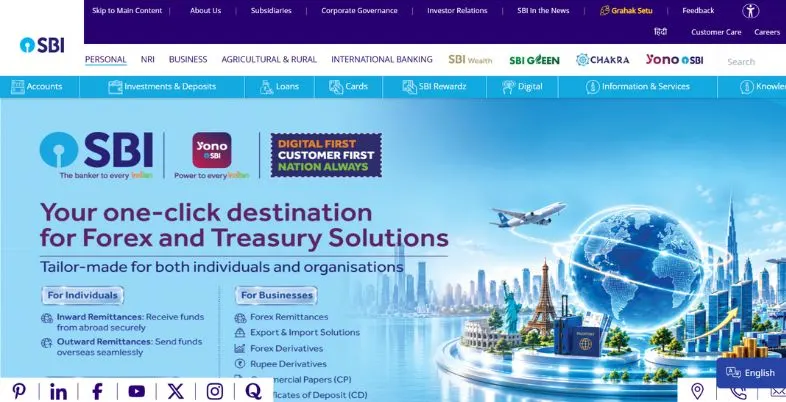
| Detail | Information |
| Name, sector | State Bank of India, Public sector |
| Founded | 1955 (roots go back to 1806) |
| HQ | Mumbai |
| Total assets | ₹76.23 lakh crore (FY2026, SBI results) |
| Market cap | ₹8.69 lakh crore (13 Oct 2026) |
| One-line note | The biggest lender in the country, with 50+ crore customers |
| Number of branches | ~23,265 |
| Number of ATMs | 64,245 (including deposit-withdrawal machines) |
| Number of employees | 2,45,131 |
| Number of cash recyclers | Included in the ATM/ADWM count above |
| Website | http://www.sbi.co.in |
SBI has over 50 crore customers and has an extensive business-correspondent network of more than 80,000 and a branch network of about 23,000. For FY26, it recorded a net profit of ₹80,032 crore, as advances have increased by 16.9% and deposits have increased by 11.0%. Net NPA remained low at 0.39%, indicating good quality of loans. It has achieved 10 crore registered users via its YONO app and is looking to open up to 250 new branches and recruit approximately 12,000 staff in FY27.
Reach is the specialty of SBI. It is in almost every village in the Himalayas and metros, and is the lifeline of government initiatives like Jan Dhan accounts, and is the only bank in the village with 156 million accounts opened by its business correspondents. In addition, it has 241 offices in 29 countries. It means trust for depositors, accessibility and a vast ATM network.
2. HDFC Bank

| Detail | Information |
| Name, sector | HDFC Bank Limited, Private |
| Founded | 1994 |
| HQ | Mumbai |
| Total assets | ₹43.65 lakh crore, standalone (31 Mar 2026, Form 6-K) |
| Market cap | ₹10.87 lakh crore (13 Oct 2026) |
| One-line note | The most valuable bank on the stock market |
| Number of branches | 9,689 (9,694 by June 2026) |
| Number of ATMs | 21,172 |
| Number of employees | 2,11,178 |
| Number of cash recyclers | Included in ATM count (cash-deposit and withdrawal machines) |
| Website | http://www.hdfcbank.com |
HDFC Bank has soared since the merger with its parent company, HDFC Ltd, in 2023. The total deposits increased by 14.4% to ₹31.05 lakh crore in March 2026, while the gross advances grew by 12% to ₹29.6 lakh crore. Its capital adequacy ratio of 19.7% is well above the 11.9% requirement, and gross NPA is just 1.15%. The standalone profit for FY26 jumped nearly 11% to ₹74,671 crore.
The bank’s niche focuses on its retail business and technology. Approximately half of its branches are located in semi-urban and rural areas, and it provides services to 4,175 cities and towns. It has also launched Neev, an in-house generative AI platform. Their vast portfolio includes savings accounts, home loans, credit cards, and much more, all served by a seamless digital process.
3. ICICI Bank
| Detail | Information |
| Name, sector | ICICI Bank Limited, Private |
| Founded | 1994 (bank); parent ICICI founded 1955 |
| HQ | Mumbai |
| Total assets | ₹29.14 lakh crore, consolidated (31 Mar 2026) |
| Market cap | ₹9.62 lakh crore (13 Oct 2026) |
| One-line note | The second most valuable bank, with the cleanest loan book among big banks |
| Number of branches | 7,511 (March 2026) |
| Number of ATMs | 12,087 (ATMs and cash recycling machines) |
| Number of employees | ~1,24,029 |
| Number of cash recyclers | Included in the ATM figure above |
| Website | http://www.icici.bank.in |
ICICI Bank is the largest bank in India after HDFC Bank with a rapid growth. Total loans rose 15.8% to ₹15.54 lakh crore and deposits grew 11.4% to ₹17.95 lakh crore in FY26. Net NPA was only 0.33%. It opened 528 new branches in just one year and in July 2026, it even surpassed TCS for the first time since 2009.
It has a specialty of a “universal bank” model. Group companies offer their customers banking, insurance, mutual funds and securities and housing finance services all in one place. The rural loan proportion surged up 25.6% in FY26, reflecting a shift from the urban to the rural side. It has an iMobile application and instant electronic services, which are popular with younger, tech-savvy customers.
4. Punjab National Bank (PNB)

| Detail | Information |
| Name, sector | Punjab National Bank, Public sector |
| Founded | 1894 |
| HQ | New Delhi |
| Total assets | ₹20.33 lakh crore (31 Mar 2026) |
| Market cap | ~₹1.35 lakh crore (14 Aug 2026) |
| One-line note | The second largest PSU bank by branches and business |
| Number of branches | 10,324 domestic (10,359 by June 2026) |
| Number of ATMs | 11,065 |
| Number of employees | ≈1,00,000 |
| Number of cash recyclers | Included in ATM count |
| Website | http://www.pnbindia.in |
PNB is on the verge of becoming a global business, as it plans to reach the mark of ₹30 lakh crore by 30 June 2026 with an increase of 10.3% in a year. Gross NPA reduced to 2.78% from 3.78% a year ago and the profit for Q1 FY27 increased more than three times to ₹5,253 crore. The lender is a quick improver in terms of better recoveries and an almost 13% credit growth.
PNB’s claim to fame is its deep roots in the semi-urban and rural areas, where roughly 63% of the branches are found. It is India’s first Swadeshi bank, established in 1894 and has a very good reputation in North India. It also has branches in international zones of Dubai, such as Dubai International Financial Centre (DIFC) and GIFT City and provides farmers, small traders and MSMEs with dedicated loans.
5. Bank of Baroda (BoB)
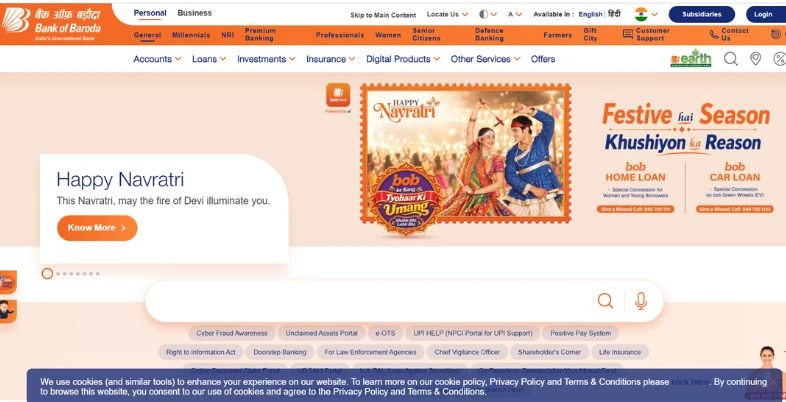
| Detail | Information |
| Name, sector | Bank of Baroda, Public sector |
| Founded | 1908 |
| HQ | Vadodara (corporate office in Mumbai) |
| Total assets | ₹20.19 lakh crore (31 Mar 2026) |
| Market cap | ~₹1.28 lakh crore (14 Aug 2026) |
| One-line note | Strong international presence among PSU banks |
| Number of branches | 8,000+ (approx.) |
| Number of ATMs | ≈9,000+ |
| Number of employees | ≈80,000 |
| Number of cash recyclers | Included in ATM count |
| Website | http://www.bankofbaroda.in |
Bank of Baroda crossed ₹20 lakh crore in total assets in FY26, with deposits of ₹16.48 lakh crore. Shareholder funds grew to ₹1.53 lakh crore from ₹1.37 lakh crore a year ago, providing it with a larger buffer to provide loans. Total income grew to ₹1.43 lakh crore during FY26, and the combined effect of the merger with Vijaya Bank and Dena Bank continues to provide a scale advantage.
It has the speciality of having an overseas network, which is not available in many Indian banks, and has branches and subsidiaries in various countries. This enables NRIs & Exporters to avail smooth cross-border services. It also provides modern mobile banking through its “bob World” digital platform, retaining the trust that users have in a government-owned bank.
6. Axis Bank
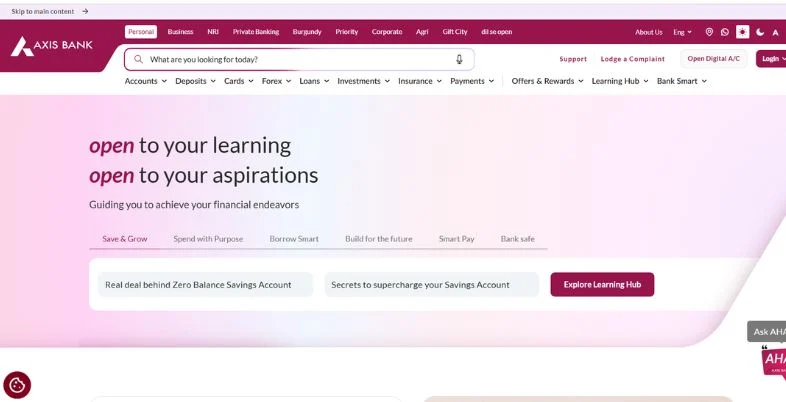
| Detail | Information |
| Name, sector | Axis Bank Limited, Private |
| Founded | 1993 (as UTI Bank; renamed Axis Bank in 2007) |
| HQ | Mumbai |
| Total assets | ₹19.46 lakh crore (2026) |
| Market cap | ₹3.90 lakh crore (13 Oct 2026) |
| One-line note | Third largest private bank by assets |
| Number of branches | ~6,275 (March 2026) |
| Number of ATMs | ≈15,000 (ATMs and cash recyclers) |
| Number of employees | ~1,01,300 |
| Number of cash recyclers | Included in ATM figure |
| Website | http://www.axis.bank.in |
With a 3rd position in assets among the largest banks in India, Axis Bank is a major contender in the race. Total assets stood at ₹19.46 lakh crore in 2026, revenues at ₹1.62 lakh crore, and net income at ₹26,385 crore. Total equity is at ₹2.13 lakh crore, with ample room to grow in corporate and retail loans.
Its forte is corporate banking, retail loans, credit cards and wealth management, with its subsidiaries such as Axis Mutual Fund, Axis Capital and Axis Securities. Axis has a reputation for being an innovator within the digital space and became an early launch partner for a new payments initiative in September 2026.
7. Canara Bank

| Detail | Information |
| Name, sector | Canara Bank, Public sector |
| Founded | 1906 |
| HQ | Bengaluru |
| Total assets | ₹18.83 lakh crore (31 Mar 2026) |
| Market cap | ~₹1.19 lakh crore (14 Aug 2026) |
| One-line note | A southern powerhouse with a large branch network |
| Number of branches | 9,500+ (approx.) |
| Number of ATMs | ≈10,000+ |
| Number of employees | ≈85,000 |
| Number of cash recyclers | Included in ATM count |
| Website | http://www.canarabank.com |
Canara Bank’s deposits increased by almost 10% to ₹15.69 lakh crore in March 2026 from ₹14.30 lakh crore in the same month of the previous year. Shareholders’ funds rose over ₹1.13 lakh crore while total income for FY26 reached ₹1.53 lakh crore. The other income has increased from ₹22,453 crore to ₹26,838 crore, indicating higher than routine lending income.
The bank’s specialty is its stronghold in South India and a wide range of retail, agriculture and MSME loans. Its asset management and insurance subsidiaries like Canara Robeco and Canara HSBC Life provide customers with one-stop financial solutions. It provides government insurance and regular dividend history for the depositors.
8. Union Bank of India
| Detail | Information |
| Name, sector | Union Bank of India, Public sector |
| Founded | 1919 |
| HQ | Mumbai |
| Total assets | ₹15.88 lakh crore (31 Mar 2026) |
| Market cap | ₹1.31 lakh crore (13 Oct 2026) |
| One-line note | Strong post-merger PSU bank with improving margins |
| Number of branches | 8,697 |
| Number of ATMs | 8,656 |
| Number of employees | ~57,960 |
| Number of cash recyclers | Included in ATM count |
| Website | http://www.unionbankofindia.bank.in |
Union Bank, whose total assets were ₹15.11 lakh crore in March, increased its assets to ₹15.88 lakh crore in March 2026. It was one of only a handful of banks that continued to increase their market value during the January-March 2026 period, and the government holds approximately 74.8% of its ownership, providing it with a solid ownership structure. It has attained the scale it has today by its merger with Andhra Bank and Corporation Bank.
Its strength lies in its pan-India network that spans 29 states and 5 union territories and is dedicated to MSMEs with its “Union MSME First” branches. It also conducts digital banking activities and provides an aggressive product line of home, car and school loans.
9. Bank of India
| Detail | Information |
| Name, sector | Bank of India, Public sector |
| Founded | 1906 |
| HQ | Mumbai |
| Total assets | ₹11.65 lakh crore (31 Mar 2026) |
| Market cap | ₹0.61 lakh crore (13 Oct 2026) |
| One-line note | An old bank with a global footprint and falling NPAs |
| Number of branches | 5,000+ (approx.) |
| Number of ATMs | ≈5,000+ |
| Number of employees | ≈50,000 |
| Number of cash recyclers | Included in ATM count |
| Website | http://www.bankofindia.co.in |
Bank of India is a good name in the list of the largest banks in India, and ranks 9th in terms of assets. Deposits grew 13.56% to ₹9.27 lakh crore, and gross advances rose 15.82% to ₹7.71 lakh crore in FY26. Cleaner books led to a fall in the net NPA to 0.51%, compared with 0.75% a year ago, by June 2026.
One of the oldest overseas networks among Indian banks, the bank’s specialty is its overseas business of ₹2.44 lakh crore. Ordinary borrowers and small firms are enjoying faster credit flows as retail credit grew 21% and MSME credit grew 17.7% in FY26.
10. Kotak Mahindra Bank
| Detail | Information |
| Name, sector | Kotak Mahindra Bank Limited, Private |
| Founded | 1985 (as Kotak Capital; banking licence in 2003) |
| HQ | Mumbai |
| Total assets | ₹10.03 lakh crore (31 Mar 2026) |
| Market cap | ₹4.41 lakh crore (13 Oct 2026) |
| One-line note | Premium private bank with a high CASA ratio |
| Number of branches | ~2,456 (RBI data) |
| Number of ATMs | 2,727 (ATMs and cash recyclers) |
| Number of employees | 1 lakh+ (approx.) |
| Number of cash recyclers | Included in ATM count |
| Website | http://www.kotak.bank.in |
Kotak Mahindra Bank has 5.2 crore customers and its CASA ratio is 43.3%, one of the highest among the big banks, which helps it keep its cost of funds low. Net advances rose by 16% to ₹4.96 lakh crore while gross NPA stood at 1.20%. The total assets increased by approximately 14% during FY26 to reach ₹10.03 lakh crore.
It has its specialization as a full financial group, which includes banking, mutual funds (₹5.55 lakh crore AUM in domestic MFs) insurance, broking, wealth management and investment banking. It’s known for offering high-quality services and digital platforms that are appreciated by its customers. This bank has fewer branches than its rivals, but has a market cap of ₹4.41 lakh crore, making it the fourth largest of Indian banks.
SBI vs HDFC Bank: Side-by-Side Comparison
| Parameter | SBI | HDFC Bank | Winner |
| Sector | Public | Private | n/a |
| Total assets (Mar 2026) | ₹76.23 lakh crore | ₹43.65 lakh crore | SBI |
| Market cap (13 Oct 2026) | ₹8.69 lakh crore | ₹10.87 lakh crore | HDFC Bank |
| Deposits | ~₹59.8 lakh crore | ₹31.05 lakh crore | SBI |
| Advances | ~₹49.3 lakh crore | ₹29.6 lakh crore (gross) | SBI |
| Net profit, FY26 | ₹80,032 crore | ₹74,671 crore | SBI |
| Gross NPA | 1.49% | 1.15% | HDFC Bank |
| Capital adequacy ratio | 15.40% | 19.7% | HDFC Bank |
| Branches | ~23,265 | 9,689 | SBI |
| ATMs / cash machines | 64,245 | 21,172 | SBI |
| Employees | 2,45,131 | 2,11,178 | SBI |
| Share price (13 Oct 2026) | ₹941 (up 6.6% in 1 year) | ₹704.90 (down 27.9% in 1 year) | SBI (1-year return) |
| Price-to-earnings | 10.1 | 13.7 | n/a |
Why Rankings Differ: Assets vs Market Cap vs Customers
The size of the largest bank in India depends on the yardstick used. The table lists each measure and its story.
| Measure | What it counts | Leader (2026) | Why it differs |
| Total assets | Everything the bank owns: loans, investments, cash | SBI | Huge deposit base and government-backed reach |
| Market cap | Share price × number of shares | HDFC Bank | Investors reward higher growth, lower risk and stronger capital |
| Branches | Physical outlets | SBI | Presence in rural and remote areas |
| Customers | Number of account holders | SBI (50+ crore) | Jan Dhan, pensions and government payments |
| Profit | Net earnings in the year | SBI (₹80,032 crore) | Scale of lending and low credit costs this year |
| Efficiency and asset quality | NPAs, capital ratio, return on assets | HDFC Bank / ICICI Bank | Private banks often run leaner operations |
Domestic Systemically Important Banks (D-SIBs) in India
- D-SIBs are banks that are deemed “too big to fail” because if they fail, the entire economy can fall apart.
- RBI releases the list each year and requests these banks to maintain additional capital.
- SBI, HDFC Bank and ICICI Bank are the three existing D-SIBs.
- As a large bank, SBI has the highest additional capital requirement of the three banks.
- D-SIBs are subject to stronger oversight, which bolsters the confidence of depositors.
- Please visit the RBI website for the updated list as the classification is periodically updated.
How Does India’s Largest Bank Compare Globally?
- The total net assets of SBI are approximately US$ 0.8 trillion as per the list of the world’s largest banks by asset value and exchange rate.
- The largest bank in India is still a mid-sized bank compared to the giants of the world, like the biggest Chinese and US banks, which are several times larger.
- On a market value basis, SBI has a valuation of about US$ 90 billion, while HDFC Bank has a valuation of about US$ 110 billion (approximate conversions).
- HDFC Bank has also made its way into the list of top 100 banks worldwide based on total assets.
- SBI is one of the largest banks in the world with a customer base of more than 50 crore.
- SBI has overseas branches in 29 countries with 241 branches.
How Often Does This Ranking Change?
- Market cap ranks: These are subject to change in a day. SBI surpassed ICICI Bank to take the second position in early April 2026 and ICICI came back to the second position by October 2026.
- Ranking of assets: changes slowly, typically at the end of each year when annual results are published in April and May.
- Quarterly results: The middle of the table may be shuffled in July, October, January and April.
- Mergers: cause the biggest jumps. The merger of HDFC Bank with HDFC Ltd elevated it to the second largest bank in the country.
- Stock prices: They change based on interest rates, budget announcements and global markets, so that the market cap is the most dynamic ranking.
- Rule of Thumb: SBI has been the leader by assets for decades and the market cap can be transferred from HDFC Bank to ICICI Bank and back to SBI.
Conclusion
So then who is the largest? SBI is the undisputed leader in all categories (assets, branches, customers, employees and profit), while HDFC Bank is the top performer in the stock market in terms of market capitalisation. ICICI Bank is another good contender, and public sector banks like PNB, Bank of Baroda and Canara Bank have assets of over ₹18 lakh crore each.
When the next time someone asks you what the largest bank in India is, you can answer with the yardstick: assets – SBI, market value – HDFC Bank. The figures vary from quarter to quarter, so always take the latest information before making any investment or opening an account. This article is not intended to be investment advice.
Also Read:
FAQs
What is the name of the biggest bank in India?
SBI is the largest bank in India in terms of total assets (₹76.23 lakh crore), branches and customers. The market cap of HDFC Bank is the highest.
Which bank in India is the largest private bank?
HDFC Bank’s asset size is at ₹43.65 lakh crore and its market capitalisation is around ₹10.87 lakh crore. ICICI Bank is second.
Which one is larger, SBI or HDFC bank?
SBI is larger in terms of assets, deposits, branches and profits. The value of its stocks is higher in the stock market.
Which is the biggest public sector bank in India?
SBI. The next biggest PSU banks in terms of assets are Punjab National Bank and Bank of Baroda.
What is SBI’s rank in the world?
SBI is typically one of the top 50 banks in the world based on total assets, which are approximately US$ 0.8 trillion.
What is the meaning of D-SIBs in India?
Domestic Systemically Important Banks are banks that are so large that the failure of such banks could cause a shake in the economy. The RBI identifies SBI, HDFC Bank and ICICI Bank as its new ‘defaulters’, demanding additional capital.
