
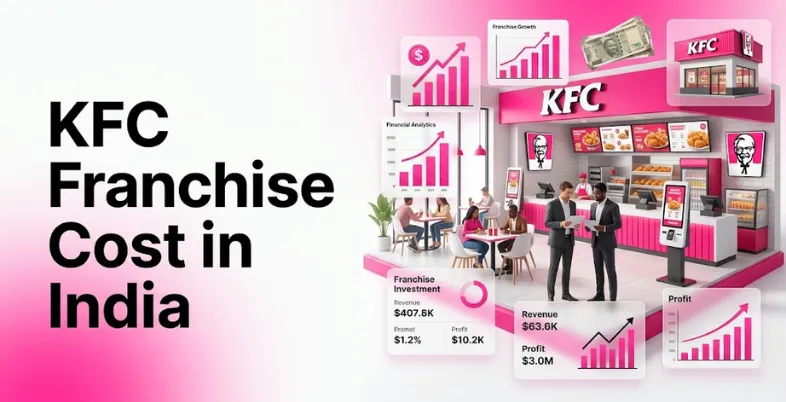
India’s quick-service restaurant (QSR) market has been growing at a strong pace, expanding at an estimated 8–10% CAGR over the past few years, driven by rising urbanization, higher disposable incomes, and increasing demand for global food brands. Among international fast-food chains, KFC stands out with its strong brand recall and presence in over 300+ cities across India, serving millions of customers every month through dine-in, delivery, and drive-thru formats.
The franchise model of KFC is considered one of the more structured and premium opportunities in the food business sector, but it also comes with significant investment requirements, strict operational standards, and location-based performance expectations. Industry estimates suggest that a single outlet can serve anywhere between 500 to 1,500+ customers daily, depending on the location, making it a high-volume business when positioned correctly.
Understanding the KFC Franchise Cost in India is essential for any investor, as it includes franchise fees, setup costs, equipment, and operational investments that together define the total entry barrier into this globally recognized fast-food network.
About KFC
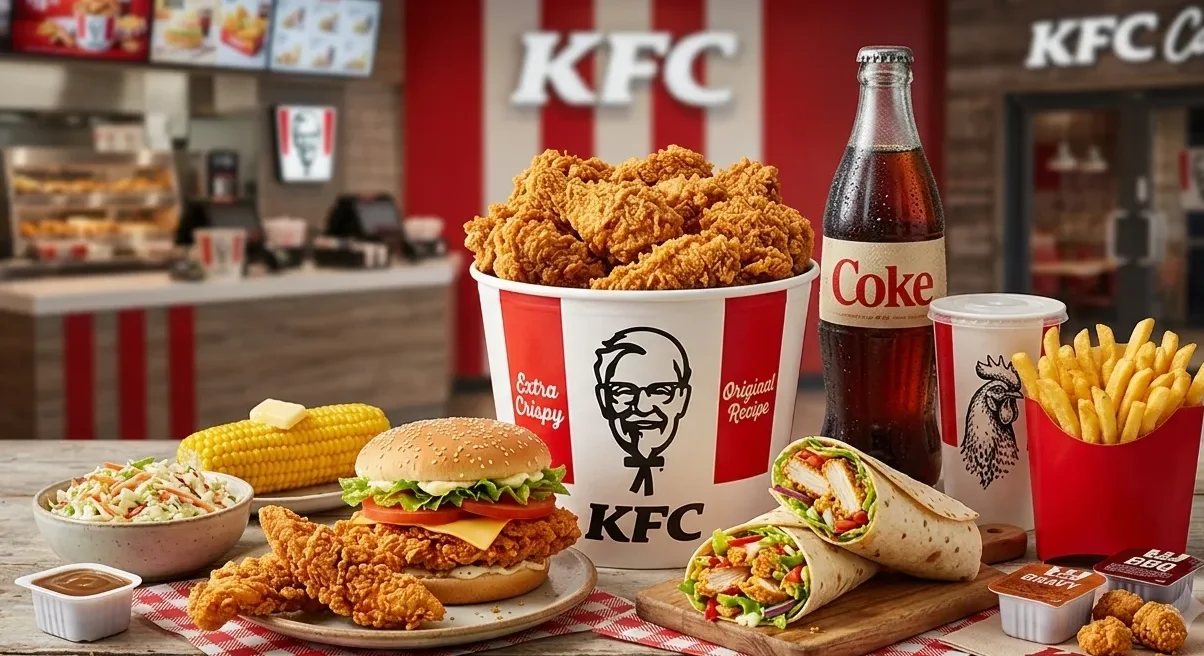
Founded by Colonel Harland Sanders, KFC (Kentucky Fried Chicken) is one of the world’s largest quick-service restaurant (QSR) brands, specializing in fried chicken, burgers, wraps, rice bowls, and snacks. Operating in more than 150 countries, KFC has built its reputation around its Original Recipe chicken, prepared using a blend of 11 herbs and spices. Owned by Yum! Brands, KFC has evolved from a single roadside restaurant into a global fast-food powerhouse serving millions of customers every day.
KFC entered India in 1995 and has since become one of the country’s most recognized international food brands. Despite initial challenges, the company expanded rapidly by adapting its menu to local tastes and introducing affordable meal options. Today, KFC’s growth is driven primarily through franchise partners such as Devyani International and Sapphire Foods, which operate hundreds of outlets across major cities and emerging markets. Recent industry consolidation has further strengthened KFC’s presence in India.
India’s QSR market industry is among the fastest-growing segments of the food service market, fueled by urbanization, rising disposable incomes, online food delivery, and changing consumer lifestyles. Within this highly competitive market, KFC plays a significant role as one of the leading chicken-focused QSR chains, competing with both international and domestic brands. Its strong brand recognition, extensive store network, and continued expansion strategy have helped KFC remain a major contributor to the growth and modernization of India’s organized fast-food sector.
Why Invest in a KFC Franchise?
Investing in a KFC franchise offers entrepreneurs the opportunity to partner with one of the world’s most recognized fast-food brands. Its established business model, loyal customer base, and strong market presence can help reduce many of the challenges associated with starting an independent restaurant business.
- Strong Global Brand Recognition: KFC enjoys worldwide popularity and trust. Customers already know the brand, reducing marketing challenges and attracting consistent footfall.
- Proven Business Model: The company provides a tested operational framework. Franchisees benefit from established processes, reducing uncertainty and improving efficiency.
- High Consumer Demand: Fried chicken remains highly popular among Indian consumers. Growing urbanization and changing lifestyles continue driving demand for QSR brands.
- Comprehensive Training Support: KFC offers extensive training programs for owners and staff. This helps maintain service quality and operational consistency.
- Powerful Marketing Assistance: National and regional advertising campaigns increase brand visibility. Franchisees benefit from professional marketing without managing campaigns independently.
- Efficient Supply Chain Network: KFC’s established supply chain ensures consistent ingredient quality. Reliable sourcing helps maintain food standards and operational continuity.
- Scalability and Growth Potential: Successful franchisees may explore expansion opportunities. Multiple outlet ownership can increase revenue and strengthen long-term business growth.
- Competitive Advantage in QSR Industry: KFC’s strong reputation, innovation, and customer loyalty provide advantages over many independent restaurants and emerging competitors.
Is KFC Offering Franchise Opportunities in India in 2026?
As of 2026, KFC is not actively offering individual franchise opportunities to most entrepreneurs in India. Instead, the brand primarily operates through a master franchise model, where large companies manage and expand KFC outlets on behalf of Yum! Brands. The two major operators have been Devyani International and Sapphire Foods, which together run hundreds of KFC restaurants across the country.
For aspiring investors, this means you generally cannot apply for a single KFC outlet franchise the way you might with many other food brands. KFC’s expansion strategy focuses on experienced multi-unit operators, large corporate partners, and investors with substantial financial resources and retail expertise. Opportunities, if available, are highly selective and typically involve long-term expansion commitments rather than standalone stores.
Adding to this trend, a major 2026 development was the proposed merger of Devyani International and Sapphire Foods, which would create a single large franchisee managing KFC and Pizza Hut operations across India. This further indicates that KFC’s Indian expansion is increasingly concentrated among large institutional operators rather than individual franchise owners.
KFC Franchise Models in India — Which Format Suits You?

Different KFC outlet formats are designed to serve different markets, customer behaviors, and investment capacities. From large dine-in restaurants to compact delivery-focused kitchens, each model offers unique advantages. Understanding these formats can help investors evaluate which setup aligns best with their budget, location, and business objectives.
1. Dine-In Restaurant Model
This is the most common and traditional KFC format. It includes full seating capacity, kitchen setup, counter service, and sometimes drive-thru (in select locations). These outlets are usually placed in high-traffic areas like malls, commercial streets, or highways.
Best for: Investors looking for long-term, high-volume business.
Investment level: High, due to large space and full infrastructure.
2. Food Court / Mall Outlet Model
These outlets are smaller and operate inside shopping malls, multiplexes, or commercial food courts. They focus mainly on quick service and take-away rather than seating.
Best for: Moderate investment investors targeting steady mall footfall.
Investment level: Medium, with lower setup cost compared to dine-in stores.
3. Drive-Thru Model
This is a high-revenue format located on highways, expressways, or busy road networks. Customers order and pick up food without leaving their vehicles. It requires larger land parcels and strategic location planning.
Best for: High-budget investors focusing on premium locations and high ticket sizes.
Investment level: Very high, but strong revenue potential.
4. Delivery-First / Compact Outlet Model
This newer format is designed mainly for online orders via Swiggy, Zomato, and KFC’s own delivery system. It requires minimal seating space and focuses on kitchen efficiency.
Best for: Investors targeting urban dense areas with strong delivery demand.
Investment level: Lower compared to traditional outlets.
Which Format Should You Choose?
If you want brand visibility and long-term scale, dine-in or drive-thru models are ideal. For controlled investment and faster setup, mall outlets or delivery-first formats are more practical. The right choice depends on your budget, location access, and business goals within the QSR sector.
KFC Franchise Cost in India: Complete Investment Breakdown
Before starting a KFC franchise, it is important to understand the complete investment structure involved. The following breakdown highlights all major cost components required to set up and operate a KFC outlet in India.
This will help investors evaluate the total capital requirement and plan their business journey more effectively.
| Cost Component | Estimated Cost |
|---|---|
| Franchise Fee | ₹30 lakh – ₹50 lakh (approx.) |
| Outlet Setup & Interiors | ₹50 lakh – ₹1.5 crore (depending on outlet size) |
| Kitchen Equipment & Machinery | ₹20 lakh – ₹50 lakh |
| Real Estate & Location Cost | Varies based on city and property type |
| Licenses & Approvals | ₹5 lakh – ₹15 lakh |
| Initial Inventory & Supplies | ₹5 lakh – ₹10 lakh |
| Staff Hiring & Training | ₹5 lakh – ₹15 lakh |
| Marketing & Launch Expenses | ₹5 lakh – ₹20 lakh |
| Working Capital | ₹20 lakh – ₹50 lakh |
| Total Estimated Investment | ₹1 crore – ₹4 crore+ |
KFC Franchise Profit and ROI Potential
Investing in a KFC franchise can offer strong earning potential due to the brand’s global recognition, loyal customer base, and established business model. The profitability of a KFC outlet depends on factors such as location, sales volume, operational efficiency, and overall management.
A well-managed KFC franchise can generate revenue through dine-in, takeaway, delivery, and online ordering channels. After considering expenses like rent, employee salaries, raw materials, royalty fees, and maintenance costs, franchise owners can earn a healthy profit margin.
| Metric | Typical Range |
| Average Annual Revenue | ₹3.5 Crore – ₹10 Crore+ |
| Gross Profit Margin | 55% – 65% |
| Net Profit Margin | 8% – 25% |
| Monthly Net Profit | ₹3 Lakh – ₹20 Lakh |
| Store-Level EBITDA Margin | 14% – 18% |
| Royalty + Marketing Fees | 8% – 11% of Sales |
| Break-Even Period | 3 – 5 Years |
| Expected ROI Recovery | 3 – 5 Years |
| Best Performing Locations | High-footfall malls, premium commercial areas, major highways |
| Key Profit Drivers | Location, rent-to-revenue ratio, delivery orders, operational efficiency |
KFC Franchise Eligibility & Requirements 2026
KFC is one of the most selective QSR brands in the world. Rather than focusing solely on investment capacity, the company also evaluates operational expertise, business management skills, and the ability to maintain brand standards. Prospective franchise partners must meet several financial and operational requirements before being considered.
- Strong Financial Capacity: Applicants should possess substantial capital reserves and net worth to support setup costs, working capital, and future expansion requirements.
- Proven Business Experience: Prior experience in retail, hospitality, food service, or multi-unit business management is highly preferred during the evaluation process.
- Long-Term Investment Commitment: KFC favors investors willing to build and operate restaurants for years rather than seeking short-term financial returns.
- Suitable Commercial Location: Candidates should have access to high-visibility commercial properties with strong footfall, accessibility, parking, and growth potential.
- Operational Management Capability: Investors must demonstrate the ability to manage staffing, inventory, customer service, and daily restaurant operations effectively.
- Compliance and Legal Readiness: Applicants should be prepared to obtain necessary licenses, permits, registrations, and approvals required for restaurant operations.
- Brands Standard Commitment: Franchise partners must strictly follow KFC’s quality, hygiene, food safety, marketing, and customer experience guidelines.
- Expansion and Growth Potential: KFC generally prefers partners capable of supporting multiple outlets and contributing to the brand’s long-term regional growth strategy.
Documents Required For KFC Franchise
A complete documentation package helps demonstrate financial stability, legal compliance, and operational readiness. While exact requirements may vary depending on the franchise structure and applicant profile, the following documents are commonly requested during the evaluation process.
- Identity Proof: Valid government-issued identification such as Aadhaar Card, PAN Card, Passport, or Voter ID for applicant verification purposes.
- Address Proof: Recent utility bills, passport, Aadhaar Card, rental agreement, or other officially accepted residential address documentation.
- PAN Card: A valid PAN Card is required for taxation, financial verification, business registration, and franchise-related compliance procedures.
- Financial Statements: Bank statements, income tax returns, net-worth certificates, and audited financial records demonstrating investment capacity and stability.
- Business Registration Documents: Company incorporation certificates, partnership deeds, LLP registration documents, or sole proprietorship records, depending on business structure.
- Property Documents: Ownership papers, lease agreements, site plans, and commercial property documentation confirming the proposed outlet location’s availability.
- GST Registration Certificate: GST registration details may be required to verify tax compliance and facilitate future business operations legally.
- Licenses & Compliance Documents: Food safety permits, trade licenses, local approvals, and other regulatory documents necessary for restaurant establishment and operation.
Step-by-Step Application Process for KFC Franchise India
Securing a KFC franchise is a rigorous process that focuses on financial strength, operational capability, and location quality. Although opportunities are limited, prospective investors should understand the standard evaluation process followed by major QSR brands.
- Step 1: Research Franchise Availability– Begin by understanding KFC’s current franchise model in India, investment requirements, eligibility criteria, and whether opportunities are available through approved expansion partners.
- Step 2: Assess Financial Readiness– Evaluate your net worth, liquid capital, funding sources, and ability to support both initial investment and ongoing operational expenses comfortably.
- Step 3: Prepare Required Documents– Gather identity proofs, financial statements, business registration certificates, property documents, tax records, and other supporting paperwork needed for evaluation.
- Step 4: Submit Franchise Inquiry– Contact the appropriate franchise development team or authorized operator, providing business details, investment capability, and proposed location information.
- Step 5: Initial Screening & Evaluation– The franchisor reviews your financial profile, business experience, operational capabilities, and overall suitability to represent the KFC brand.
- Step 6: Site Selection & Approval– Potential outlet locations are assessed based on visibility, accessibility, demographics, traffic volume, competition, and long-term commercial viability.
- Step 7: Sign Agreements & Complete Training– After approval, franchise agreements are finalized, fees are processed, and management teams undergo training on operations, quality standards, and compliance.
- Step 8: Store Setup & Grand Opening- Construction, equipment installation, staffing, inventory procurement, and final inspections are completed before launching the restaurant to customers.
What Support Does KFC Provide to Its Franchises?
One of the biggest advantages of partnering with a global QSR brand like KFC is access to extensive operational and business support. From training and marketing to supply chain management, KFC helps franchise operators maintain consistent quality and customer experience across all locations.
- Initial Training Programs: KFC provides comprehensive training covering restaurant operations, food preparation, customer service, inventory management, and business administration practices.
- Store Design & Setup Assistance: The company offers guidance on outlet layout, kitchen planning, interior design, equipment selection, and compliance with brand standards.
- Supply Chain Support: Franchisees gain access to approved suppliers, centralized procurement systems, and standardized ingredients to ensure consistent food quality.
- Marketing & Advertising Support: KFC conducts national and regional marketing campaigns, digital promotions, seasonal offers, and brand-building activities to attract customers.
- Operational Guidance: Dedicated support teams assist franchisees with daily operations, quality control, staffing strategies, and performance optimization initiatives.
- Technology & POS Systems: KFC provides access to point-of-sale systems, digital ordering platforms, reporting tools, and operational management technologies.
- Quality Assurance Programs: Regular audits, inspections, and performance reviews help maintain food safety, cleanliness, and customer service standards across outlets.
- Staff Training & Development: Ongoing employee training programs ensure teams remain updated on operational procedures, service standards, and product preparation methods.
- Product Innovation & Menu Updates: Franchisees benefit from new product launches, menu enhancements, promotional campaigns, and consumer trend research conducted by KFC.
- Business Growth Support: KFC assists qualified operators with expansion planning, multi-unit development opportunities, market analysis, and long-term business growth strategies.
Benefits of Owning a KFC Franchise
KFC is one of the world’s most recognized fast-food brands, offering franchisees the advantage of an established business model and loyal customer base. For investors with the required capital and operational capabilities, a KFC franchise can provide several long-term business benefits.
- Globally Recognized Brand: KFC’s strong international reputation attracts customers instantly, reducing the challenges associated with building brand awareness from scratch.
- Established Business Model: Franchisees benefit from proven operational systems, standardized processes, and decades of industry experience across global markets.
- Strong Customer Demand: The brand enjoys consistent demand from families, students, professionals, and delivery customers across diverse demographic segments.
- Comprehensive Training Support: KFC provides extensive training programs covering operations, staff management, customer service, food preparation, and quality control.
- National Marketing Campaigns: Franchisees benefit from large-scale advertising campaigns that increase brand visibility and drive customer traffic throughout the year.
- Reliable Supply Chain Network: Access to approved suppliers ensures consistent ingredient quality, efficient inventory management, and smoother restaurant operations nationwide.
- Multiple Revenue Channels: Income can be generated through dine-in customers, takeaway orders, drive-thru services, and online food delivery platforms.
- Long-Term Growth Potential: India’s expanding QSR market and increasing consumer spending create opportunities for sustained business growth and expansion.
Challenges of Owning a KFC Franchise
While KFC offers strong brand recognition and growth potential, franchise ownership also comes with significant responsibilities and financial commitments. Understanding these challenges beforehand helps investors make informed decisions and prepare for long-term operational demands.
- High Initial Investment: Opening a KFC outlet requires substantial capital for franchise fees, setup costs, equipment, working capital, and property expenses.
- Limited Franchise Availability: KFC primarily expands through large franchise partners, making opportunities for individual investors relatively rare and highly competitive.
- Expensive Commercial Locations: Prime locations often involve high rental costs, security deposits, and long-term lease commitments that impact profitability significantly.
- Strict Operational Standards: Franchises must consistently follow detailed brand guidelines covering food quality, hygiene, service standards, and restaurant operations.
- Ongoing Royalty Fees: Regular royalty and marketing contributions reduce profit margins and remain payable regardless of short-term business performance fluctuations.
- Intense Market Competition: KFC competes with international QSR chains, local restaurants, cloud kitchens, and rapidly growing food delivery brands.
- Staff Recruitment Challenges: Hiring, training, scheduling, and retaining qualified employees can be difficult in the highly competitive restaurant industry.
- Dependence on Location Performance: Sales and profitability depend heavily on footfall, demographics, competition levels, and local consumer spending patterns.
KFC Franchise vs Other Food Franchise Options
| Brand | Investment Required (Approx.) | Franchise Availability | Popular Products | Best For |
| McDonald’s | ₹6–14 Crore+ | Limited & Selective | Burgers, Fries, Beverages | Large-scale investors seeking a premium global brand |
| Burger King | ₹2–5 Crore | Selective | Burgers, Fries, Combos | Investors targeting urban QSR markets |
| Subway | ₹50 Lakh–₹1.5 Crore | Available | Sandwiches, Wraps, Salads | Medium-sized investors seeking lower investment |
| Pizza Hut | ₹1.5–3.5 Crore | Selective | Pizza, Pasta, Sides | Investors interested in family dining and delivery |
| Domino’s Pizza | ₹80 Lakh–₹2.5 Crore | Limited | Pizza, Garlic Bread, Desserts | Delivery-focused food business operators |
| Wow! Momo | ₹15–50 Lakh | Available | Momos, Burgers, Snacks | Entrepreneurs seeking affordable QSR opportunities |
| Chai Sutta Bar | ₹10–30 Lakh | Available | Tea, Coffee, Snacks | First-time franchise investors |
| The Belgian Waffle Co. | ₹20–40 Lakh | Available | Waffles, Desserts, Beverages | Investors looking for compact food outlets |
| Baskin-Robbins | ₹15–30 Lakh | Available | Ice Cream, Desserts | Entrepreneurs seeking lower operational complexity |
| Barbeque Nation | ₹2–5 Crore+ | Highly Selective | Barbecue, Buffet Dining | Experienced hospitality investors |
Explore more franchise options in India:
- Amul Franchise Cost in India
- Chai Sutta Bar Franchise Cost
- McDonald’s Franchise Cost in India
- Burger King Franchise Cost in India
Conclusion
Starting a KFC franchise requires a significant investment, and understanding the KFC franchise cost in India is the first step before entering this business. It is more than just opening a restaurant—it is an opportunity to partner with one of the world’s most recognized quick-service restaurant brands. With strong brand value, customer loyalty, and a proven business model, KFC attracts many entrepreneurs looking to enter the food industry.
However, owning a KFC outlet involves careful planning, financial readiness, and meeting strict operational standards. Factors like location, outlet size, setup expenses, competition, and ongoing costs play an important role in determining success. A well-managed KFC franchise can benefit from brand recognition and customer demand, but long-term growth depends on smart decisions, efficient operations, and consistent execution.
FAQs
How Much Does A KFC Franchise Cost In India?
The total investment typically ranges from ₹1 crore to ₹4 crore+, depending on the outlet format, location, and property costs.
Can An Individual Get A KFC Franchise In India?
Opportunities are limited. KFC primarily expands through large franchise partners and experienced multi-unit operators rather than individual investors.
What Is The Minimum Space Required For A KFC Outlet?
Requirements vary by format, but most full-scale outlets generally require 1,000–3,500+ sq. ft. of commercial space.
How Long Does It Take To Recover The Investment?
A well-performing outlet may achieve break-even within 3–5 years, although actual timelines depend on location and operating efficiency.
Does KFC Charge Royalty And Marketing Fees?
Yes. Franchise operators typically pay ongoing royalty and marketing contributions based on a percentage of sales revenue.
Is KFC A Good Franchise Investment In 2026?
KFC can be attractive for investors with substantial capital and long-term vision, but success depends heavily on location, management quality, and market demand.
