15 Best Data Asset Management Tools for Modern Businesses
In an age where information powers every strategic move, managing digital assets effectively has become essential for modern businesses. Organizations today generate vast amounts of data daily from customer insights and operational metrics to multimedia content and intellectual property. Without a structured approach, this wealth of information can quickly become chaotic, underutilized, or even a risk to compliance and security.
Data Asset Management tools address these challenges by providing centralized platforms to organize, secure, and optimize data assets with precision. Offering advanced features such as intelligent indexing, analytics, version control, and access management, these tools ensure that the right information is available to the right people at the right time.
Beyond streamlining workflows, DAM solutions enhance collaboration, protect valuable assets, and transform raw data into actionable insights. By leveraging these platforms, businesses can maximize the strategic value of their data, drive informed decisions, and maintain a competitive edge in today’s fast-evolving digital landscape.
What are Data Asset Management Tools
Data Asset Management Tools are software solutions that help organizations organize, store, and manage their valuable data assets efficiently. A data asset can include anything from customer information, financial records, marketing content, product details, to multimedia files. These tools provide a centralized system where all assets are stored, tagged with metadata for easy search, and protected with access controls to ensure security.
Features like version control, advanced search, analytics, and team collaboration streamline workflows, allowing employees to quickly find, share, and use the right data. Many DAM tools integrate with other platforms such as CRM, ERP, and marketing automation systems, further enhancing efficiency.
The benefits include time savings, improved collaboration, regulatory compliance, cost reduction, and better decision-making through organized data insights. Popular tools like Bynder, Adobe Experience Manager, Canto, and Widen Collective are widely used across industries to manage digital and informational assets effectively.
Why Data Asset Management Matters More Than Ever
- Too much data, too little visibility: Modern organizations use dozens of databases, tools, and platforms. Without proper data asset management, teams often don’t know what data exists or where it lives, leading to duplicated work and missed insights.
- Faster decision-making with trusted data: When data assets are well-documented and governed, teams can confidently use the data without second-guessing its accuracy. This speeds up reporting, analytics, and business decisions.
- Better collaboration between teams: Data asset management platform create a shared understanding between technical teams and business users by adding context, definitions, and ownership to data assets, reducing communication gaps.
- Improved compliance and risk management: Knowing where sensitive data is stored and how it flows across systems helps organizations meet regulatory requirements and reduce data-related risks.
- Maximizing the value of existing data: Instead of constantly collecting new data, organizations can extract more value from what they already have by making data assets easier to discover, reuse, and analyze.
How to Choose the Right Data Asset Management Tools
- Understand your users first: Some tools are built mainly for data engineers, while others focus on business users. Choose a solution that matches who will actually use the platform on a daily basis.
- Check integration with your data stack: The best tool is one that fits smoothly into your existing ecosystem, whether you use cloud data warehouses, BI tools, or on-prem systems.
- Look for strong search and discovery: A good data asset management tool should make it easy to search, filter, and quickly find relevant datasets without technical complexity.
- Evaluate governance and lineage features: If compliance, data ownership, or impact analysis is important for your organization, prioritize tools with built-in governance workflows and clear data lineage.
- Balance features with usability: Powerful features are important, but if the tool is hard to use, adoption will suffer. A clean interface and collaboration features often matter more than complexity.
List of Top 15 Best Data Asset Management Tools
1. Collibra
Website: https://www.collibra.com
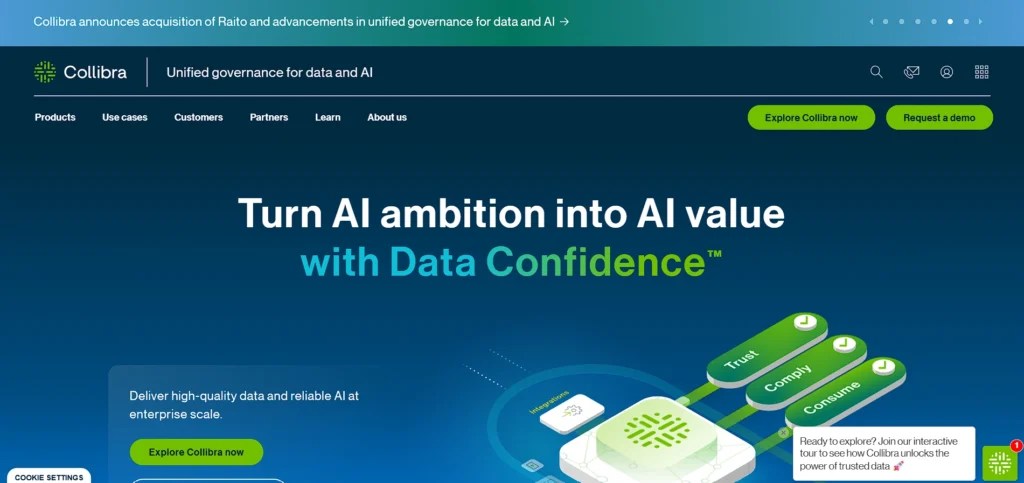
Collibra is one of the most widely used enterprise-grade data asset management platforms, designed to help organizations gain control over their data ecosystem. It provides a centralized system to catalog, govern, and understand data assets across multiple sources, enabling both technical and business users to collaborate effectively. Collibra is especially strong in connecting data governance with data discovery, ensuring that data is trusted, well-documented, and compliant.
The platform focuses heavily on data intelligence, helping companies understand what data they have, where it comes from, and how it is used. With strong workflow automation and policy enforcement, Collibra supports regulatory compliance, data quality initiatives, and analytics readiness, making it ideal for data-driven enterprises.
Top Features:
- Enterprise data catalog and metadata management
- Data governance workflows and policy enforcement
- Business glossary with data lineage
- Data quality and compliance support
- Role-based access and collaboration tools
Pricing:
- Available on request
2. Alation
Website: https://www.alation.com
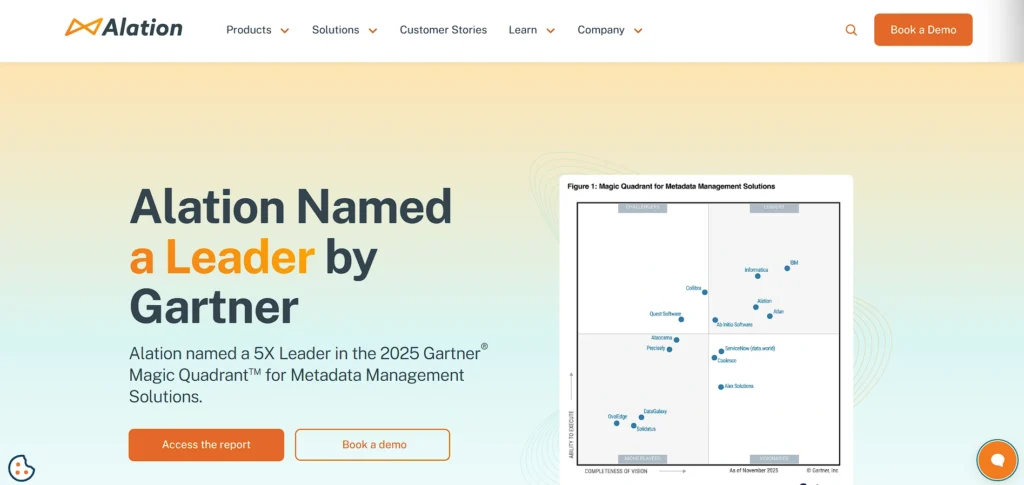
Alation is a modern data asset management tools and data catalog platform that emphasizes usability and data discovery. It leverages machine learning to automatically index data assets and recommend relevant datasets to users, reducing the time spent searching for information. Alation is widely adopted by analytics and data science teams looking to improve data accessibility and trust.
Beyond cataloging, Alation helps organizations create a culture of data collaboration by enabling users to document insights, add context, and share knowledge directly within the platform. Its strong integration ecosystem makes it suitable for companies with diverse data stacks and cloud-based infrastructures.
Top Features:
- Intelligent data catalog with search and recommendations
- Automated metadata harvesting
- Data lineage and impact analysis
- Built-in collaboration and documentation
- Integrations with BI, cloud, and database tools
Pricing:
- Available on request
3. Informatica Axon
Website: https://www.informatica.com
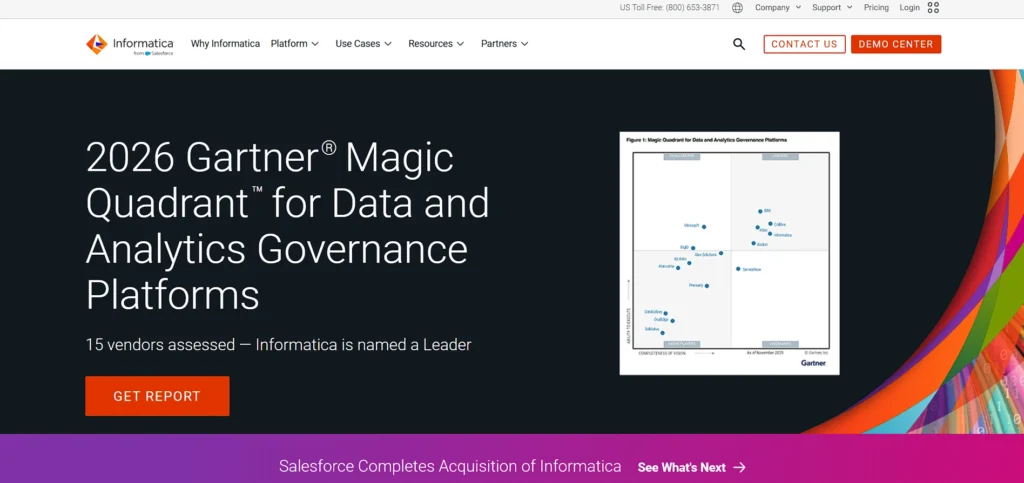
Informatica Axon is a comprehensive data asset management and governance solution built for large enterprises managing complex data environments. It acts as a business-facing layer that connects technical metadata with business context, helping organizations align data assets with strategic goals. Axon is commonly used alongside Informatica’s broader data management suite.
The tool excels in defining data ownership, accountability, and governance processes across the organization. By providing visibility into data definitions, policies, and relationships, Informatica Axon ensures consistent data usage and improves decision-making across departments.
Top Features:
- Business glossary and data domain management
- Data governance and stewardship workflows
- Integration with Informatica metadata tools
- Data lineage and impact visibility
- Enterprise-scale governance framework
Pricing:
- Available on request
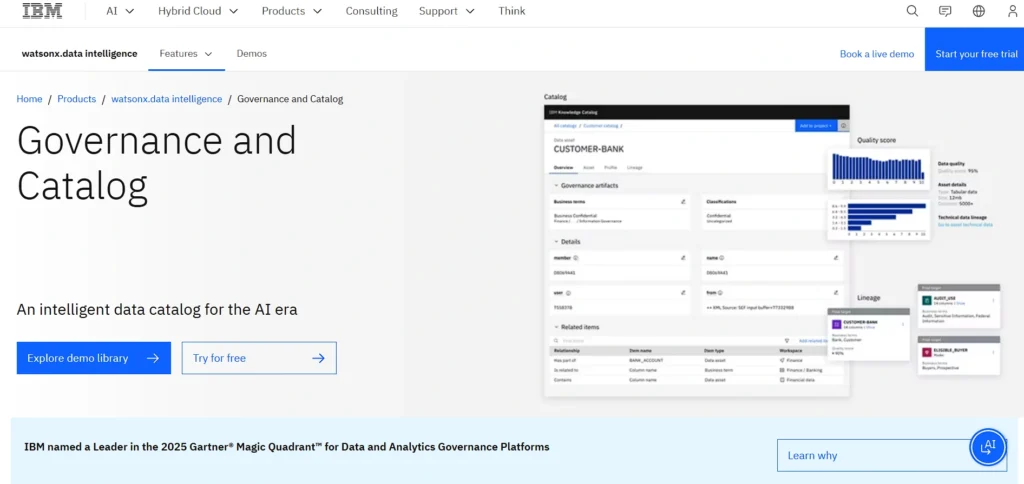
4. IBM Watson Knowledge Catalog
Website: https://www.ibm.com/products/watson-knowledge-catalog
IBM Watson Knowledge Catalog is one of the leading data asset management tools, combining metadata management, governance, and AI-powered discovery. It enables organizations to catalog structured and unstructured data assets while applying governance policies automatically. The platform is designed to support analytics, AI, and regulatory compliance initiatives.
With built-in intelligence, the tool helps classify data, identify sensitive information, and ensure proper access controls. Its tight integration with the IBM data and AI ecosystem makes it a strong choice for enterprises already invested in IBM technologies.
Top Features:
- AI-powered data discovery and classification
- Metadata management and business glossary
- Automated data governance and access control
- Support for structured and unstructured data
- Integration with analytics and AI platforms
Pricing:
- Available on request
5. Microsoft Purview
Website: https://www.microsoft.com/purview
Microsoft Purview is a unified data governance and data asset management service designed for hybrid and cloud environments. It helps organizations discover, catalog, and manage data assets across Azure, on-premise systems, and third-party sources. Purview provides a consistent view of data assets, making it easier to govern and use data responsibly.
The platform integrates seamlessly with Microsoft’s data ecosystem, making it particularly attractive for organizations using Azure, Power BI, and Microsoft analytics services. Its automated scanning and classification capabilities reduce manual effort while improving data visibility and compliance.
Top Features:
- Unified data catalog for cloud and on-prem environments
- Automated data scanning and classification
- End-to-end data lineage visualization
- Built-in governance and compliance features
- Deep integration with Microsoft data tools
Pricing:
- $10.85/usr/mo
6. Atlan
Website: https://atlan.com
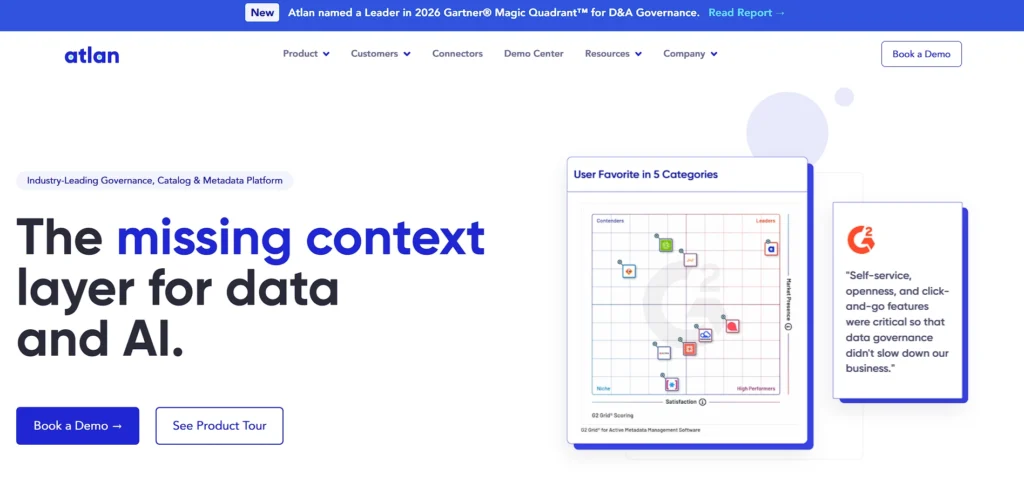
Atlan is a modern, cloud-native data asset management tools built for fast-moving data teams. It focuses on improving data discoverability and collaboration by acting as a shared workspace where data analysts, engineers, and business users can work together. Atlan integrates deeply with popular data warehouses and BI tools, making data assets easier to find and trust.
The platform emphasizes real-time metadata, context sharing, and automation to reduce friction in data workflows. With a strong user experience and active metadata approach, Atlan is especially popular among data-driven startups and mid-sized enterprises.
Top Features:
- Cloud-native data catalog
- Active metadata and usage insights
- Data lineage and impact analysis
- Built-in collaboration and annotations
- Integrations with modern data stacks
Pricing:
- Available on request
7. Talend Data Catalog
Website: https://www.talend.com
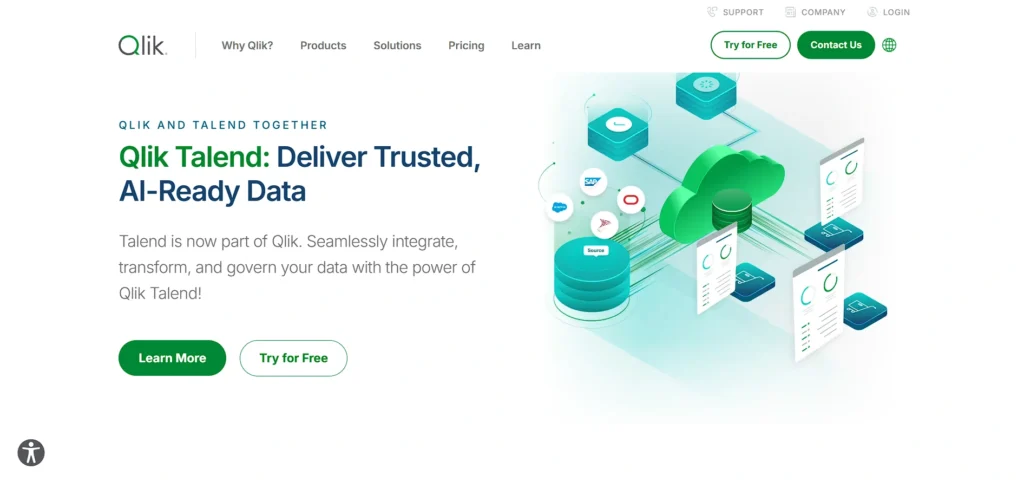
Talend Data Catalog is a robust data asset management software designed to help organizations understand and trust their data. It automatically indexes metadata from multiple sources, allowing users to search, profile, and evaluate datasets quickly. The tool is well-suited for organizations focused on data quality and integration.
Talend’s strength lies in combining data discovery with data quality insights, enabling users to assess the reliability of data assets before using them. Its intuitive interface makes it accessible to both technical and non-technical users.
Top Features:
- Automated metadata harvesting
- Data profiling and quality indicators
- Smart search and data discovery
- Business glossary and lineage
- Integration with Talend data tools
Pricing:
- Available on request
Suggested Read: Wealth Screening Tools
8. Apache Atlas
Website: https://atlas.apache.org
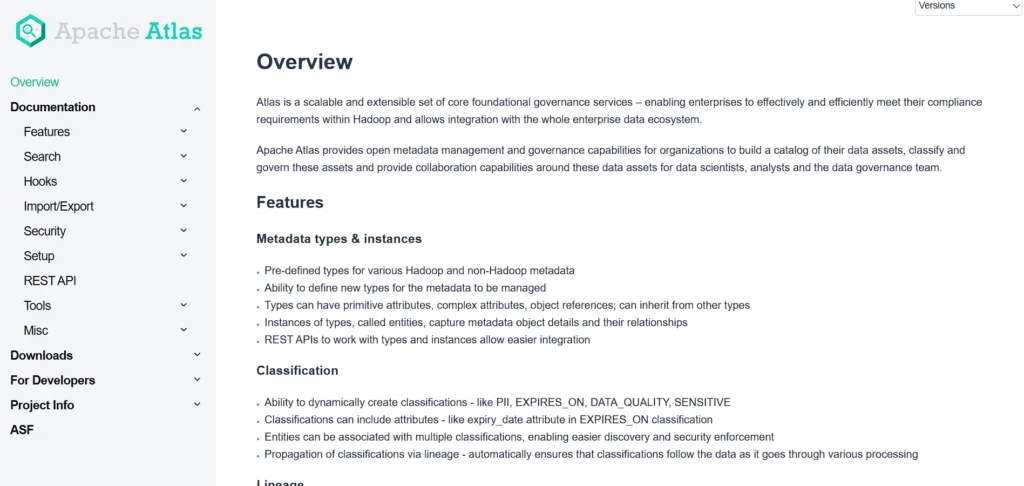
Apache Atlas is an open-source data asset management tools and metadata governance framework widely used in big data ecosystems. It provides capabilities to manage metadata, classify data, and track lineage across complex data platforms. Apache Atlas is commonly adopted in Hadoop-based and enterprise data lake environments.
The tool is highly extensible and allows organizations to customize governance models based on their needs. While it requires technical expertise to deploy and manage, Apache Atlas offers strong control over data assets without licensing costs.
Top Features:
- Open-source metadata management
- Data classification and tagging
- End-to-end data lineage tracking
- Integration with big data platforms
- Customizable governance framework
Pricing:
- Free
9. Data.world
Website: https://data.world
Data.world is a collaborative data catalog and data asset management platform and one of the leading data asset management tools focused on enabling data-driven decision-making. It helps organizations document, organize, and share data assets while maintaining governance and security controls. The platform is designed to be user-friendly and accessible across teams.
By emphasizing collaboration and semantic search, data.world allows users to add business context and insights directly to datasets. This makes it easier for teams to reuse data and avoid duplication of effort across the organization.
Top Features:
- Collaborative data catalog
- Semantic search and metadata management
- Business glossary and documentation
- Governance and access controls
- API and BI tool integrations
Pricing:
- Available on request
10. OvalEdge
Website: https://www.ovaledge.com
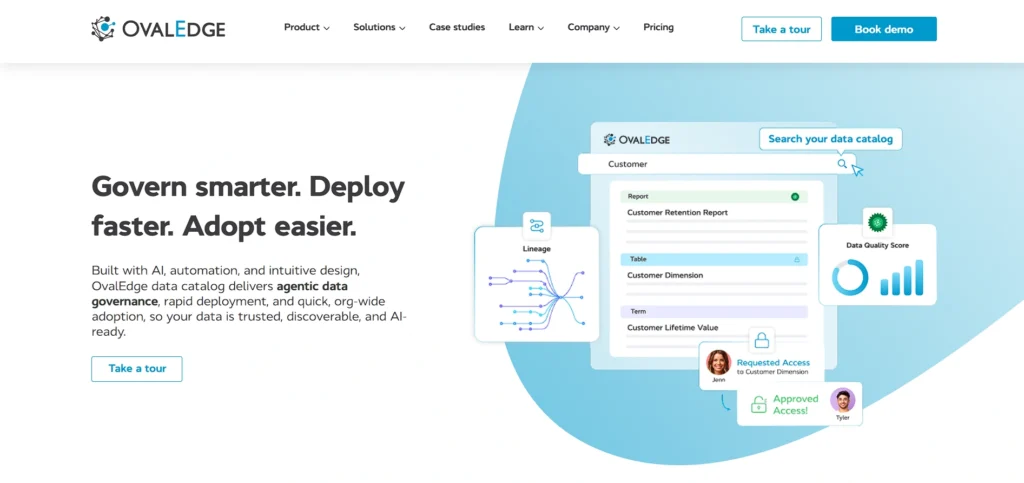
OvalEdge is an enterprise data asset management and governance platform that provides visibility into data assets across the organization. It combines data cataloging, lineage, and governance to help businesses manage data efficiently and ensure compliance. OvalEdge supports both cloud and on-premise environments.
The platform is designed to reduce data chaos by offering a centralized view of data assets and their relationships. With strong lineage and impact analysis, OvalEdge helps organizations understand how data flows across systems and applications.
Top Features:
- Centralized data catalog
- Automated data lineage and impact analysis
- Data governance and stewardship tools
- Metadata-driven discovery
- Support for hybrid environments
Pricing:
| Essential | Premium | Enterprise |
| $2000/mo | Available on request | Available on request |
11. erwin Data Intelligence
Website: https://www.erwin.com
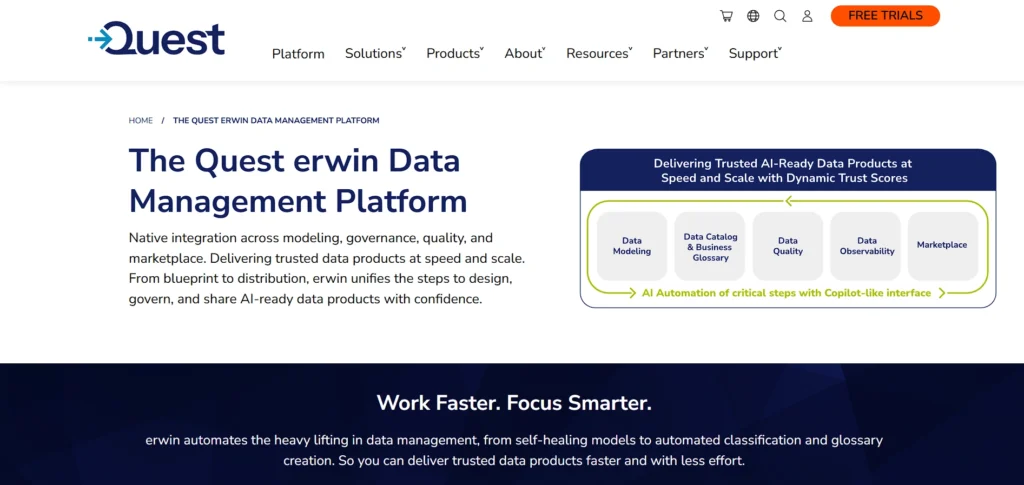
erwin Data Intelligence is a comprehensive data asset management platform and one of the leading data asset management tools, focusing on metadata-driven governance and data understanding. It helps organizations discover, catalog, and manage data assets while linking technical metadata with business definitions. The tool is commonly used by enterprises aiming to improve data transparency and regulatory compliance.
By providing automated data mapping and lineage, erwin enables teams to understand how data moves across systems. Its strong governance framework supports stewardship, policy management, and impact analysis, making it suitable for highly regulated industries.
Top Features:
- Enterprise data catalog and metadata management
- Automated data mapping and lineage
- Business glossary and stewardship workflows
- Governance and compliance support
- Integration with erwin modeling tools
Pricing:
- Available on request
12. OpenMetadata
Website: https://open-metadata.org
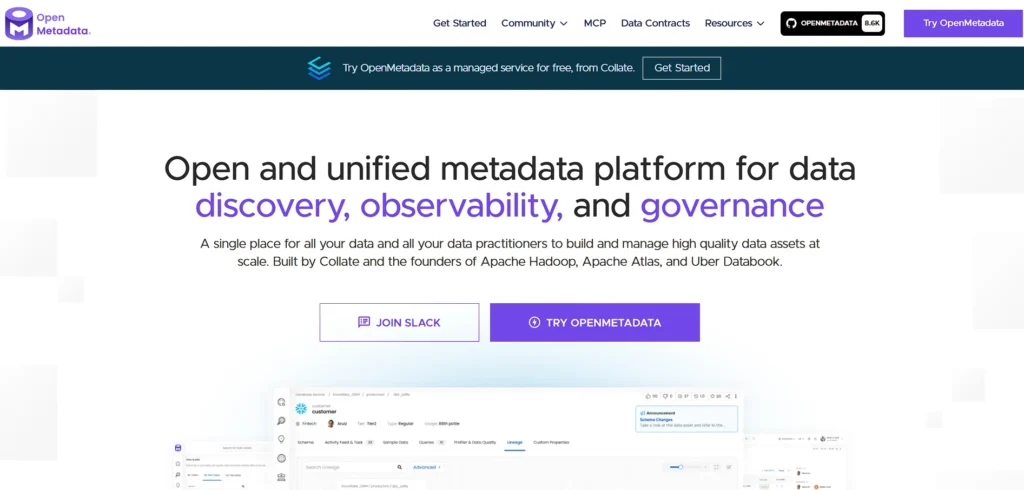
OpenMetadata is an open-source data asset management and metadata platform designed for modern data ecosystems. It provides a unified way to catalog, document, and govern data assets such as databases, dashboards, pipelines, and machine learning models. OpenMetadata is built with extensibility and community-driven development in mind.
The platform emphasizes collaboration and transparency by enabling users to add descriptions, tags, and ownership details to data assets. It is a strong choice for organizations that want flexibility and control without being locked into a proprietary system.
Top Features:
- Open-source data catalog platform
- Unified metadata for data, analytics, and ML assets
- Data lineage and ownership tracking
- Collaboration and documentation features
- API-first and extensible architecture
Pricing:
- Basic version available for free. For advanced features contact sales.
13. Secoda
Website: https://www.secoda.co
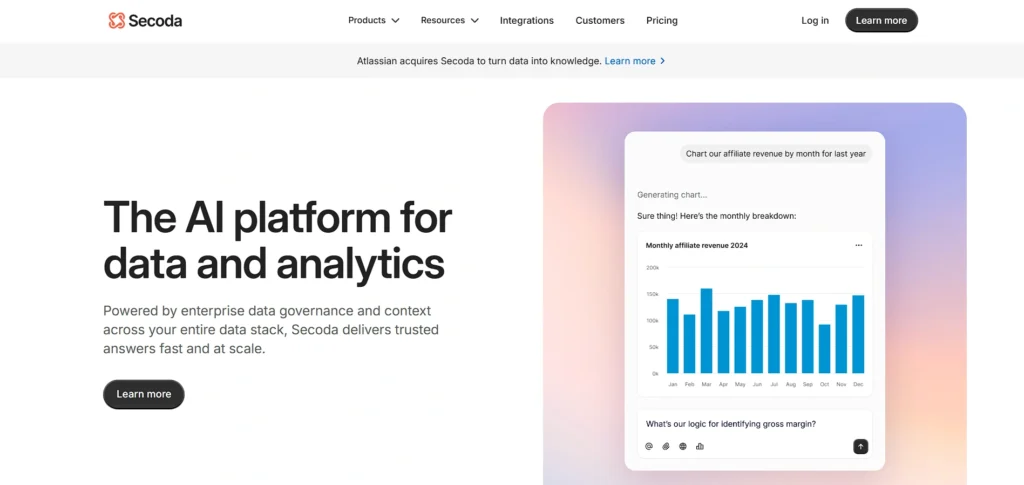
Secoda is a modern data asset management tool designed to help teams discover, document, and trust their data. It is widely recognized among data asset management tools for its focus on simplicity and automation, making it easy for organizations to build a searchable source of truth for data assets. Secoda is especially popular among startups and mid-sized companies.
With automated metadata collection and strong integrations, Secoda reduces manual documentation efforts. Its clean interface and collaboration features help teams align quickly and improve data literacy across the organization.
Top Features:
- Automated data discovery and documentation
- Centralized data catalog
- Data lineage and usage insights
- Team collaboration and search
- Integrations with cloud data tools
Pricing:
- Available on request
14. Amundsen
Website: https://www.amundsen.io
Amundsen is an open-source data asset management and data discovery tool designed to help teams find, understand, and trust their data quickly. It acts as a centralized data catalog where users can search for datasets, view descriptions, and understand ownership without needing deep technical knowledge. Amundsen is widely adopted by engineering and analytics teams because of its simplicity and clarity.
The tool focuses on improving data discoverability rather than heavy governance. It allows organizations to document data assets, add context through descriptions and tags, and highlight popular or frequently used datasets. Because it is open-source, Amundsen offers flexibility and is a strong choice for teams that want control without enterprise licensing costs.
Top Features:
- Open-source data catalog
- Fast and simple data discovery
- Metadata search and tagging
- Data ownership and usage insights
- Lightweight and easy to deploy
Pricing:
- Free
15. CastorDoc
Website: https://www.castordoc.com
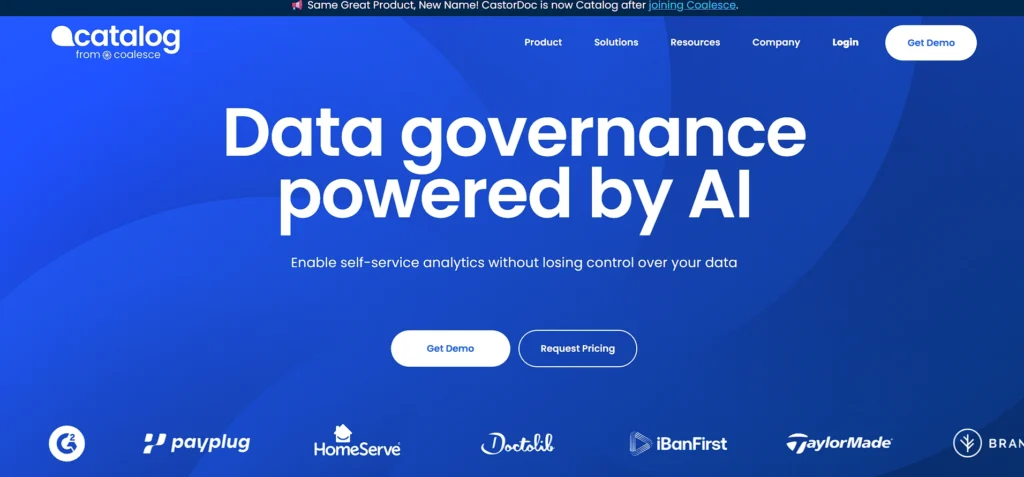
CastorDoc is a data documentation and data asset management tools platform aimed at improving data accessibility for business users. It enables organizations to create a single source of truth by combining data catalogs, documentation, and collaboration features. CastorDoc focuses heavily on usability and clarity.
The platform bridges the gap between technical and non-technical users by translating complex datasets into understandable business terms. This makes it a strong option for teams focused on self-service analytics and data literacy.
Top Features:
- Data catalog with business-friendly documentation
- Searchable data asset repository
- Collaboration and knowledge sharing
- Data lineage and ownership visibility
- Support for self-service analytics
Pricing:
- Available on request
Comparison
| Tool | Best For | Pros | Cons | Pricing |
|---|---|---|---|---|
| Collibra | Enterprise governance & compliance | Enterprise-grade governance, strong compliance support, rich workflow automation | Complex setup, steep learning curve | On request |
| Alation | Data discovery & analytics teams | Intelligent search & recommendations, easy collaboration, AI-powered metadata | High cost for smaller teams, requires some training | On request |
| Informatica Axon | Complex enterprise governance | Excellent governance, integrates with Informatica tools, enterprise-scale | Interface less intuitive, heavier for small teams | On request |
| IBM Watson Knowledge Catalog | AI-powered discovery | AI-driven classification, metadata management, strong integration with IBM ecosystem | Can be complex, expensive | On request |
| Microsoft Purview | Microsoft stack & hybrid environments | Seamless integration with Azure & Microsoft tools, automated scanning & classification | Limited outside Microsoft ecosystem | ~$10.85/user/mo |
| Atlan | Cloud-native teams & collaboration | Cloud-native, strong collaboration & annotation features, active metadata | May lack deep governance for large enterprises | On request |
| Talend Data Catalog | Data quality-focused teams | Automated metadata harvesting, data quality insights | UI can be complex, fewer collaboration features | On request |
| Apache Atlas | Big data & Hadoop ecosystems | Open-source, highly customizable, strong lineage tracking | Requires technical expertise, limited support | Free |
| Data.world | Data collaboration & context | Easy collaboration, semantic search, user-friendly | Governance features less advanced, relies on cloud | On request |
| OvalEdge | Hybrid data environments | Hybrid support, strong lineage & impact analysis | High pricing, moderate collaboration features | From ~$2000/mo |
| erwin Data Intelligence | Regulated industries | Metadata-driven governance, automated lineage, regulatory compliance | Complex setup, expensive | On request |
| OpenMetadata | Flexible open-source metastore | Open-source, highly extensible, API-first | May need customization & technical expertise | Free / basic |
| Secoda | Startups & small teams | Simple, easy to use, automated discovery | Limited advanced governance, may not scale well | On request |
| Amundsen | Lightweight discovery | Free, fast search, simple interface | Minimal governance & collaboration features | Free |
| CastorDoc | Business-user friendly docs | Self-service analytics, easy to understand for non-technical users | Limited governance, not enterprise-scale | On request |
Conclusion
In conclusion, managing data doesn’t have to feel overwhelming. Organizations may finally comprehend what data they have, where it comes from, and how it should be used with the correct data asset management platform and data asset management tools. These solutions transform disorganized data into reliable, well-organized resources that teams may use on a daily basis.
The ideal solution will rely on your users, data environment, and objectives, regardless of how big or small your company is. While some technologies promote collaboration and usability, others concentrate on governance and compliance. The secret is to start with a technology that can expand with your data and meet your present demands. When utilized properly, data asset management technologies do more than merely organize data; they also facilitate more intelligent teamwork and improved decision-making.
FAQs
Who Should Use Data Asset Management Tools?
These tools are useful for data analysts, data engineers, business users, compliance teams, and decision-makers. Any organization that works with large or complex datasets can benefit from better data visibility and governance.
How is Data Asset Management Different From Data Governance?
Data asset management focuses on discovering and organizing data assets, while data governance focuses on policies, rules, and compliance. Most modern tools combine both to ensure data is usable and properly controlled.
Are Data Asset Management Tools Only For Large Enterprises?
No. While many tools are built for enterprises, several modern and cloud-based solutions are ideal for startups and mid-sized businesses. The right tool depends on scale, budget, and data complexity.
Do These Tools Work With Cloud And on-Premise Data?
Yes. Most data asset management software support cloud, on-premise, and hybrid environments, allowing organizations to manage data assets across multiple systems from a single platform.
How Long Does It Take To See Value From a Data Asset Management Software?
Basic values like improved data discovery can be seen quickly, often within weeks. Long-term benefits such as better governance, higher data trust, and improved collaboration grow as more users adopt the tool.
