How to Manage Freelancer Payments at Your Agency

Manage freelancer payments can feel like juggling spreadsheets, emails, and last minute Slack messages, especially when your agency works with a mix of designers, writers, developers, and consultants.
Payments are a huge part of the relationship, and getting them right keeps your projects running smoothly and your talent happy.
Stick around for the lowdown on how modern agencies streamline payments, avoid compliance pitfalls, and keep everything transparent.
Why Organized Freelancer Payments Matter
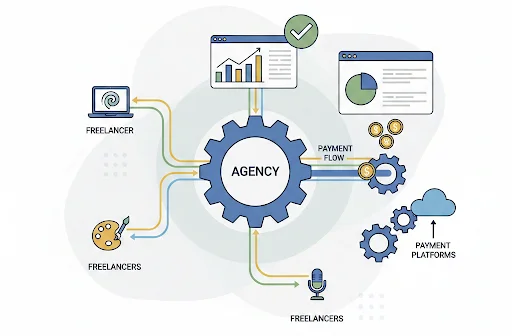
Working with freelancers gives agencies flexibility, lower overhead, and access to global talent. But a messy payment system can cancel out those benefits. According to research on the growing demand for creative workers by TechRadar, freelancers are taking on more work than ever, which means expectations around timely and predictable payment are rising too.
Late payments can weaken your reputation and slow down projects. A global report by by Jobbers found that over half of freelancers experience delays of more than 30 days, which is a major pain point. Your agency plays a big role in making sure your freelancers are not part of that statistic.
Build a Streamlined Payment Workflow
A solid workflow takes payment tasks off your team’s mental load. When your agency grows and you onboard more freelancers, having a system in place saves hours of back-and-forth. Structured workflows improve consistency and reduce project friction. This applies not only to creative tasks but to administrative ones like invoicing and payouts.
Here are three simple ideas to build a workflow that scales:
- Set standard pay periods so freelancers know exactly when funds arrive
- Require all invoices to be in a consistent format
- Automate reminders for missing invoices or overdue approvals
Centralize Freelancer Information
Freelancers often follow different formats for invoices, deliverables, and communication styles. Your team can reduce confusion by centralizing payment details like rates, contract terms, bank info, and tax documents. A compressed but organized system also helps if someone on your team goes on vacation or leaves.
Keep Payment Terms Clear From Day One
Clear terms protect both sides. Late fees, turnaround times for approvals, expected deliverables, and bonus structures should be written out. This reduces misunderstandings and gives your freelancers a stable foundation.
Choose the Right Payment Methods

Agencies today pay freelancers in many different ways, and the best option depends on location, volume, and your internal tools. According to a practical breakdown by Of Zen and Computing, direct deposit and ACH transfers are often the most cost effective for domestic workers, while PayPal or global payment platforms handle international contractors more smoothly.
Domestic vs International Considerations
If you work with international freelancers, watch out for conversion fees and slow transfer times. Some agencies choose tools based on the countries from which they hire most often. Cross border payouts need to account for local regulations, too.
Consistent Documentation Helps Everyone
Freelancers appreciate knowing exactly what data they need to send. Your agency also benefits when everything syncs neatly in accounting records. This is where tools that generate clean and standardized documents can help. For instance, if you’re unsure of the best way to document freelancer payments, learning how to make pay stubs can help you keep your documentation uniform across different workers. Adopting a consistent template for pay stubs ensures everyone stays on the same page.
Maintain Legal and Tax Compliance
Tax compliance is one of the more intimidating parts of managing freelancers. While your agency likely isn’t responsible for withholding taxes for independent contractors, you still need accurate records. Misclassification issues can lead to regulatory problems.
Track Forms and Deadlines
Collect forms such as W9s or W8BENs before your first payment. Keep digital copies so your finance team can access them at any time. File necessary annual forms on time.
Understand Local Regulations
Each country has its own freelance tax rules. Your agency’s tool stack should help you stay organized rather than adding more stress.
Improve Communication With Transparent Systems
Transparent communication helps freelancers trust your agency. When workers feel informed about timelines and expectations, they produce better work. A workflow driven engine explained in an arXiv study shows how structured communication supports creative output, an idea that applies just as well to project admin.
Set Expectations Early
Before any project starts, set expectations about revisions, payment cadence, late fees, and invoice approval times. This avoids rushed conversations later.
Offer Visibility Into Invoice Status
Agencies with a freelancer portal or shared dashboard create more transparency. Even a simple shared document that tracks invoice status and payment dates makes a difference.
Tools to Help Automate Payments
Tools shape your entire workflow. Reviews from from Fueler highlight that automation reduces errors and saves time, especially when juggling many contractors.
Features to Look For
Look for automation tools that sync with your accounting system, support global transfers, and let freelancers update their own details. Make sure your team can access analytics for future planning.
Organizing Your Tech Stack
Pick tools that fit your agency’s scale. A small creative shop might need lightweight software, while a large agency can invest in more complex systems. The same applies to all other aspects of your operations, from recruitment automation to campaign management. Get this right in a payments context, and you’ll find it easier to apply elsewhere.
Create a Consistent Onboarding Flow for New Freelancers
A smooth onboarding flow helps freelancers feel confident from the start and reduces the chance of payment issues later. When someone joins your roster, give them a short checklist that explains how your agency handles invoices, timelines, deliverables, and communication preferences. This saves your team from repeating the same instructions and gives freelancers a reliable reference point.
What to Include in Onboarding Materials
Clear onboarding materials also set the tone for your working relationship. You can include simple information such as invoice requirements, preferred file formats, your internal approval chain, and how long payments typically take. When everything is presented up front, you minimize confusion. Even a quick overview of your agency workflow helps freelancers align with your pace and expectations.
Build a Routine That Scales
As your agency brings on more freelancers, a standard onboarding flow ensures every new person gets the same information. This consistency helps prevent errors and protects your recordkeeping, especially when you have many projects moving at once.
Track Performance and Payment Patterns Over Time

Once payments are flowing consistently, it helps to monitor trends. Tracking patterns makes it easier to predict cash flow, plan hiring needs, and avoid bottlenecks. It also gives your agency the chance to spot inefficiencies that may be slowing down approvals or payouts.
Identify Delays Before They Become Problems
Look at how long invoices take to move from submission to approval, and then from approval to payout. If certain steps routinely drag on, you can adjust your workflow or automate specific checkpoints. This kind of data helps your team keep operations smooth, especially during busy months.
Use Metrics to Strengthen Your Talent Pool
Performance and payment insights can also help you understand which freelancers are your most reliable collaborators. By tracking on time delivery, communication quality, and workload capacity, you can match the right freelancers to the right projects. This strengthens relationships and keeps quality high across your agency’s output.
Final Thoughts
Freelancer payments don’t have to be stressful. With clear terms, organized records, and a reliable workflow, your agency can build strong relationships with top talent. When freelancers know they’ll be paid on time, they’re more likely to accept projects and stick with your team long term.
If you want to build smoother internal processes and streamline future projects, keep exploring tools and tips like the ones mentioned here. A little structure goes a long way in keeping your agency running sustainably.
