

It’s difficult to select a French app. There are some that are free and some that cost more than a monthly membership at a gym, but all of them assure progress. You’ll have a menagerie of apps in any app store and they all have slick screenshots and striking statements about fluency. The thing that they don’t tell you much about is what they really are good for, where they are no longer useful and what type of student they work best with. Actually, it’s not a question of which app is “best. It’s which one is good for your target, your skill level and your lifestyle. A commuter will not want anything that requires a lot of effort to understand the audio, and an adult beginner will not want anything similar to a grammar explanation. A parent wishing to begin a fun start to their child’s life has other priorities altogether. So, more than a streak counter is needed for a learner preparing for the DELF.
This guide explores 15 French Learning Apps, free from habit building to paid courses, and even live tutoring. We consider the methods of teaching, practice of speech, depth of grammar, pricing, and level coverage and convenience, and we are honest about the limitations of each. You’ll also find quick picks by goal, a Duolingo vs Babbel comparison and a 30-day starter plan and a decision checklist to help you choose. The prices and features listed are subject to change and are based on information from the official sites as of May 2026 — please verify the official sites before subscribing. The theme that emerges consistently is that most students will benefit from using an app for daily practice, coupled with ongoing discussions. We discuss what Apps cannot do and how to fill it with your time and money going in the right direction.
Quick Picks: Best French App for Your Goal
| Goal | Pick | Why | Price note |
| Speak French with confidence | italki | Live 1-on-1 lessons with native teachers | From $4 per lesson, no subscription |
| Build a daily habit for free | Duolingo | Short, gamified lessons | Free; Super from $13/month |
| Structured grammar for adults | Babbel | Clear grammar explanations in English | $18.49/month (3-month minimum) |
| Learn on your commute | Pimsleur | Hands-free 30-minute audio lessons | About $20–$21/month |
| Build vocabulary fast | Memrise | Spaced repetition with native speaker clips | Free; Premium $24.99/month |
| Listening at intermediate level | News in Slow French | Real news at a slower pace | Free episodes; Premium from $6.90/month |
| Writing feedback | Busuu | Native speakers correct your exercises | Free; Premium from $13.99/month |
| Kids | Duolingo (with a parent) | Playful, low pressure | Free tier available |
How We Compared These French Learning Apps
Each app is judged on the same criteria to ensure a fair comparison.
- Teaching method: Is this app a gamified drill, audio, video, flash cards or is it a video with a real person? How you learn is determined by the method.
- Speaking practice: The top area apps are not very good at. We looked to see if an app has a voice recognition feature, community practice, or if it includes having a live conversation with a real individual.
- Clear grammar and depth: Some apps do a good job of teaching grammar and others do not. We indicated when it is no longer useful, as there is more than one that slows down around A1-A2.
- Price and value: We tested the free tier, the pricing and any minimum commitment. Price is only a matter of price value.
- App coverage of levels: We considered what levels (A1 to C2) each app advertised and if this was likely to be true.
- Offline access: If you’re not at your computer, you’ll need to choose between an app that is available for iOS and Android devices, and how long each lesson takes.
- Learner feedback: We followed the ratings from italki source review, but these are not considered a judgement.
Also Read: Ed-Tech Companies
15 Best French Learning Apps at a Glance
| App | Free tier | US price + date | Claimed level | Speaking | Offline | iOS/Android |
| Duolingo | Yes | Super from $13/mo (May 2026) | Beginner | Basic prompts | Paid plan | Yes/Yes |
| Busuu | Yes | Premium from $13.99/mo (May 2026) | A1–C1 | Limited | Paid plan | Yes/Yes |
| Memrise | Yes | $24.99/mo (May 2026) | Beginner–intermediate | Native clips | Paid plan | Yes/Yes |
| Coffee Break French | Yes | $269 lifetime (May 2026) | Beginner–advanced | None | Podcast downloads | Yes/Yes |
| FrenchPod101 | Yes | $4–$23/mo (May 2026) | Beginner–advanced | None | Downloads | Yes/Yes |
| News in Slow French | Yes | From $6.90/mo (May 2026) | B1–B2 | None | Paid plan | Yes/Yes |
| Coursera | Audit free | From $49/mo (May 2026) | Varies by course | None | Yes | Yes/Yes |
| Lawless French | Yes | Free (May 2026) | All levels | None | No | Web only |
| Babbel | No | $18.49/mo (May 2026) | Beginner–intermediate | Speech practice | Yes | Yes/Yes |
| Rosetta Stone | No | $15.95/mo (May 2026) | Beginner–intermediate | Voice recognition | Yes | Yes/Yes |
| Pimsleur | No | $20–$21/mo (May 2026) | Beginner–intermediate | Audio repetition | Yes | Yes/Yes |
| FluentU | No | $29.99/mo (May 2026) | Intermediate | None | Limited | Yes/Yes |
| Rocket French | No | From $149.95/level (May 2026) | Beginner–intermediate | Voice recognition | Yes | Yes/Yes |
| Lingoda | No | $64.99–$399.99/mo (May 2026) | A1–C2 | Live group | No | Yes/Yes |
| italki | Free to join | From $4/lesson (May 2026) | All levels | Live 1-on-1 | No | Yes/Yes |
Best Free French Learning Apps
1. Duolingo
- Best for: Habit
- Rating: 4.7/5
- Downloads: Among the most downloaded learning apps on the stores (500M+ installs on Google Play)
- App link: https://www.duolingo.com/
- Platforms: iOS, Android, Web
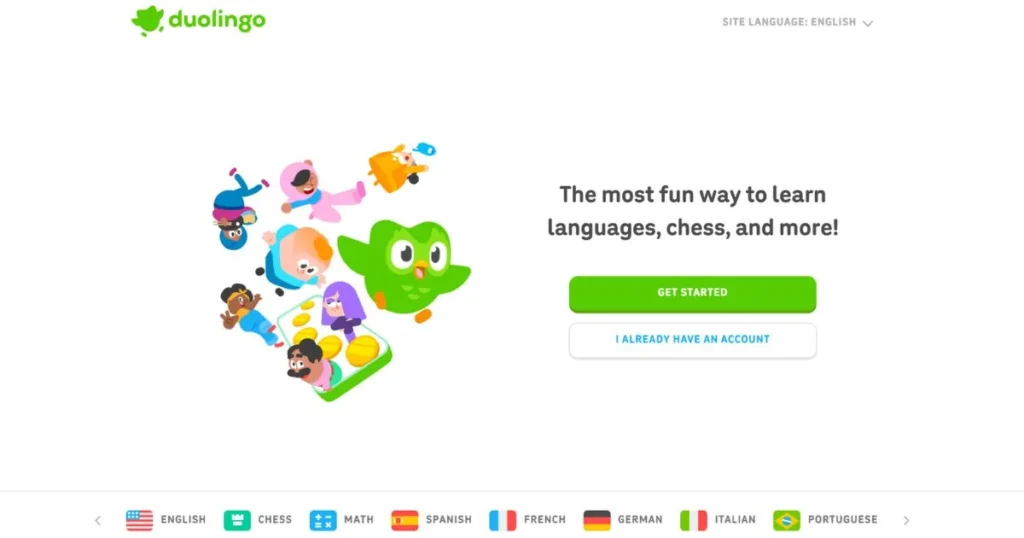
Duolingo makes French fun and entertaining. You take brief lessons, add streaks, and progress through levels so learning is not difficult, but rather easy. It’s good for learning basic words, simple phrases and sentence construction, and the free edition is plentiful. The compromise: Depth. Most students reach a plateau around A1-A2 level and the learning is grounded in the use of multiple choice and translation, with no interaction with a real person. Consider Duolingo a warm up, not the class.
The application includes vocabulary, grammar, listening, speaking, reading, and writing skills in organized levels. Personalisation through AI modifies lessons depending on the performance of users. In addition to French, users can also learn many other languages, like Spanish, Korean, Japanese, German, and Italian, making it a versatile language learning platform.
Key highlights
- Very short, game like lessons on mobile and web.
- Many multiple choice, translation and basic speaking exercises.
- Streaks and levels get you to come back every day.
Pros
- Generous free tier.
- Habit-forming and fun.
- Good for elementary words and phrases.
Cons
- Progress tends to stagnate around A1-A2.
- No opportunities to speak in real-time.
- The game format can be a hindrance to real learning.
Pricing
- Free version available.
- Super Duolingo from $13/month.
2. Busuu
- Best for: Feedback
- Rating: 4.7/5
- Downloads: Tens of millions of users worldwide (10M+ installs on Google Play)
- App link: https://www.busuu.com/
- Platforms: iOS, Android, Web
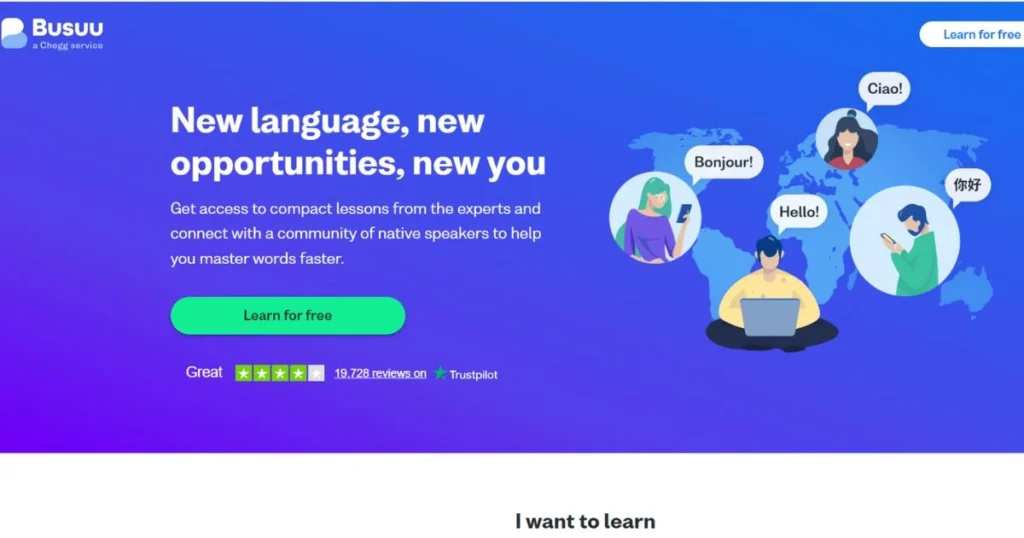
Busuu’s model is to offer you structured lessons and a community aspect which involves you posting written homework with native French speakers correcting it. One of the differences between various self-study apps is that feedback is available. The course spans six levels of A1 to C1, has a personalised study plan and provides informal language exchange with other students. The down side is that this is done by volunteers; not all are qualified teachers, and quality of the correction is not uniform.
The application relies on customised study schedules and trackers to ensure learners are consistent. Premium plans include offline access, which is flexible. The curriculum of Busuu is based on the CEFR language levels, and the progress is measurable and well-organised. There is also a limited amount of speaking practice. Busuu is ideal for anyone seeking structure and a few humans for learning without any cost of tuition.
Key highlights
- Correcting of writing exercises by native French speakers.
- A plan of personalised learning across six levels of structured lessons.
- Certificates available on completion.Certificates available in McGraw-Hill certificates on completion.
Pros
- Authentic feedback of student writing.
- Passage between A1 and C1 free of obstructions.
- Certificates for motivation.
Cons
- The quality of the feedback is variable due to volunteers writing the feedback.
- Not as interesting as Duolingo or Babbel.
- Not much speaking practice.
Pricing
- Free basic plan.
- Premium from $13.99/month.
3. Memrise
- Best for: Vocabulary
- Rating: 4.8/5
- Downloads: Popular flashcard app (10M+ installs on Google Play)
- App link: https://www.memrise.com/
- Platforms: iOS, Android, Web
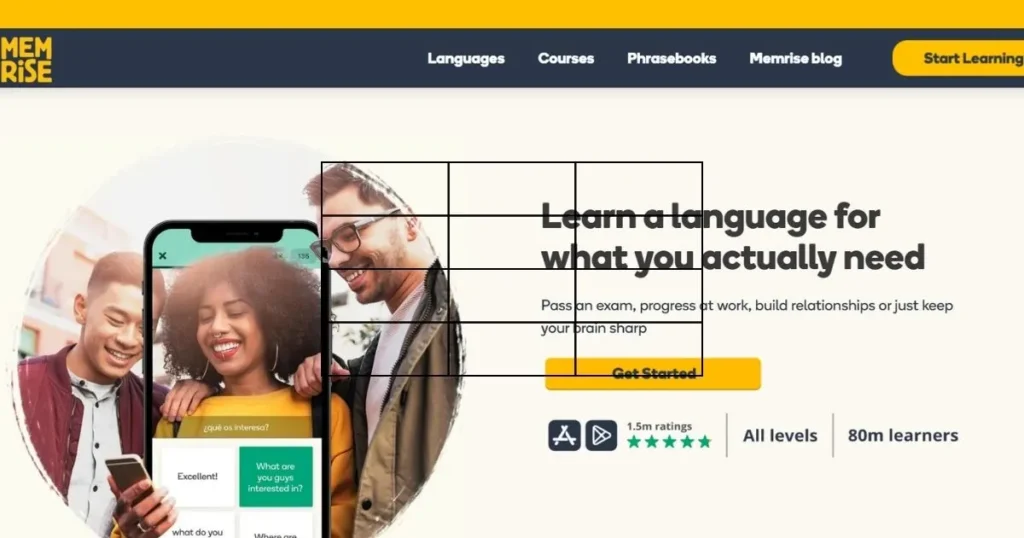
Instead of reading a simple definition of new words, Memrise uses short video clips from native French speakers to teach you new words in a natural context. It has a spaced repetition system that will help words stick, as they will be presented to you just before you forget. It also has a vast library of community-made decks as well as official content. Memrise is not a full course of French and doesn’t provide much grammar lessons.
However, it is a great vocabulary supplement at many levels, and can be used in conjunction with a grammar-based text or with a tutor. Ideal for both novice and intermediate learners, Memrise places strong emphasis on vocabulary building and exposure to natural speech patterns used in real French conversations.
Key highlights
- Real pronunciation is demonstrated in native speaker videos.
- Spaced repetition is a method for retaining words in LTM.
- Extensive collection of community decks on a number of subject areas.
Pros
- Natural-sounding pronunciation examples.
- Excellent for retention.
- Lots of choices of decks.
Cons
- Not a stand-alone course.
- The quality of community decks varies.
- Very little grammatical instruction.
Pricing
- Free basic plan.
- Premium $24.99/month.
4. Coffee Break French
- Best for: Relaxed
- Rating: 4.7/5
- Downloads: Widely available on all major podcast platforms
- App link: https://coffeebreaklanguages.com/
Coffee Break French is a podcast series that will take absolute beginners through the language and one of the best French Learning Apps, building from simple tenses, phrases and more to advanced grammar. Episodes are 15-30 minutes in length, and are structured by level. One of the simpler free resources to get started with, the teaching style is warm and approachable. There is no writing training, no live speaking training and it is audio only so the extent of your progress depends on your regular attendance. Premium content is a premium selling!
Key highlights
- 15–30 minute episodes organised by level.
- Unlock all of the main podcasting sites.
- Teaches from beginner to intermediate and advanced.
Pros
- Positive, non-threatening approach to teaching.
- Free way to start.
- Clear level structure.
Cons
- Audio-only and no writing or live practice.
- Consistency brings about progress.
- Premium content costs extra.
Pricing
- Free episodes.
- $269 lifetime access.
5. FrenchPod101
- Best for: Listening
- Rating: 3.0/5
- Downloads: Long-running app with a broad global audience (1M+ installs on Google Play)
- App link: https://www.frenchpod101.com/
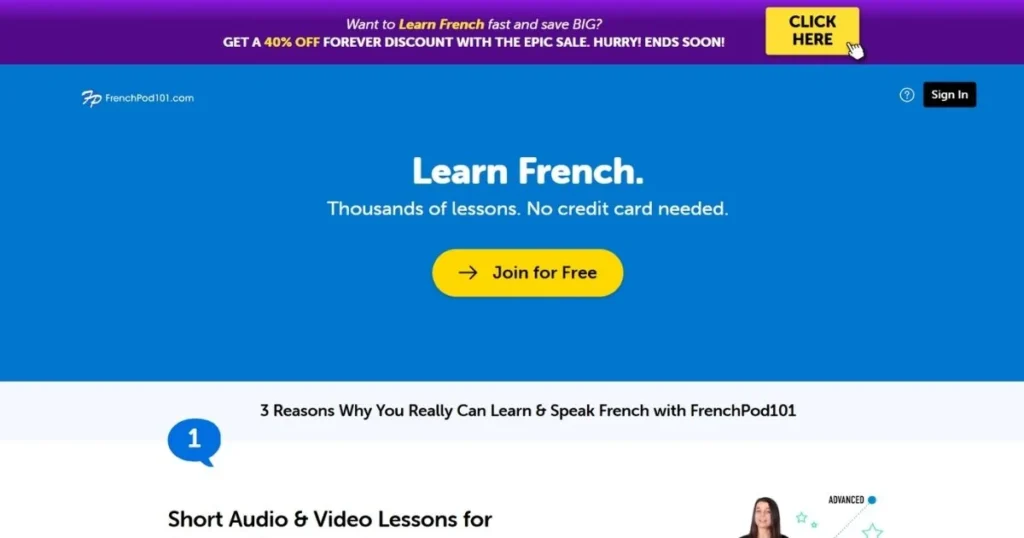
FrenchPod101 focuses on audio and video lessons taught by the native French speakers from beginner to intermediate and advanced levels. Lessons include downloadable transcripts, word lists and PDF notes, and are accessed via web and mobile. It’s compact and easy to carry around for your commute or exercise. The areas of weakness include consistency and interaction. It is not always the host that determines the quality of the lessons, advanced content is not always spoken in a native French style and there is no live speaking practice. Do not use it as a main source, but as an accessory source.
Key highlights
- Large library of audio and video lessons.
- Transcripts, clips and PDF notes to download.
- Includes beginner to intermediate to advanced level.
Pros
- Large library of all topics at all levels.
- Ideal for on the move learning.
- Offline downloads available.
Cons
- No Speaking practice- no live.
- The quality is dependent on the host.
- Advanced content comes with an unnatural sound.
Pricing
- Free basic plan.
- Subscriptions from $4 to $23/month.
6. News in Slow French
- Best for: Comprehension
- Rating: 4.5/5
- Downloads: Niche but loyal audience of intermediate learners
- App link: https://www.newsinslowfrench.com/
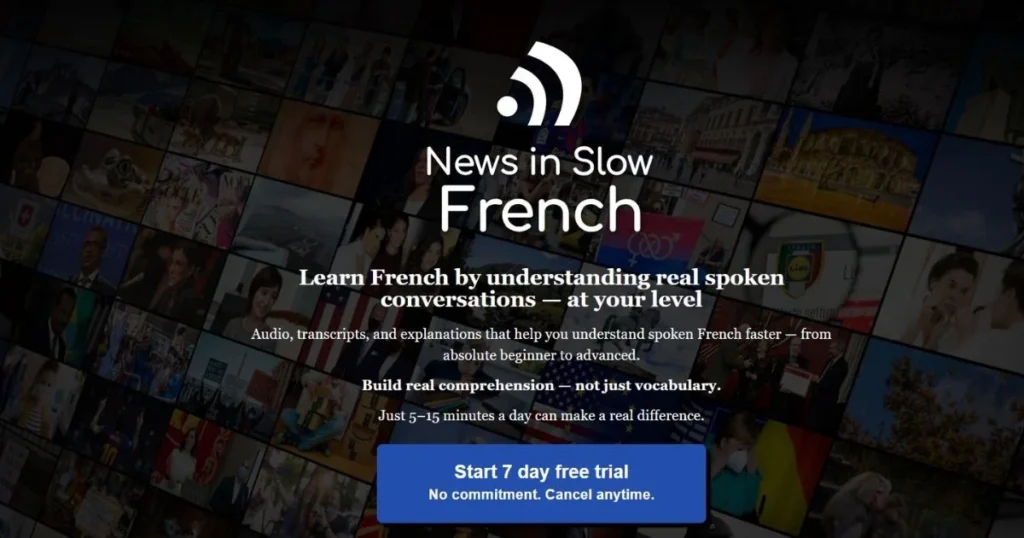
News in Slow French presents authentic stories of the news presented in a slow, intermediate-level French. It enables you to cross the frustrating middle phase where you know the fundamentals and can’t keep up with native speakers. The episodes are always up to date with the topics related to the current events and French culture. Not for beginning students and no speaking or writing practice. Other students may also object to the expense of the podcasts when compared to other podcast resources.
Key highlights
- Audio episodes every week that are easier to follow.
- Includes grammar notes and transcript.
- At B1-B2 level of the learner.
Pros
- The best instrument for intermediate listening.
- Transcripts enable you to learn vocabulary.
- Up-to-date news articles.
Cons
- Not recommended for novices.
- No oral or written practice.
- Premium Price is quite expensive.
Pricing
- Free episodes available.
- Premium from $6.90/month.
7. Coursera
- Best for: Academic
- Rating: 4.8/5
- Downloads: Large global learning platform with a dedicated mobile app
- App link: https://www.coursera.org/
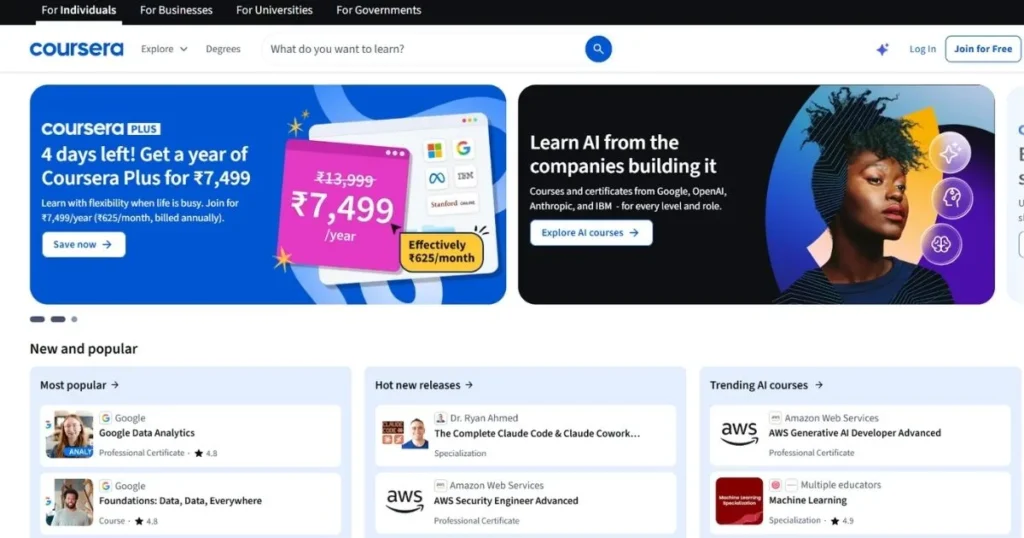
Coursera offers French courses from universities, including the Sorbonne. Those who enjoy lectures, written exercises, graded assignments and a certificate will find it to be a great option. Most courses are available for auditing (without cost) to give you a chance to sample before making a decision. The program is not conversational; meaning there is no live speaking practice, nor is there a teacher/learner interaction. There are also course timetables that are fixed, not for everybody. Suitable for students who are interested in systematic learning and who would like to have some name attached to the learning.
Key highlights
- Programs of French from reputable universities.
- Video Lectures, Quizzes and peer review.
- On paid plans certificates are available.
Pros
- Information from trusted sources.
- Organized with progressively more challenging tasks.
- Most courses offer the opportunity to receive a free audit.
Cons
- No opportunity for actual contact with a native teacher.
- None speaking practice.
- Have fixed schedules for some courses.
Pricing
- Free to audit.
- Certificate plans from $49/month.
8. Lawless French
- Best for: Grammar
- Rating: Not rated
- Downloads: Not an app: a free, mobile-friendly website
- App link: https://www.lawlessfrench.com/
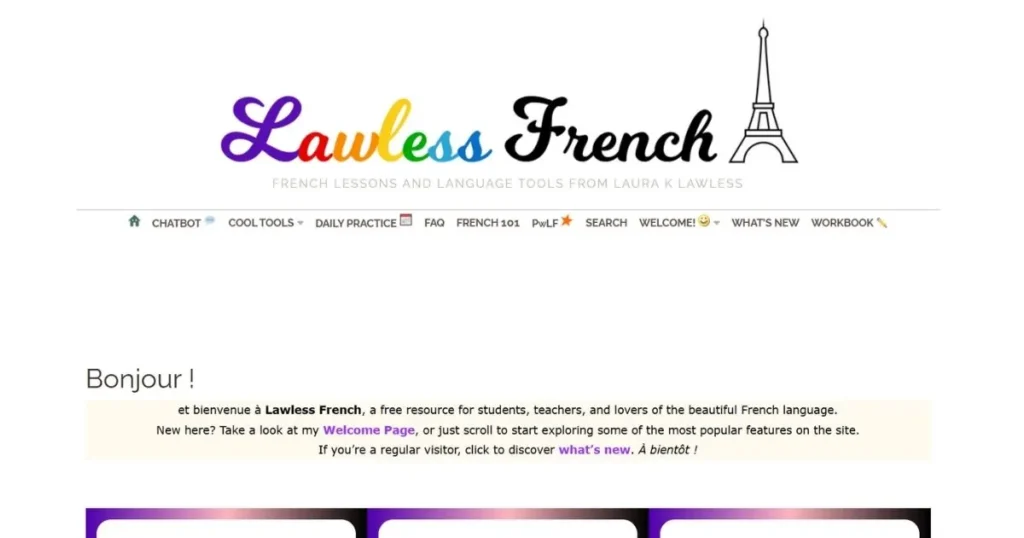
Lawless French is an French Learning Apps, but it’s a free addition to the apps above. It has hundreds of written grammar lessons and vocabulary articles that are organized by topic and level and have lessons that are linked to a sister site. A useful reminder to go back to in case of a stumbling block in a rule or tense. It is not a course with a set schedule and does not include any audio, interactive exercises, or speaking practice so progress is based on students’ own motivation. Mark it on a bookmark, use it as a fill-in activity and use a more structured instrument together.
Key highlights
- Hundreds of written lessons by topic and level.
- Covers simple tenses to more advanced structures.
- Link to sister site for exercises.
Pros
- With no paywall or any restrictions.
- Clear grammar explanations.
- Accessibility to the needed options.
Cons
- Nothing to hear and no interaction.
- Not a “stand alone” course.
- No organisation to help you move.
Pricing
- Free.
Best Paid French Learning Apps
9. Babbel
- Best for: Structure
- Rating: 4.7/5
- Downloads: Major paid language app (10M+ installs on Google Play)
- App link: https://www.babbel.com/
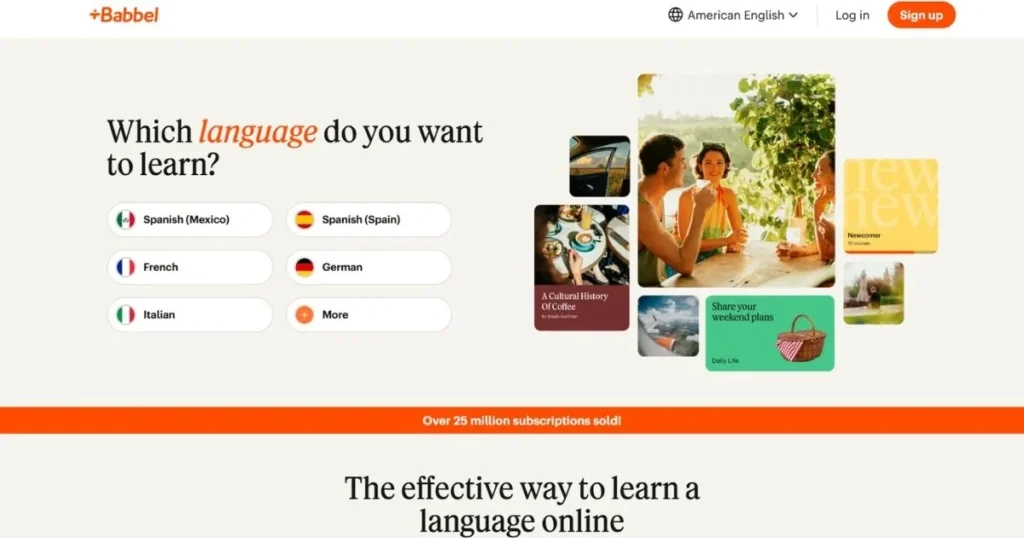
Babbel offers French lessons by language experts – not crowdsourced. The Grammar is clearly explained in English, each session focuses on grammar, vocabulary, listening and speaking and are ideal for the adult beginner who has a dislike for guessing rules. It provides a sense of achievement and makes a good framework. The restrictions are similar to many others – no live speaking practice with an actual teacher. It is also not free, and supports only 14 languages. It’s a viable choice for French beginners looking for guidance.
Key highlights
- All 4 skills taught in each lesson.
- Clear explanation of grammar in English.
- Created by language professionals.
Pros
- Professionally built lessons.
- Clear grammar explanations.
- Includes listening, speaking, reading and writing.
Cons
- No free version.
- Only 14 languages available.
- No oral communication with native speaker.
Pricing
- $18.49/month.
- Minimum 3-month commitment.
10. Rosetta Stone
- Best for: Immersion
- Rating: 4.8/5
- Downloads: One of the best-known names in language software (10M+ installs on Google Play)
- App link: https://www.rosettastone.com/
- Platforms: iOS, Android, Web
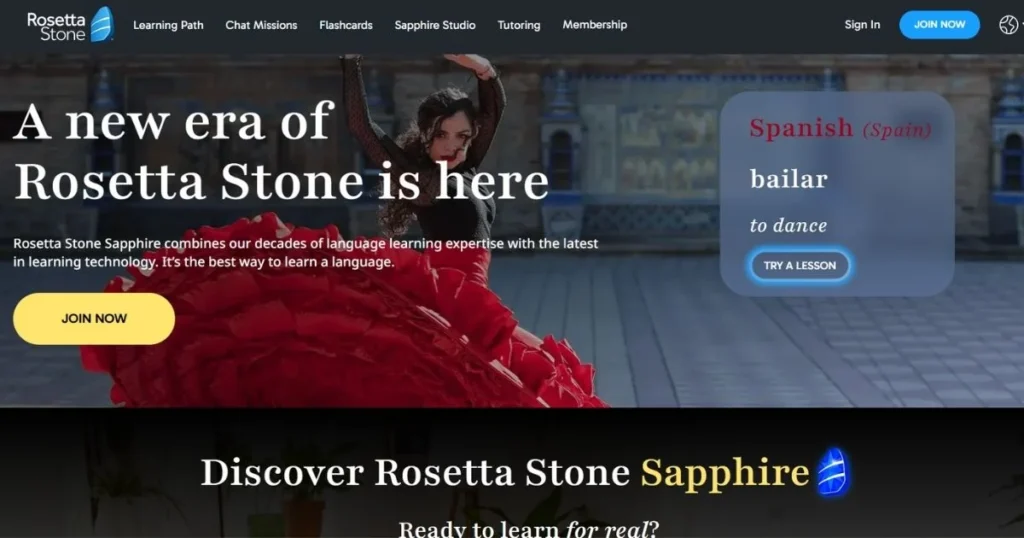
Rosetta Stone French is an image-based learning program that utilizes only the French language to teach French. It teaches you by matching pictures, words and sounds, and it compares your pronunciation with native speakers with its TruAccent voice recognition. For visual learners, who prefer being surrounded, this is great. The speech recognition technology assists in the correction of pronunciation. Its systematic classes slowly develop grammar and vocabulary through repeated exposure. Rosetta Stone is flexible as it provides both desktop and app-based learning.
One disadvantage is that the grammar is not taught directly; thus, the structure of sentences, and the usage of simple tenses, can sometimes be a problem. It can also become repetitive over time, and is one of the more expensive self-study methods. One time payment option that offers lifetime access.
Key highlights
- Lessons are 100% immersed and taught in no English.
- TruAccent provides feedback on pronunciation.
- Lifetime access available.
Pros
- Good feedback on French pronunciation.
- Engaging from first lesson.
- One-time payment option.
Cons
- No grammar explanations.
- Exercises get repetitive.
- More expensive than most self-study applications.
Pricing
- $15.95/month.
- Minimum 3-month commitment.
- Lifetime access available for a one-time payment.
11. Pimsleur

- Best for: Audio
- Rating: 4.7/5
- Downloads: Established audio-learning brand (1M+ installs on Google Play)
- App link: https://www.pimsleur.com/
- Platforms: iOS, Android, Web
Pimsleur is a Spaced Repetition based audio-only French course. Each lesson takes approximately 30 minutes and does not require any type of screen – learn whilst driving, walking or cleaning. It’s very helpful for pronunciation and listening and encourages you to talk. Slow, no reading or writing, and no live contact with teacher. It is also more expensive than other audio-only products. Pimsleur is designed for busy people who prefer a course that allows them to get spoken practice without the total immersion.
Key highlights
- 30-minute audio-only lessons.
- Based on the spaced repetition method.
- To use for hands-free with a mobile app.
Pros
- Completely hands-free.
- Pronunciation and Output are good.
- Helps vocabulary stay in long-term memory.
Cons
- Slangs for a long time.Struggles to advance in levels.
- Expensive for audio-only.
- No Reading, Writing and Live Teacher Practice.
Pricing
- From $20–$21/month.
12. FluentU
- Best for: Video
- Rating: 4.3/5
- Downloads: Smaller, focused audience of intermediate learners
- App link: https://www.fluentu.com/
- Platforms: iOS, Android, Web
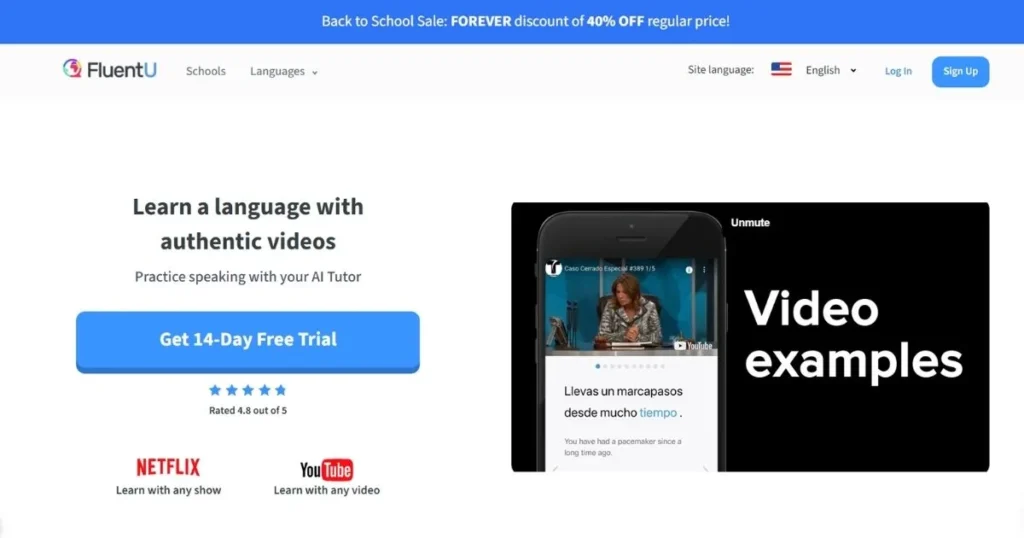
The French learning platform FluentU offers you the opportunity to learn French using real video content: clips, ads, and short films with interactive subtitles, flashcard-style vocabulary pop-ups, and comprehension quizzes. This role-play method improves listening skills and vocabulary. The application includes quizzes and personalized reviews to reinforce learning. FluentU is perfect for visual and auditory learners who enjoy authentic content.It recommends videos for words you are having difficulty with so that you feel it is personal practice. It is suitable for students who are in the intermediate level who wish to develop their listening skills from authentic media sources. The negatives are that it is expensive and overlapping. Most of the source material is publically available on YouTube, it comes at a higher price than most self-learning applications and it lacks writing practice and real-time conversational practice. Use it as a listening aid and not as a course.
Key highlights
- A variety of French videos on many topics.
- Vocabulary Pop-Up with interactive captions.
- Video recommendations of terms based on inaccurate searches.
Pros
- Authentic content, not scripted dialogues.
- Helpful interactive subtitles.
- Personalised video suggestions.
Cons
- All of most of the source videos are available on YouTube, for free.
- Expensive compared to other self-study programs.
- No writing practice or real speech.
Pricing
- $29.99/month.
13. Rocket French
- Best for: Ownership
- Rating: 4.5/5
- Downloads: Loyal self-study audience
- App link: https://www.rocketlanguages.com/
- Platforms: iOS, Android, Web
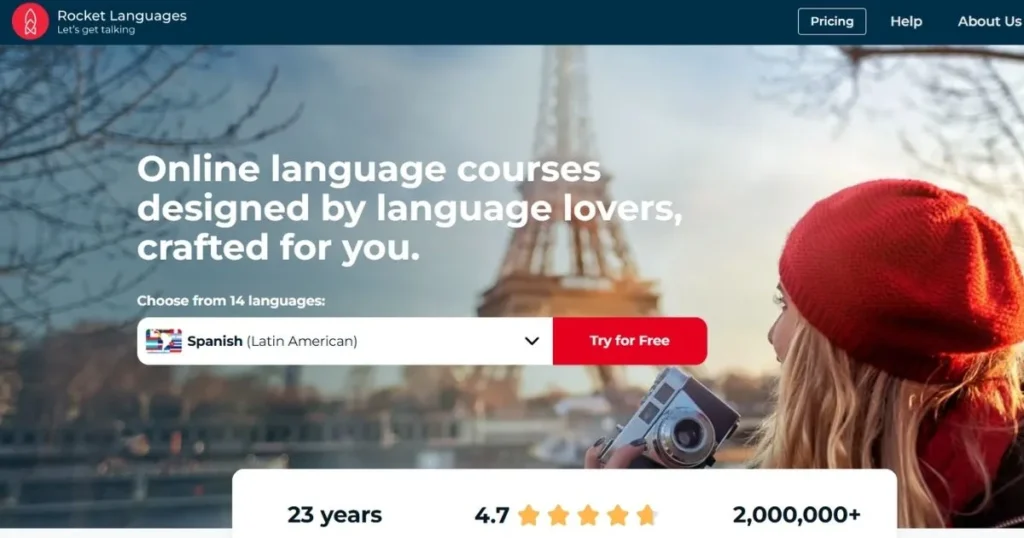
Rocket French is a combination of audio dialogue lessons, interactive grammar practice, writing practice and cultural notes on French life. It is a mixture of audio lessons and interactive exercises and quizzes. The speech recognition tools facilitate accurate pronunciation. It has the ability to compare the pronunciation with a native speaker with its voice recognition software, allowing you to see where you went wrong. The big selling point is the pricing: You pay a single level fee and have access for life with no monthly charges. It can be too slow for fast learners, not as many formats of exercises as newer sites, and there is no teacher-to-student interaction. It is perfect for the self-paced learner who likes to purchase her/his copy once.
Key highlights
- Audio lessons with engaging activities.
- Feedback for pronunciation using voice recognition.
- Notes of French culture.
Pros
- Pay once, use for life!
- Real pronunciation feedback.
- Well developed grammar and vocabulary.
Cons
- The tempo of the audio may be too slow.
- A lesser number of exercises in comparison to newer apps.
- No in-class native teacher.
Pricing
- From $149.95 per level.
- Lifetime access, no monthly subscription.
14. Lingoda
- Best for: Classroom
- Rating: 4.7/5
- Downloads: Online language school with a mobile app for booking classes
- App link: https://www.lingoda.com/
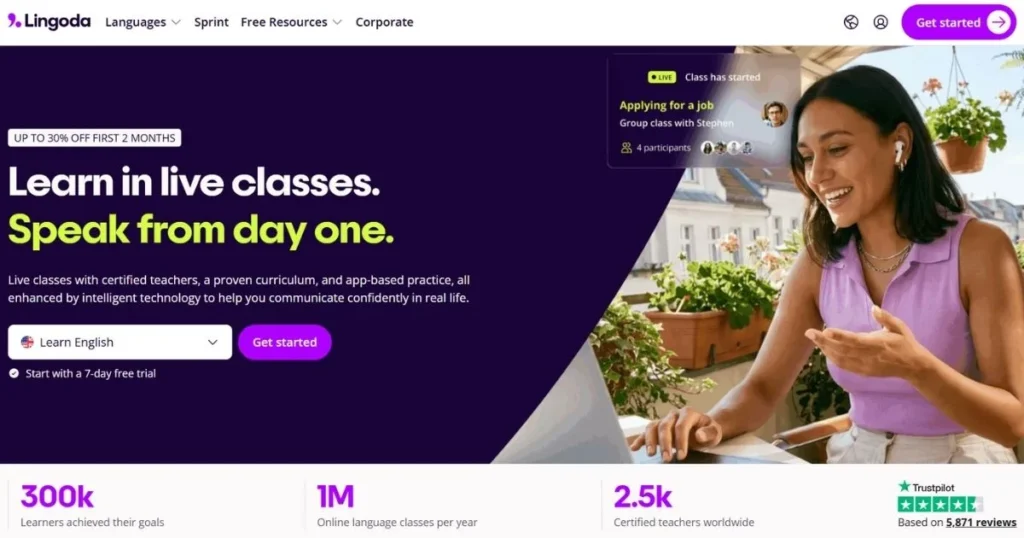
Lingoda is a language school that conducts French Learning Apps with real-life, native teachers in groups. Classes are continuous, have three to five students, are based on a CEFR curriculum and offer real speaking practice and accountability of a classroom. This pairing isn’t typically found in apps. But the downside is the price – the game is significantly more pricey than the self-study apps. Group lessons will also not be as personalised as private lessons and there will be less opportunity to work on areas of weakness. It’s suitable for students who prefer a specific course structure and content.
Key highlights
- Classes using live video with qualified native teachers.
- CEFR-aligned curriculum.
- 3-5 students in small groups.
Pros
- 100% of teachers are qualified as native speakers.
- Classes offered at all times of the day.
- Real curriculum + skills.
Cons
- For instance, it’s more costly than self-study apps.
- Not as individualised as a 1 to 1 lesson.
- Decreased attention to any areas of weakness.
Pricing
- Group classes from $64.99 to $399.99/month.
15. italki
- Best for: Speaking
- Rating: 4.8/5
- Downloads: 10 million learners across 190+ countries
- App link: https://www.italki.com/
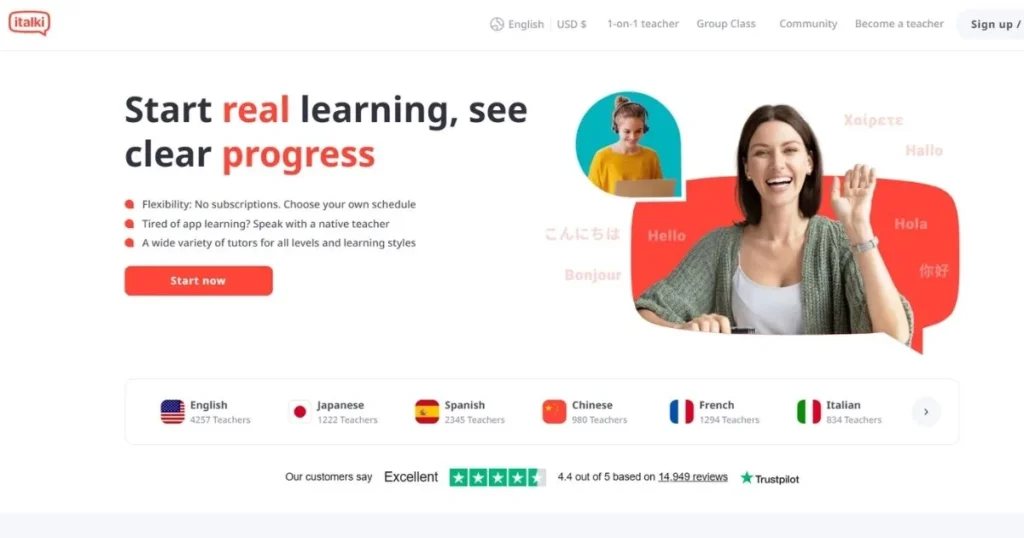
italki is not so much an French Learning Apps as a marketplace to connect with real, individual French teachers, including community tutors, for one-to-one, live lessons. You look at prices, teaching style and specialisation, watch the intro videos, read reviews and then book a discounted trial lesson before committing to your purchase. This can be from DELF qualified teachers to those wanting to chat and talk, for all beginners, exam takers and business learners can find a match. It also features a customizable learning plan, a classroom and italki Plus for generating notes on the lessons and managing words. It is the only tool for this here that is around actual talking.
Key highlights
- 1 on 1 lessons at any time and any timezone.
- Tutors for DELF/DALF, business, travel and conversation.
- Discounted trial lessons available with most tutors.
Pros
- Real-life speaking practice in context of your objectives.
- No monthly subscription – pay per lesson.
- Flexible week schedule for busy weeks.
Cons
- Expensive per session, as compared to a free app.
- There is a time investment to be done in selecting the right teacher.
- Progress is dependent on regular lessons being booked.
Pricing
- French lessons from $4.
- Discounted trial lessons available.
- No subscription required.
- italki Plus available as an add-on (check the site for details).
Best French Learning Apps for Beginners
| Need | Best pick | Why |
| Low-pressure daily practice | Duolingo | Free, short and easy to start |
| Clear grammar explanations | Babbel | Structured lessons with English explanations |
| Relaxed audio introduction | Coffee Break French | Gentle podcast pace for absolute beginners |
| Listening on the go | FrenchPod101 | Audio lessons for commutes |
| Correct pronunciation from day one | italki | A native teacher catches habits before they stick |
Duolingo vs Babbel for French
Either are popular entry points, but each are right for some. Duolingo is free, fun and addictive. It will keep you practising daily but is likely to get stuck within the A1–A2 level target zone and uses a range of multiple-choice and translation drills. Babbel is $18.49/month (has a minimum 3 months subscription) and does not offer a free version, but its lessons are taught by professionals from the language field and present grammar in English, with all four skills being addressed in any given lesson.
If you are looking to take a dip without spending money, or you need some motivation, then you should opt for Duolingo. If you’re an adult beginner who is wanting structure and grammar, then pick Babbel. They also provide no opportunity to practice speaking, so expect to add a real person conversation when you’ve mastered the basics.
What App Is Better Than Duolingo for French?
“Better” is based on what Duolingo is lacking from you.
- Desire for organisation, grammar? Babbel doesn’t skimp on explanations.
- Want writing feedback? You can have the correction of your work done by native speakers with the help of Busuu.
- Looking for a vocabulary that will stick? Memrise is a spaced repetition course with native speaker videos.
- Want to speak? italki is the strongest option, because a real teacher responds to what you say.
None of the French Learning Apps are better than Duolingo on every aspect, it’s just that it’s cheaper and more addictive. However, other tools are more effective when it comes to depth and speaking.
Can ChatGPT Help You Learn French?
Yes, as practice partner, not as a whole course. For little or no cost, AI chatbots can act as a waiter in a café, tell you the reason behind a verb’s form, provide you with sample sentences and quiz you on a word at any time. They are kind, and don’t criticize errors.
There are limits. Sometimes AI will provide an inaccurate or overly formal response, it won’t be able to accurately assess your pronunciation, and it doesn’t have to take responsibility as a schedule does. Use for making and checking the meaning of sentences and to check against a reliable grammar reference work. Then put this into practice in a discussion with a live teacher whose native language accent you can hear and correct any habits a chatbot may overlook.
What Apps Can’t Do (and What to Add)
Apps are great for repeating words, routine and vocabulary. They have lower scores in these areas:
- Live conversation: Most applications do not actually have a live person to converse with. Rewrite the sentence in italki regular 1-on-1 lessons.
- Personalised correction: Personalized corrections are hardly ever offered by automated feedback. Add: a tutor to keep an eye on your frequent errors.
- Scripted audio: It is cleaner than natural accents and speech. Include: News in Slow French, authentic videos or podcasts.
- Accountability: Apps can be terminated quietly with free apps. Add: scheduled lessons that have a specified time.
The practical setup consists of one application for daily practice and one or two lessons a week with the instructor.
The 80/20 Rule in French
The Pareto principle, also known as the 80/20 rule, is based on the observation that a large percentage of the effects come from a small percentage of the causes. In French, it’s a relatively limited number of high frequency words and core grammar structures that account for most of the common language spoken. The proportions may differ, depending on the source, so do not consider the proportion to be a rule, but a guide.
In practice, focus first on:
- Very common verbs (être, avoir, aller, faire) and present tense verbs.
- The most common words, within the top hundred or thousand most common words.
- Basic vocabulary for greetings, ordering, directions and conversation.
- Basic question types with negation.
When these are fixed, introduce the tenses (passé composé and future) and extend your vocabulary. There are apps that are suitable for this early stage such as Memrise and Duolingo.
30-Day Starter Plan
| Week | Focus | Daily routine (20–30 mins) |
| Week 1 | Sounds, greetings, core phrases | Duolingo or Coffee Break French; learn 10 new words daily |
| Week 2 | Present tense and essential verbs | Babbel lesson or Lawless French grammar page; review flashcards |
| Week 3 | Listening and simple conversation | FrenchPod101 or Pimsleur on your commute; book a trial lesson on italki |
| Week 4 | Speaking and review | Two 1-on-1 lessons; revisit weak words on Memrise; write a short self-introduction |
By Day 30 learn to introduce yourself, order food, ask for directions and follow slow, simple speech. Do it at your own pace.
What Reddit Learners Recommend
Online Learner Communities are more likely to highlight a few themes than have a “winner” emerge. We have not included individual posts here so use this as a guideline and verify any current threads.
- Lots of students recommend to begin with an open application, and then progress to an even more structured one.
- Listening comprehension is frequently championed with the use of podcasts and graded listening.
- Vocabulary is often suggested to use spaced repetition tools.
- Sometimes learners will state that speaking with a tutor or exchange partner finally helped them to make progress.
The constant theme is to use tools together.
How to Choose: Quick Decision Checklist
- Set the objective: Set the objective for travel, exams, work and family conversation – this requires different tools. When it comes to speaking, go for live practice. If you’re looking to add a habit to your daily routine, try a free app.
- Assess the level: Structure and grammar help the beginner. Intermediates require listening and speaking skills and most apps are light on higher than A2 so find apps that cover your stage.
- Establish a feasible budget: Free resources such as Duolingo, Coffee Break French and Lawless French are free. The subscription fees are approximately $13-$30 a month, and the italki course fees begin at $4. Be on the lookout for “low-cost” commitments.
- Match the schedule: Commuters are for audio learning programs such as Pimsleur or FrenchPod101. With no rigid schedule, pay-for-lesson tutoring fits those who are busy or have irregular schedules.
- Test before you commit: Take advantage of free trials or auditions for a class or book a discounted trial lesson to see how it fits.
Conclusion
No one app is the “best” French Learning Apps, it’s the best one for your objective. You will get a free start from Duolingo, Coffee Break French and Lawless French. Structure and immersion are added by Babbel, Rosetta Stone and Pimsleur. Memrise, FluentU and News in Slow French help to develop vocabulary and listening skills. All of the apps listed here have a drawback, however: they can’t take the place of human interaction. This is why the best regimen is a daily application and monthly in-class lessons. For the interactive learners, if you want to speak French, sign-up for a trial class with a native French teacher at italki, and let your favourite app do the daily repetition in between.
FAQs
Is Duolingo or Babbel better for French?
Duolingo is more effective when it’s free and done without pressure. Babbel is ideal for adult learners who need explanations of grammar and a step-by-step approach. Both provides no live speaking practice.
What is the 80/20 rule in French?
It’s the concept that there is a limited number of key words and basic grammar that form the bulk of the day-to-day conversation. First focus and expand on common verbs, essential phrases and present tense, then add the rest.
Can ChatGPT help me learn French?
Yes, for role play practice, explanations and quizzes. May make errors; may not be able to accurately judge your pronunciation; double check pronunciation details; practice speaking with a real teacher.
What app is better than Duolingo for French?
It is dependent on your requirement. Babbel’s grammar is better, Busuu’s writing is corrected, Memrise has better vocabulary retention and italki has better real speaking practice.
Are there truly free French learning apps?
Yes. Duolingo is free, Busuu and Memrise have a basic plan for free, Coffee Break French and News in Slow French have free episodes, and Coursera courses are audited for free. However Lawless French is free for use and it’s a website and not an app.
Which app is the best for learning French as a beginner?
Duolingo is for casual learners, Babbel is for grammar learners. Either combine with a native teacher on italki so he or she can identify pronunciation patterns early or with a native instructor who has written curricula designed to help students learn the language.
Can I become fluent using apps alone?
Unlikely. Vocabulary and habit are developed in Apps, fluency requires natural speech and personalised feedback. Mix applications and live lessons.
How long does it take to reach A2 or B1 with an app?
This is dependent on your study effort, consistency and starting stage, so there is no accurate estimation of how long an honest app can take you. It is common for many apps to sag during the A1 – A2 stage of the course so additional listening and speaking skills practice is generally required to reach the B1 level.
What is the best free French learning app for kids?
A popular starting point is Duolingo, which is free but not specifically for young children, and will, by itself, be a great challenge for them. There are apps specifically for children that teach French, so read the reviews, look at age appropriateness and privacy policies and give the free trial a test run. Children do better with short and play sessions.
Do I need to pay for an app to pass the DELF?
It doesn’t have to be, but exam preparation is enhanced by structure and feedback. Free Apps can develop vocabulary and listening. Apps don’t offer targeted coaching as do a tutor who is familiar with the exam (e.g. a tutor who is certified as a DELF teacher) or a course offered at the Alliance Française.
