
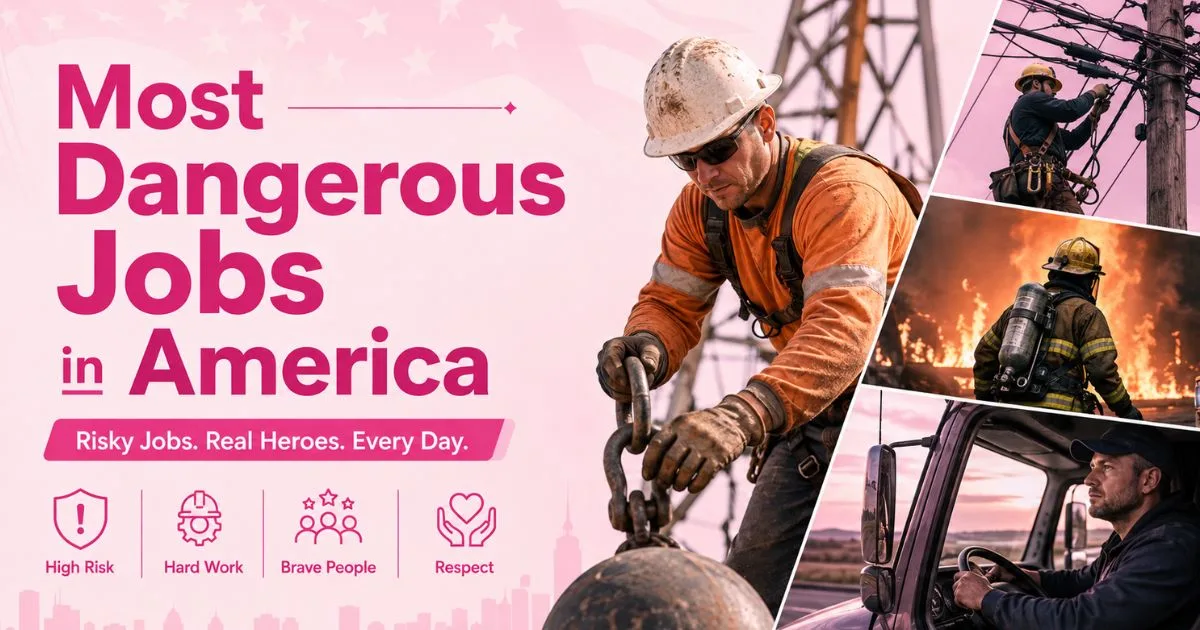
All work involves some level of risk, but some occupations require workers to risk their lives every day. Imagine a logger under the weight of heavy branches, a roofer on a steep roof in July heat, or a fisher bringing the fishing gear on a pitching deck far from the shore. They work and keep this country going, but they pay a price that the office worker doesn’t think of.
The best place to begin gathering information on this subject is from the U.S. Bureau of Labor Statistics (BLS) Census of Fatal Occupational Injuries (CFOI). The new edition is for the calendar year 2024 and was published on 19 February 2026. There were 5,070 fatal work injuries in the United States, a decrease of 4.0 percent from 5,283 in 2023. The national fatal injury rate of 3.3 deaths per 100,000 full-time equivalent (FTE) workers was lower than 3.5 in the previous year. Despite this, there was still one worker death per 104 minutes.
The BLS uses a standard yardstick to measure the Most Dangerous Jobs in America: the fatal injury rate. The top 10 jobs and their deaths will be displayed, along with pay, skills, hazards, and practical tips for safety. The most recent complete data set is for 2026, and 2025 data will be provided in the next CFOI.
How “Dangerous” Is Measured (Rate vs Number of Deaths)
There are two straight answers to the question ‘which job is the most dangerous?’, and the answers are different.
Knowing this division is essential to digesting any list of the Most Dangerous Jobs in America. The first is the fatal injury rate. It demonstrates the risk of death for an individual worker, as it relates to the size of the workforce. The second is the number of fatalities, which reveals the biggest aggregate losses – regardless of the number of people working on the job.
If a person looks for the Most Dangerous Jobs, it’s normally the rate which they’re after. Even a small job with a few fatalities may be quite dangerous for the worker. There’s a personal risk reduction in a big occupation where many people die.
| Measure | What it tells you | Best used for | Example (2024) |
| Fatal injury rate | Deaths per 100,000 FTE workers | Comparing personal risk | Logging: 110.4 |
| Number of deaths | Total workers killed | Seeing where losses are largest | Truck drivers: 950 |
| Nonfatal injury rate | Injuries per 100 workers (a separate BLS survey) | Everyday injury risk | All private industry: 2.3 |
The 10 Most Dangerous Jobs in America
The following fatality data is from BLS CFOI 2024. Pay data are from the BLS Occupational Employment and Wage Statistics (OEWS) program, May 2025 estimates, and are medians for the nation unless otherwise specified.
| Rank | Job | Fatality rate (per 100,000 FTE) | Deaths | Leading cause (typical) | Median pay (OEWS) | Source year |
| 1 | Logging workers | 110.4 | 51 | Struck by trees, logs, equipment | $49,660 | CFOI 2024 / OEWS May 2025 |
| 2 | Fishing and hunting workers | 88.8 | 24 | Vessel incidents, drowning | Not published | CFOI 2024 / OEWS May 2025 |
| 3 | Roofers | 48.7 | 104 | Falls from height | $55,440 | CFOI 2024 / OEWS May 2025 |
| 4 | Structural iron and steel workers | 37.8 | 14 | Falls from height | $61,910 | CFOI 2024 / OEWS May 2025 |
| 5 | Refuse and recyclable material collectors | 37.4 | 36 | Struck by vehicles | $49,690 | CFOI 2024 / OEWS May 2025 |
| 6 | Aircraft pilots and flight engineers | 36.7 | 73 | Aircraft crashes | $123,220 (commercial); $232,140 (airline) | CFOI 2024 / OEWS May 2025 |
| 7 | Helpers, construction trades | 35.8 | 18 | Falls, struck by objects | $46,680 (laborers and helpers) | CFOI 2024 / OEWS May 2025 |
| 8 | Underground mining machine operators | 35.6 | 12 | Contact with equipment, roof falls | About $61,810 | CFOI 2024 / OEWS May 2025 |
| 9 | Driver/sales workers and truck drivers | 25.7 | 950 | Roadway crashes | $58,640 (heavy truck) | CFOI 2024 / OEWS May 2025 |
| 10 | Grounds maintenance workers | 20.9 | 239 | Falls, struck by objects, traffic | About $39,150 | CFOI 2024 / OEWS May 2025 |
The 10 Most Dangerous Jobs in America
1. Logging Workers
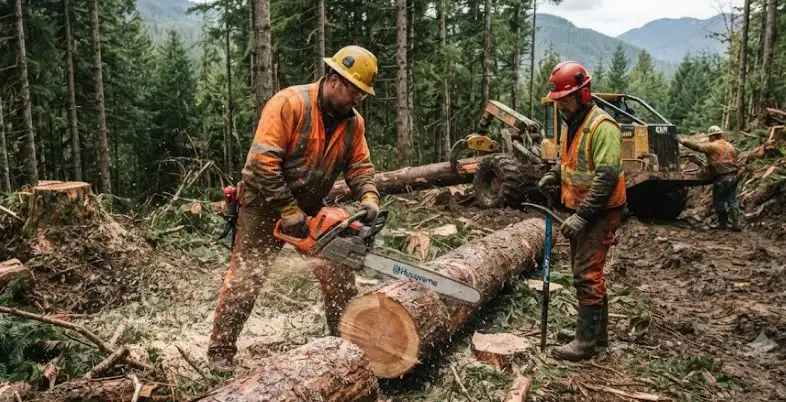
- Fatality risk: 110.4 deaths per 100,000 workers
- Common employer: Timber and logging companies
- Typical salary: About $49,660 per year
- Skills required: Chainsaw and equipment operation
Logging workers remove trees that can be used to make lumber and paper and packaging. They fell trees, operated skidders and feller bunchers, and moved timber to mills. The career is ideal for someone who enjoys working outdoors and with machines and does not require a college degree. It is the most dangerous occupation in America by rate. Pay is close to the national median of $50,980. BLS projects that employment will decline slightly, as mechanized equipment takes the place of hand work, but that the employment of trained operators for modern harvesters will remain valuable. Loggers can advance to a crew leader or start their own contract business.
Why it’s dangerous:
- Falling trees and limbs
- Chainsaw kickback injuries
- Heavy moving machinery
- Remote work sites
- Rough, uneven terrain
- Delayed emergency help
Check World’s Best Business Opportunity
2. Fishing and Hunting Workers
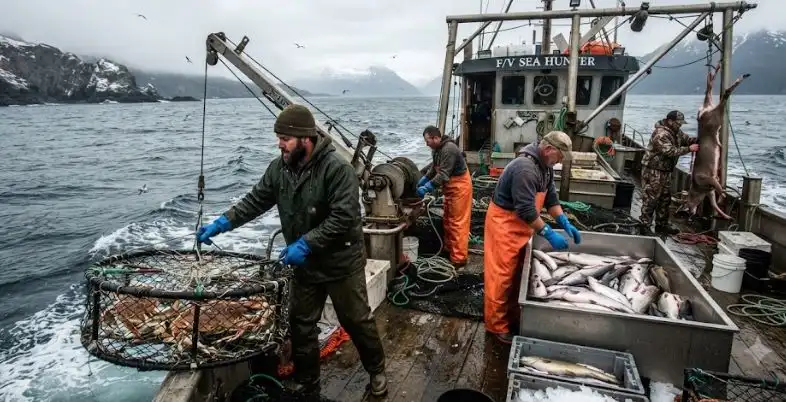
- Fatality risk: 88.8 deaths per 100,000 workers
- Common employer: Commercial fishing vessel owners
- Typical salary: BLS annual wage unavailable
- Skills required: Seamanship, rope work, stamina
Commercial fishers harvest fish, crab, and shellfish for sale in markets and restaurants throughout the country. They may work in the summer on small boats or large vessels and are frequently part of a tight-knit group. Earnings are typically related to the catch, and seasons with good catches can command high earnings, whereas seasons with poor catches can command low earnings, making it impossible to provide a single annual wage. No formal training is required for the job, and skilled deckworkers can become captains or owners of their own boats. In 2024, there were 24 deaths, but the workforce is very small, which makes the death rate very high.
Why it’s dangerous:
- Rough seas and storms
- Vessels capsizing or sinking
- Falls overboard
- Heavy gear and winches
- Icy, wet decks
- Far from rescue
3. Roofers
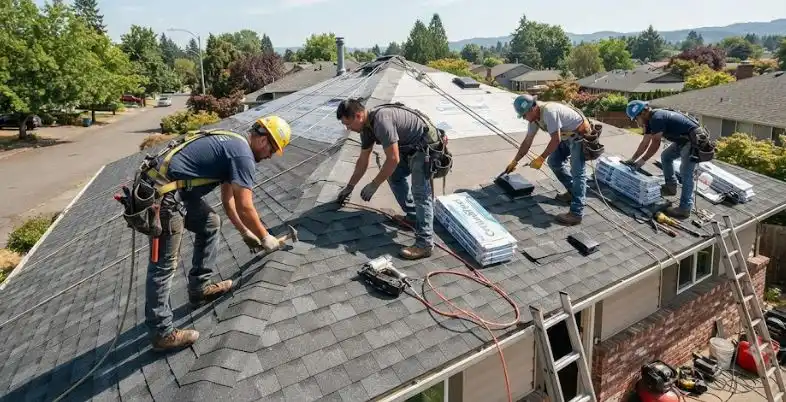
- Fatality risk: 48.7 deaths per 100,000 workers
- Common employer: Roofing and construction contractors
- Typical salary: About $55,440 per year
- Skills required: Balance, strength, hand tools
Roofers install, repair and replace roofs on commercial and residential buildings. It is a relatively simple skilled occupation to get into, as most of the training is done in the job. BLS anticipates that employment will increase at a rate greater than average through 2035 at 5 percent, and at a rate of approximately 12,000 jobs per year. The median pay is $55,440 which is higher than the median for all workers, and more than a foreman/company owner. Demand is steady as storms and aging homes maintain demand. In 2024, roofers had the third highest number of recorded deaths, 104, making roofing one of the Most Dangerous Jobs in America.
Why it’s dangerous:
- Falls from height
- Steep, slippery slopes
- Extreme summer heat
- Fragile roof surfaces
- Unstable ladders
- Hot tar and torches
4. Structural Iron and Steel Workers
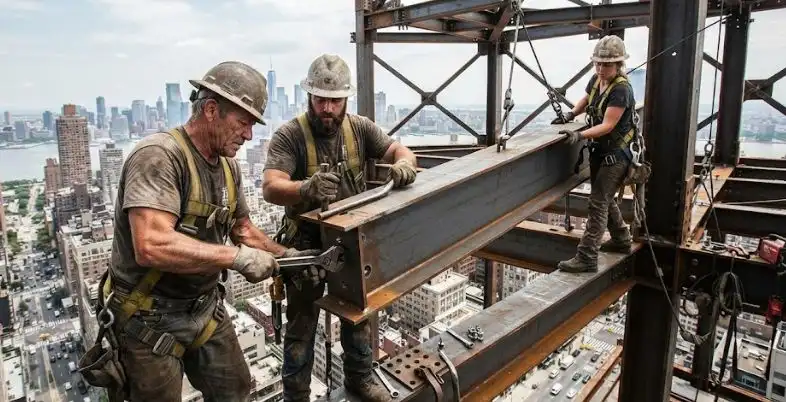
- Fatality risk: 37.8 deaths per 100,000 workers
- Common employer: Steel erection contractors
- Typical salary: About $61,910 per year
- Skills required: Welding, rigging, working at heights
Ironworkers have the task of building the frameworks of skyscrapers, bridges, stadiums and factories. They install steel beams and columns, fasten them with bolts or weld and attach reinforcing bars to the concrete to reinforce it. They tend to come through paid apprenticeship programs and thus are compensated for their studies. The median salary is $61,910, which is much higher than the $58,590 national median, and demand is tied to construction and infrastructure spending. There are a number of clear career paths in the trade that proceed from a state of apprentice to journeyman to foreman. In 2024, BLS reported 14 fatal injuries, a relatively small number that resulted in a relatively high rate given the small size of the workforce.
Why it’s dangerous:
- Working at great heights
- Swinging steel loads
- Crane operations nearby
- Strong wind exposure
- Narrow beam walking
- Hot cutting tools
5. Refuse and Recyclable Material Collectors
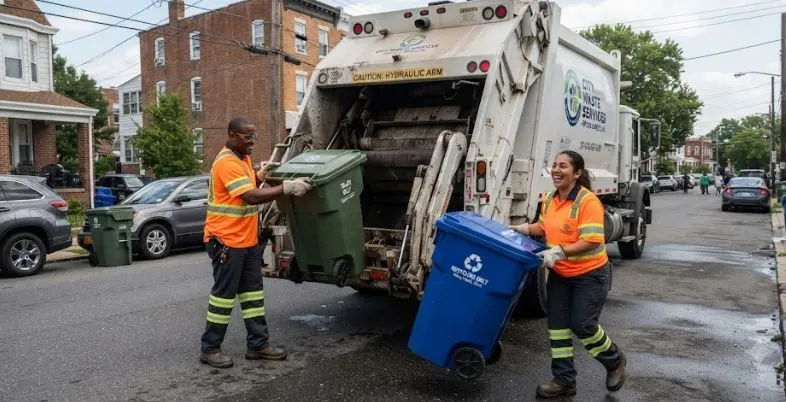
- Fatality risk: 37.4 deaths per 100,000 workers
- Common employer: Waste companies, city governments
- Typical salary: About $49,690 per year
- Skills required: Driving, lifting, route awareness
The refuse and recyclable collector service removes waste and recyclables that help maintain neighborhoods that are clean and healthy. In 2025, some 156,400 individuals had these occupations and BLS projects steady growth of 2 percent through 2035. Many jobs are with the city government or large waste companies with benefits. It’s a non-college job that pays for reliability, physical fitness and good driving skills. Pay is near the national average, and for those with experience, there is the option to become a driver, a route supervisor or an equipment operator. A total of 36 collectors died while on duty in 2024, far exceeding the national average of three. In 2024, there were 36 collectors killed at work, compared to 3.25 nationally.
Why it’s dangerous:
- Struck by vehicles
- Backing trucks
- Heavy repeated lifting
- Hydraulic compactor hazards
- Hazardous items in bins
- Early, dark routes
6. Aircraft Pilots and Flight Engineers

- Fatality risk: 36.7 deaths per 100,000 workers
- Common employer: Airlines, charter and air-tour operators
- Typical salary: $123,220 to $232,140 yearly
- Skills required: Flight training, judgment, certification
This group includes airline pilots, commercial pilots as well as flight engineers. Commercial pilots fly helicopters, charter planes, air tours, medical planes, and crop-dusting planes, and airline pilots fly scheduled passenger jets. The top pay on this list is for a commercial pilot in the Middle East and Africa, with a median wage of $123,220; the median wage for an airline pilot is $232,140. BLS expects the rate of employment growth to be far faster than average, rising 7 percent between 2025 and 2035. The job requires a lot of training and education and can be expensive, but the pay is high. The small aircraft category accounts for many fatal aircraft accidents, as do the 73 pilot and flight engineer fatalities during 2024.
Why it’s dangerous:
- Small aircraft crashes
- Sudden bad weather
- Low-altitude flying
- Mechanical failures
- Pilot fatigue
- Remote landing sites
7. Helpers, Construction Trades
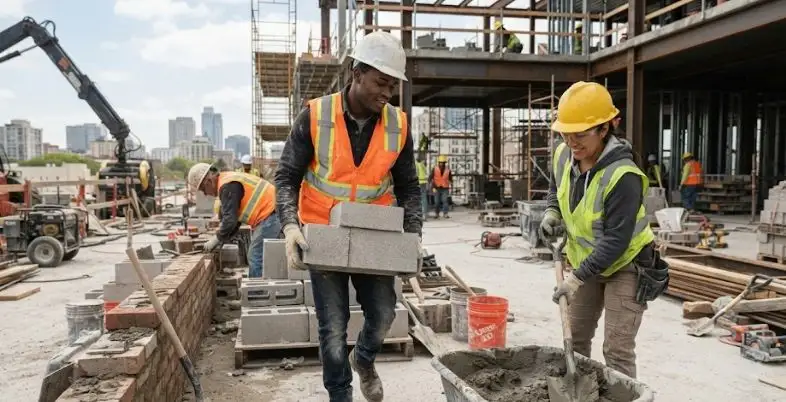
- Fatality risk: 35.8 deaths per 100,000 workers
- Common employer: Construction contractors
- Typical salary: About $46,680 per year
- Skills required: Lifting, teamwork, basic tools
Construction helpers work with other skilled tradespeople like electricians, plumbers, roofers and masons. They assist in moving materials, carry tools, clean up work areas and learn the craft through observation and participation. This is a tried-and-tested path: taking a starting role as a helper and then moving onto an apprenticeship and subsequently a higher-paying licensed trade. This wage is the median for the larger category of construction laborers and helpers as reported by the BLS, and varies from position to position within the helper category. It is a quick track to the construction sector. The small number of workers resulted in 18 helpers being killed on the job in 2024, which pushed the rate to 35.8.
Why it’s dangerous:
- New, inexperienced workers
- Falls and slips
- Struck by objects
- Trench and excavation hazards
- Power tool injuries
- Heavy materials handling
8. Underground Mining Machine Operators
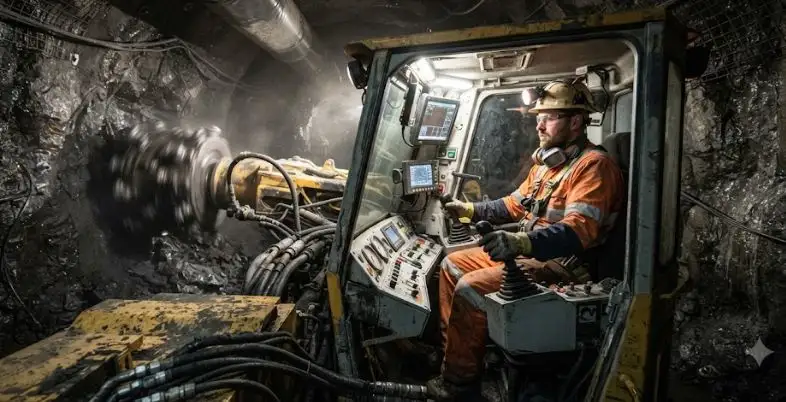
- Fatality risk: 35.6 deaths per 100,000 workers
- Common employer: Coal and mineral mining companies
- Typical salary: About $61,810 per year
- Skills required: Machine operation, mine safety training
Underground Mining Machine Operators operate continuous miners, loaders and similar heavy machinery used to cut and move coal, salt, metals and stone under ground. It is a good-paying occupation, with the national median salary for continuous mining machine operators around $62,000 and some loading machine positions higher than that for workers who do not have a college degree. Minesafety training to workers is required. Employment will be approximately level, with limited jobs available and limited to a region. A small number of deaths in 2024 indicates that a low number of deaths in a small occupation can result in an extremely high rate.
Why it’s dangerous:
- Roof and rib falls
- Explosions and fires
- Dust and toxic gases
- Heavy machines, tight spaces
- Poor visibility
- Electrical hazards
9. Driver/Sales Workers and Truck Drivers
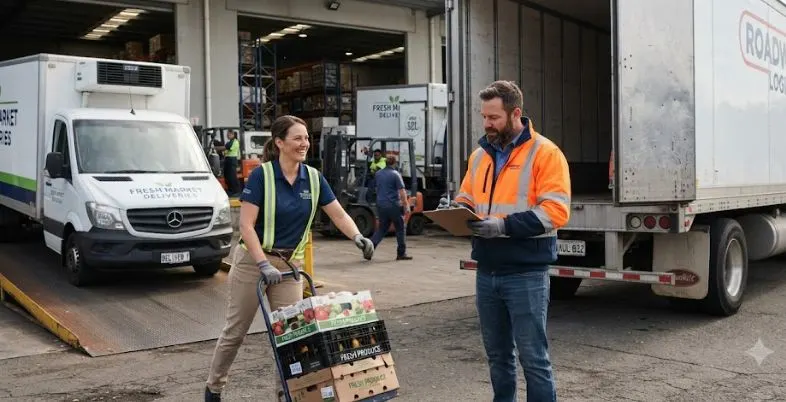
- Fatality risk: 25.7 deaths per 100,000 workers
- Common employer: Trucking and freight companies
- Typical salary: About $58,640 per year
- Skills required: Safe driving, CDL, endurance
Truck drivers transport the food, fuel, medication and packages that stores and homes rely on. Heavy and tractor trailer drivers had approximately 2.2 million jobs in 2025 and are expected to increase 4 percent until 2035, according to BLS. Typically, a commercial driver’s license (CDL) is required for entry. Heavy truck drivers make $58,640 on average, which is usually per mile. Demand is steady. The group accounts for the highest number of fatalities in this ranking of the Most Dangerous Jobs in America, with 950 workers killed in 2024, even as the personal rate is lower than for logging.
Why it’s dangerous:
- Highway crashes
- Driver fatigue
- Long working hours
- Rollovers and jackknifes
- Night and bad-weather driving
- Loading and unloading risks
10. Grounds Maintenance Workers
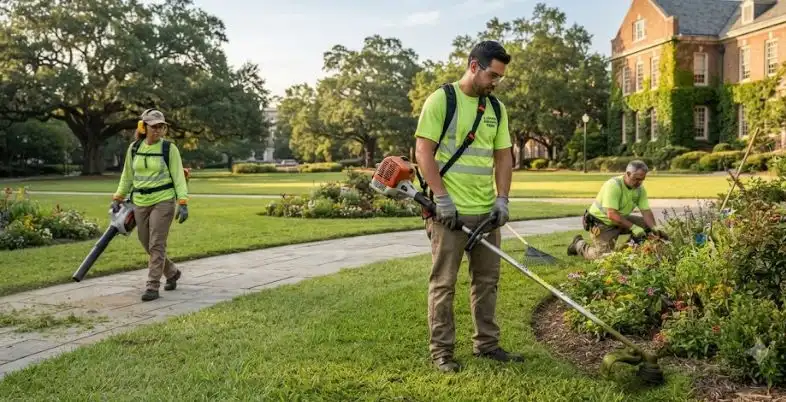
- Fatality risk: 20.9 deaths per 100,000 workers
- Common employer: Landscaping firms, local governments
- Typical salary: About $39,150 per year
- Skills required: Equipment use, plant care, stamina
Grounds maintenance workers perform a variety of tasks including mowing the lawn, trimming hedges, pruning trees, planting gardens, and maintaining parks, campuses and golf courses. In 2024, approximately 1.3 million people were employed in these occupations, and BLS estimated that they would grow by 4 percent in 2034. Simple to enter and a way to get to supervisor positions or a small landscaping business. Safety investment is even more of an important element with this job as the pay is less than most jobs in this list. Ground maintenance had 239 fatalities in 2024, one of the more significant numbers of fatalities for high-rate occupations.
Why it’s dangerous:
- Tree trimming falls
- Chainsaws and mowers
- Heat exposure
- Roadside traffic
- Falling branches
- Chemical exposure
Most Dangerous Jobs by Total Number of Deaths
Many lives could be claimed by a job, even if the rate is a modest one, because of the number of people that are employed. The occupations with the highest number of fatalities in the BLS 2024 occupation chart are shown in this table. The truck driver job far outstrips the other nine jobs in the top ten list of jobs by deaths, with a death rate of 950, compared with the combined death rate of 571 for the other nine jobs.
| Rank | Job | Deaths (2024) | Fatality rate (per 100,000 FTE) |
| 1 | Driver/sales workers and truck drivers | 950 | 25.7 |
| 2 | Construction laborers | 334 | 15.8 |
| 3 | Grounds maintenance workers | 239 | 20.9 |
| 4 | Farmers, ranchers and other agricultural managers | 175 | 19.4 |
| 5 | Miscellaneous agricultural workers | 147 | 19.0 |
| 6 | Laborers and freight, stock and material movers | 110 | 5.4 |
| 7 | First-line supervisors of construction trades | 105 | 12.8 |
| 8 | Roofers | 104 | 48.7 |
| 9 | Carpenters | 89 | 7.5 |
| 10 | Maintenance and repair workers, general | 76 | 10.8 |
Most Dangerous Industries and Occupation Groups
When you consider the larger picture, it is easy to see why some occupations are at the top of the Most Dangerous Jobs in America. These are the main patterns in the BLS 2024 data:
- Agriculture, forestry, fishing and hunting recorded the highest fatality rate (459 deaths per 100,000 workers, about 20.0).
- Transportation and material moving occupations recorded the highest number of deaths among all occupation groups, with 1,391 deaths and a rate of 12.5.
- In 2024, construction and extraction occupations had 1,032 deaths.
- Deaths in building and grounds cleaning and maintenance increased to 356, from 337 in 2023.
- Protective service occupations had 281 fatalities, of which 97 were homicides.
- Older workers are more at risk: workers aged 65 and older died at a rate of 9.1 per 100,000, which is nearly three times higher than the all-worker rate.
What Causes Fatal Work Injuries?
The occupations on this list are not the same, but the same few causes most fatalities. As evident in the BLS 2024 numbers, the trend is what you see:
- The highest number of work fatalities occurred with transportation incidents, at 1,937 or 38.2 percent of work deaths.
- One thousand, one hundred and forty six people died in roadway crashes involving motor vehicles.
- The number of pedestrian workers involved in motor vehicle collisions increased 19.0 percent to 369.
- There were 844 deaths due to falls, slips and trips and 10.8 per cent of these falls occurred from more than 30 feet.
- Violence claimed 733 lives – 470 homicides, 263 suicides.
- 687 deaths occurred due to harmful substances/environments, including 410 overdoses.
- Falls on objects and equipment, including trees, rolling loads and moving machinery, continue to be a leading cause of fatalities in logging, mining and construction.
- There is simplicity to the lesson. The common risks in Most Dangerous Jobs in America are: vehicles, heights and heavy equipment.
Dangerous Jobs That Pay Well (and Ones That Don’t)
Many of the Most Dangerous Jobs in America pay modestly, and danger and pay don’t always go hand in hand. In comparison, the national median wage for all workers was $50,980 in May 2025.
Higher-paying dangerous jobs
- Airline pilots: Median of $232,140, which is far the highest of all professions.
- Commercial pilots: $123,220 median.
- Structural iron/steel workers: $61,910 median.
- Underground mining machine operators: $61,810 for continuous mining.
- Heavy Truck Drivers: $58,640 median.
- Roofers: $55,440 median.
Lower-paying dangerous jobs
- Grounds maintenance workers: Approximately $39,150, which is below the national median.
- Construction Trades workers: $46,680 median.
- Refuse/recyclable material collectors: $49,690 median.
- Logging workers: $49,660 – Slightly below the national median.
- Commercial fishing: BLS has no annual wage data and income may vary depending on the catch.
How Workers Can Reduce Risk
While no checklist can eliminate all risk, smart habits and good employers can reduce the risk significantly.
- Always use fall protection: The most common deadly accidents in roofing and steel work are prevented by harnesses, guardrails, safety nets and ladders properly set up.
- Follow the proper safety equipment: Basic armor includes chainsaw chaps, hard hats, high-visibility clothing, gloves and eye and ear protection.
- Use life jackets when in the water: PFDs, immersion suits and emergency beacons are effective in helping people survive if they fall into the water.
- Safety belt and rest: Break schedules and seat belts keep drivers safe from crashes and fatigue.
- Be visible in the vicinity of traffic: Collectors and road crews are protected with reflective vests, warning lights, spotters and safe backing procedures.
- Beat the heat: Stay hydrated, find shade, and know the symptoms and signs of heat illness. There are more stringent heat restrictions in certain states than federal law.
- Train & certify: Request training in tools, machine equipment, confined spaces and emergency plans prior to the start of a job.
- Check out equipment and speak up: Inspect ladders, ropes, brakes and guards on a daily basis and report any defects found. OSHA is available to assist when hazards remain uncovered.
- Employers are responsible for creating safe environments: Mechanized harvesting, aerial lifts, improved routes, driver monitoring and a strong safety culture are preferable to just telling people to be careful.
Data Notes: Why Rankings Differ Across Websites
Searching online for the Most Dangerous Jobs in America might yield various lists of the top 10 jobs. Here is why:
- Rate vs count: Some lists rank by deaths; truck drivers top the list. Others are ranked by rate, and thus the loggers are ranked first.
- Different years: Older articles are based on 2023 or earlier data. This guide refers to the 2024 CFOI data that was released in February 2026.
- Smaller numbers can have sharp swings: Jobs in the 19,000- to 20,000-level range, like iron workers and underground mining machine operators, can rise or fall significantly.
- Only selected occupations: BLS charts select occupations. For instance, the rankings that include police officers are derived from other tables in the BLS chart because they do not have a 2024 rate.
- Job title definitions: “Pilots” refers to airline pilots only or to the BLS broader group of aircraft pilots and flight engineers. Agricultural managers can be included or excluded from the “Farmers”.
- Various data sources: CFOI reports deaths (including self-employed). The risk of nonfatal injuries is understated by the nonfatal injury survey because it fails to include many self-employed and small-farm workers, e.g., loggers and fishers.
Conclusion
The Most Dangerous Jobs in America aren’t secret. Logging, fishing, roofing, iron work, waste collection and flying small aircraft, among others, are all highly loaded and involve working at height, in the weather and/or with heavy equipment and/or in traffic. According to BLS 2024 data, logging workers are at the greatest personal risk, with 110.4 deaths per 100,000 workers, while truck drivers have the highest number of deaths at 950.
The positive news is that there were fewer overall work fatalities in 2024. Improved training, protective clothing, safer equipment and high levels of employer commitment save lives. If you are employed in one of these occupations or employ others in that category, make safety a part of the job, not an add-on.
FAQs
What is the most dangerous job in America?
Logging. The 110.4 deaths per 100,000 FTE workers for logging workers were the highest in 2024.
What is the most dangerous job measured by?
The fatal injury rate, which compares the number of work deaths to the number of full-time equivalent workers, is used by BLS. This will enable the fair comparison of small and large jobs.
Which job has the most total deaths?
Driver/sales workers and truck drivers (950 deaths in 2024).
What is the rate of fatal injuries in the country?
The national rate for 2024 was 3.3 deaths per full-time equivalent worker which was a decrease from 3.5 deaths per full-time equivalent worker in 2023.
Which is more hazardous, logging or farming?
No. The rate for farmers, ranchers and agricultural managers was 19.4 in 2024, well below logging’s 110.4. Farming, even with its lower number of fatalities, still has more fatalities than logging as it employs more people.
What jobs are dangerous but have good salaries?
Airline pilots ($232,140), commercial pilots ($123,220), ironworkers ($61,910) and underground mining machine operators (about $61,810) earn above the national median.
What safety measures should workers take?
Always wear fall protection and protective equipment, stay hydrated, wear bright-colored clothing in traffic, get trained, report hazards early.
What is the mortality rate of workers?
A work injury claimed the life of one worker every 104 minutes or 5070 workers in 2024.
