

Starting a business as a teenager has never been more realistic. Smartphones, free design tools, and online marketplaces have removed most of the old barriers: no shop lease, no big loan, and no adult-only network needed to get your first customer.
Also keep in mind that Upwork requires you to be 18. PayPal, Stripe, Venmo and Cash App all require 18 too. Fiverr allows sellers from 13, but only through a parent or guardian’s account. Knowing this upfront saves a lot of wasted time signing up for tools that will reject you.
This guide covers real business ideas for teens in 2026, sorted by age, budget and whether you want to work from home, online, or in your neighbourhood, along with honest earning ranges and the platform rules that actually apply to you.
Why 2026 Is a Genuinely Good Time to Start
- Digital fluency advantage: Teens who grew up on social media and new apps often understand online audiences and trends faster than older competitors.
- Low starting capital: Most modern teen business ideas need little more than a smartphone, an internet connection, and some effort.
- Schedule flexibility: Service and online business models can be built around school hours, homework, and weekends rather than a fixed shift.
- Real early experience: Customer service, basic money management, marketing and problem-solving skills built now carry directly into college applications and future jobs.
- Growing niche demand: Personalised services, short-form content and small custom products all have real buyer demand that a teen-run business can realistically serve.
- More support than before: Parents, schools and communities increasingly encourage youth entrepreneurship with mentorship and small resources rather than treating it as a distraction.
- Favorable Ecosystems: Parents, schools, and communities are finding more advantages in youth entrepreneurship and are waking up to support teen businesses by providing mentorship, resources and nurturing.
Quick Answers to Common Questions
- What business can I start at 15 years old? Tutoring, pet sitting, lawn care, babysitting, crafts and reselling, and content creation are all realistic at 15, and Fiverr becomes usable through a parent’s account.
- How to make $1,000 a month as a teen? This usually needs either a steady local service (10-15 tutoring or babysitting hours a week at $15-25/hour) or a growing online channel like content creation, freelancing or print-on-demand with consistent weekly effort over a few months.
- How to make $500 as a kid? A combination of smaller jobs works well here: a few weekend babysitting or pet-sitting gigs, a handful of tutoring sessions, or selling a batch of handmade crafts or resold items.
- What are the top small business ideas for teens? Tutoring, pet care, lawn care and cleaning, crafts and reselling, print-on-demand, content creation, digital services (design or social media help), subscription boxes, and freelancing consistently rank as the most realistic and repeatable options.
Platform Age Requirements You Actually Need to Know
This is the part most ‘business ideas for teens’ articles leave out, and it matters, since it decides which tools you can realistically use right now versus which ones need a parent’s help.
- Fiverr: Sellers can be as young as 13, but only through an account owned and verified by a parent or legal guardian, who takes on the legal responsibility for it.
- Freelancer.com: Teens as young as 15 can use a parent’s account with permission, and can generally open their own account from 16, subject to local contract law.
- Upwork: Requires users to be 18, or the local age of majority if higher, with no minor or parental-permission tier at all.
- PayPal, Stripe, Venmo and Cash App: All require account holders to be 18. A parent can set up and manage an account and pay a teen out from it, or platforms like Fiverr that hold funds internally let a parent withdraw on the teen’s behalf.
- Social platforms (YouTube, TikTok, Instagram): Most allow an account from around 13, but their built-in monetisation and payout programmes generally require the creator, or a linked parent or guardian account, to be 18.
- Forming a business entity: Minors generally cannot sign binding contracts or form an LLC on their own in most places. A sole proprietorship run informally, or a parent-formed LLC with the teen involved, is the realistic path for most under-18 entrepreneurs.
Comparison Table: Best Fit by Teen Profile
| Business Idea | Best Suited For | Earnings | Startup Cost | Online/Local |
| Tutoring | Academic achievers, patient communicators | $15-25/hour | Low ($10-30) | Both |
| Pet Care | Animal lovers, responsible teens | $15-50/day | Low ($20-40) | Local |
| Lawn Care | Physically active, equipment-oriented | $30-60/yard | Medium ($200-500) | Local |
| Crafts/Reselling | Creative, trend-aware teens | Variable profits | Low-Medium ($50-200) | Both |
| Print-on-Demand | Design-focused, marketing-savvy | $100-1000+/month | Low ($50-100) | Online |
| Content Creation | Charismatic, social media natives | $500-5000+/month | Low (smartphone) | Online |
| Digital Services | Tech-skilled, detail-oriented | $15-50/hour | Low-Medium | Online |
| Subscription Boxes | Curators, customer-focused | $10-50/subscriber | Medium-High | Online |
| Freelancing | Skill-specific, self-motivated | $5-30/hour | Very Low | Online |
Top At-Home & Small Business Ideas for Teens
Tutoring and Coaching

Tutoring is one of the oldest and the most popular profitable business concepts among adolescents as academically performing students can earn money out of their acquired knowledge, assisting their peers to prosper. This business opportunity taps into teaching merits and knowledge of the subject to make a commendable difference in the local communities.
Contemporary tutoring goes beyond conventional teaching to specialized tutoring in such areas as coding, music, language learning, and test preparation. The business approach demands a high level of flexibility where the teen works around school hours and develops communication, patience, and leadership skills which are of concrete value in career development. Business Ideas for Teens like tutoring prove that knowledge itself can turn into an inspiring source of income.
- How it works: Set your hourly rate based on the subject and your experience, then find students through school networks, community boards, or online tutoring platforms.
- Earning potential: Most teen tutors start around $15-25 an hour, with rates climbing as reputation and experience build.
- Startup cost: Minimal, roughly $10-30 for basic supplies, plus an optional simple website or online profile.
- Pro tip: Specialising in a high-demand subject, like math, science, or a specific standardized test, tends to command better rates than general tutoring.
Babysitting / Pet Care (Dog Walking, Pet Sitting)

Pet care and babysitting represents an ancient business concept of teens to capitalize upon trust, responsibility and pure love to others. Although such businesses are based on services, they need good interpersonal skills and reliability but they have a high money prospect with low start up costs. The pet care market is on the steady increase due to the demands of busy persons to find good care providers for their pets.
In the same manner, babysitting is always on demand where parents need to be sure of their childcare in the evenings, on weekends and other special occasions. In both services, the teens are given an opportunity to employ themselves within their communities and learn life imperatives as they create community ties. Business Ideas for Teens like these show how trust and care can grow into rewarding opportunities.
- How it works: Build a client base through referrals, neighbourhood apps and word of mouth, and offer flexible scheduling around evenings, weekends and school holidays.
- Earning potential: Babysitting typically runs $12-20 an hour, dog walking $15-25 a walk, and pet sitting $25-50 a day.
- Startup cost: Roughly $20-40 for basic supplies like leashes, waste bags and treats, plus a basic first aid understanding.
- Pro tip: A basic CPR or pet first-aid certification, even a short online one, adds real credibility with parents and pet owners.
Lawn Care, Cleaning & Errands

Lawn care, cleaning, and errand-running service-based businesses provide great opportunities for physically active teens who like hands-on work. These are classic business activities among teens that give them steady demand since time-saving services are becoming more and more important in the eyes of homeowners. The labor contributes to character, work ethic, and practicality and meets the community’s need for immediate services.
Lawn care variations during seasons can be adjusted with categorical clean-up and errand services during the year and form a stable income line. Its success will rely on reliability, attention to detail, and competitive pricing, which indicates the convenience businesspeople can enjoy with the help of the given services. Business Ideas for Teens in this space prove that simple services can turn into strong income streams.
- How it works: Market door to door or through local community apps, build a small roster of regular clients, and grow through referrals and reliable quality.
- Earning potential: Lawn mowing typically runs $30-60 a yard, house cleaning $25-40 an hour, and errand running $15-25 an hour.
- Startup cost: Roughly $200-500 for basic lawn equipment, or $50-100 for cleaning supplies, depending on which service you choose.
- Pro tip: Bundling two services together, like mowing plus basic yard cleanup, often earns more per visit than either service alone.
Selling Crafts or Reselling Items

Creative youngsters are able to monetize artistic abilities as a result of craft-making and reselling future operations. The types of businesses that teens can do through this category include custom artwork, furniture, handmade jewelry, flipping a product on an online marketplace, as well as the sale of vintage clothing. Teens interested in reselling can also curate pre-loved or trending jewelry pieces from popular brands like Pandora, offering an easy entry point into fashion-focused resale markets. The business model enables the entrepreneur to be creative and attain important product development, inventory and customer service skills.
Market trends, pricing strategies, and good selling techniques through the internet are some of the factors that need to be understood when success is in question. The entrepreneurship of strong teens blends creating products with reselling but diversifies the income and places less risk on the products, as they offer different products. Business Ideas for teens, like crafting and reselling, show how passion can be turned into profit
- How it works: Either source items cheaply to resell at a markup, or create original handmade products, then list them on an online marketplace or sell locally.
- Earning potential: Craft sales vary widely, roughly $10-200 per item, while reselling profit margins often run 30-100 percent depending on sourcing and demand.
- Startup cost: Roughly $50-200 for initial inventory or craft supplies.
- Pro tip: Good product photos, taken even on a decent smartphone, make a noticeable difference to how fast items sell online.
Online Business Opportunities for Teens
Print-on-Demand Shops
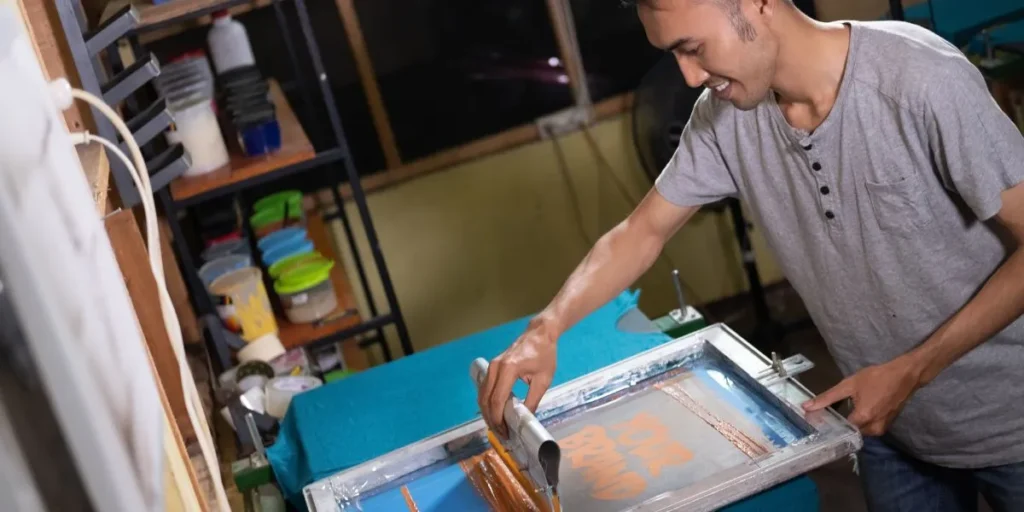
Print-on-demand business is one of the unique business concepts among teens, which combines creativity and incorporates new technology in e-business. With this model, the young entrepreneur can create bespoke graphics, messages and art, which are not printed out until the customer orders the products, removing the risk of inventory and upfront expenses. Famous products include t-shirts, hoodies, phone cases, stickers and home decor items in original designs.
It requires knowledge about target audiences, powerful designs and effective marketing through social media, where teens have the habit of spending hours. The business model has some useful lessons regarding the development of the product, developing the brand, and digital marketing. Business Ideas for teens, like print-on-demand, prove how creativity and technology can team up for success.
- How it works: Create original designs, list them on a print-on-demand platform, and market them through social media.
- Earning potential: A well-run shop can bring in roughly $100-1,000+ a month, with typical profit margins of $5-15 per item.
- Startup cost: Low, mainly a design tool subscription and a small social media ad budget, roughly $50-100 to start.
- Pro tip: Targeting a specific niche audience with genuine enthusiasm for a topic usually converts better than trying to appeal to everyone.
Content Creation: YouTube, TikTok, Blogging

One of the most easily accessible business ideas for teens is to create content on content creation platforms, capitalizing on their innate knowledge about trends in the digital sphere and social media interaction. Out of such ventures, teenagers are able to commercialize personalities, talents, and interests as they create useful personal brands in their lives.
Making it happen involves regularity, inventiveness and profound platform algorithms and viewer preferences. Examples of these streams of revenue are advertising revenue, sponsorships, affiliate marketing and direct product sales. The business educates on content strategy, audience development, brand partnerships, and digital marketing skills that are becoming more and more useful in the contemporary career in any industry.
- How it works: Post consistently in a genuine area of interest, engage with your audience, and layer in monetisation once you have enough traction.
- Earning potential: Results vary enormously, from a modest side income for smaller creators up to several thousand dollars a month for consistent, engaged channels, though most beginners should expect a slow build rather than fast income.
- Startup cost: Essentially free to start with just a smartphone, though better lighting, a microphone or basic editing software can help as you grow.
- Pro tip: Most monetisation programmes on these platforms require the account holder to be 18, or a linked parent or guardian account if you are younger, so plan for that before counting on ad revenue specifically.
Digital Services: Graphic Design, Web Design, Virtual Assistant

Teen service business enterprises take advantage of technical skills that most teens inherently possess and turn them into successful business opportunities among teens. These products include graphic design for small firms, website design, social media management, and virtual assistant services. There is a constant increase in the need for affordable digital services as small businesses are now able to understand the need for an online presence.
The competitive rates provided by teen businesses, in addition to fresh attitudes and up-to-date insights on various matters related to the digital environment, typically give more recently established companies an advantage over more established ones. Attaining success involves building quality portfolios, professional communication, and consistently producing high-quality work that would enable the creation of long term relationships with the clients. Business Ideas for Teens in digital services highlight how skills can turn into thriving ventures
- How it works: Build a small portfolio, promote it through freelancing platforms and social networks, and grow through referrals and repeat clients.
- Earning potential: Typically $15-50 an hour, with project-based work often paying more depending on complexity.
- Startup cost: Low, mainly a design or development tool (many have free tiers) and a simple portfolio site.
- Pro tip: Taking on one or two lower-cost projects early specifically to build a portfolio and testimonials pays off in higher rates later.
Subscription Boxes & Digital Products

The concept of subscription boxes and digital products is a scalable business concept among teens that can start as a small side-hustle and portfolio into a large source of income. They are available through weekly themed subscription boxes that are delivered monthly to subs and digital products where an online course, a template or digital artwork can be sold and reused with no further manufacturing expenses.
These models impart the principles of product curation, customer retention, digital marketing, etc., which prove useful in business life. To be successful, there must be the ability to comprehend what is needed by the target market, develop good value propositions and be able to satisfy the subscribers with regular quality of what they offer. Business Ideas for teens, like subscription boxes and digital products, show how creativity and consistency can build lasting income.
- How it works: Find a specific niche audience, build an offering that delivers consistent value, and set up a recurring subscription or simple sales system.
- Earning potential: Subscription boxes typically earn $10-50 a month per subscriber, while digital products can bring in $100-2,000+ a month depending on repeat purchases.
- Startup cost: Medium to high compared to other ideas on this list, since sourcing, packaging or shipping physical box contents adds real cost.
- Pro tip: Build an email list from day one, since it becomes your most reliable channel for keeping subscribers engaged and informed.
Freelancing & Microservices

Freelancing websites present convenient points of entry for teens to commercialise existing skills by working on projects. The following business ideas are teen-friendly: writing, data entry, customer service, translation, and business-specific services such as social media posting services or simple programming. Microservices are based on small individual tasks that can be done quickly and are competitively priced.
The model enables teens to work on flexible hours around school timetables, accumulating professional experience and client relationships. It is important to focus on producing quality work over time, develop positive reviews, and progressively raise the rates of service over time as the expertise level builds. Business Ideas for teens, like freelancing, make it possible to earn money while building future-ready skills.
- How it works: Build a profile, start with small tasks to build reviews and reputation, and raise your rates gradually as your track record grows.
- Earning potential: Beginners typically start around $5-30 an hour, with rates climbing meaningfully as expertise and reviews build.
- Startup cost: Very low, mainly time spent building a profile and portfolio.
- Pro tip: Remember that Fiverr (via a parent’s account) is currently the most realistic large freelancing platform for under-18s, since Upwork requires account holders to be 18.
Newer and More Unique Business Ideas Worth Trying in 2026
- AI-assisted design and content tools: Teens comfortable with AI image and writing tools can offer faster turnaround on logos, social captions, or simple marketing content for small local businesses, a genuinely fresh niche compared to traditional freelancing.
- Faceless content channels: Channels built around voiceover, text-on-screen or curated clips rather than an on-camera presence, useful for teens who want to build an audience without being personally recognisable online.
- Local business social media help: Many small local shops and services still lack a consistent social media presence, creating real demand for a teen who can post consistently and understand short-form video trends.
- Custom AI-generated merchandise: Combining print-on-demand with AI-generated artwork to produce more original designs faster than manual design alone allows.
- Niche resale of collectibles or trending accessories: Curating and reselling specific, in-demand items (trading cards, popular accessory brands, retro tech) to a focused buyer community, often through dedicated marketplace apps rather than general listings.
Business Ideas for Teen Girls
Every idea in this guide works regardless of gender; skill and effort matter far more than anything else. That said, a few categories tend to come up often in searches specifically framed around teen girls, so it is worth naming them directly: jewellery making and reselling, content creation around beauty, fashion or lifestyle topics, tutoring, babysitting, and small custom craft businesses. None of these are exclusive to any one group, and plenty of the highest earners in categories like content creation and digital services are teens of every gender, so choose based on genuine interest rather than a stereotype.
Business Ideas for 13-Year-Olds Specifically
At 13, the realistic list narrows a little, mostly because of platform age rules, but there is still plenty of room to genuinely earn.
- Local services with a parent’s oversight: Babysitting for younger children, dog walking, lawn mowing and simple errands for neighbours all work well at this age.
- Tutoring younger kids: A 13-year-old can often tutor elementary-age students in reading or basic math for neighbours or family friends.
- Selling crafts through a parent’s account: A parent can list handmade items on a marketplace on a 13-year-old’s behalf, with the teen doing the actual making and packing.
- Fiverr through a parent’s account: This is the one major freelancing platform genuinely built to allow a 13-year-old to sell services, provided a parent owns and manages the account.
How Teens Can Launch These Businesses Today
- Start small and test first: Try a business idea with minimal or no upfront spending before investing real money into equipment or inventory.
- Use your existing network: Friends, family, school communities and social media are the fastest way to land your first few customers and build word-of-mouth momentum.
- Build a simple professional presence: A basic social media page, simple website, or even printed business cards add real credibility.
- Keep simple records from day one: Track what you earn and spend, even in a basic notebook or spreadsheet, since this builds financial literacy and matters later for tax purposes.
- Ask for mentorship: A teacher, family friend, or successful local entrepreneur can offer feedback that saves real time and mistakes.
- Protect your school priorities: Set clear boundaries between business hours and study time so one does not consistently eat into the other.
Staying Safe While Running an Online Business as a Teen
- Never share personal details like your home address, school name, or daily schedule with online clients or customers.
- Keep all communication with clients inside the platform’s messaging system rather than moving to personal phone numbers or apps when possible.
- Have a parent or guardian review any contract, payment agreement, or unusual client request before you agree to it.
- Be cautious of any client asking you to work outside the platform’s payment system, or offering unusually high pay for very little clear work, both are common red flags.
Money Management and Taxes: What Teen Entrepreneurs Should Know
- Keep business money separate from personal spending money, even with something as simple as a labelled envelope or a separate savings jar, to make tracking easier.
- Understand that business income is generally taxable once it crosses a certain threshold, even for minors, so talk to a parent about how your specific country or state handles a young person’s earnings.
- Save receipts for anything you buy for the business- supplies, equipment, ads- since these are often deductible business expenses.
- Consider setting aside a portion of every payment, even a small percentage, into savings.
Conclusion
Teen entrepreneurship in 2026 is genuinely more accessible than it has ever been, whether that means tutoring a neighbour’s kid, running a small content channel, or offering design help to a local shop. The real skills built along the way- communication, basic money management, marketing, and problem-solving- carry real value well beyond whatever the business itself earns.
Start small, pick something that matches your actual interest and schedule, get a parent or guardian involved early given how many platforms require it, and stay realistic about how quickly income builds. Done this way, a teen business becomes less about a quick payday and more about a genuinely useful head start on skills that pay off for years.
FAQs
What are the most thought-out business ideas for teens who have no money to start with?
Content creation, tutoring, babysitting and freelancing are cheap to start up and can be led by resources already available such as smartphones and access to the internet.
How do young people manage business against the school agenda?
In order to be a successful teen business owner, education is a priority, working evenings and weekends, and selecting business structures that are flexible enough to fit academic schedules.
Are teens required to hold special permits or licenses to their businesses?
Regions and business types are different in terms of requirements. Examine domestic laws, and address the tax and legal issues by engaging parents.
What is the projected earning capability of teen business?
Up to $ 100- $ 2,000+ monthly, depending on the type of business, time invested, and market demand, with most teens realizing about $ 200- $ 800 monthly at the beginning of the business.
What in the world can teens do to get customers to use their new businesses?
In the beginning, the family and friends use social media marketing, community groups and emphasize on delivering exceptional service to yield referrals and regular clients.
