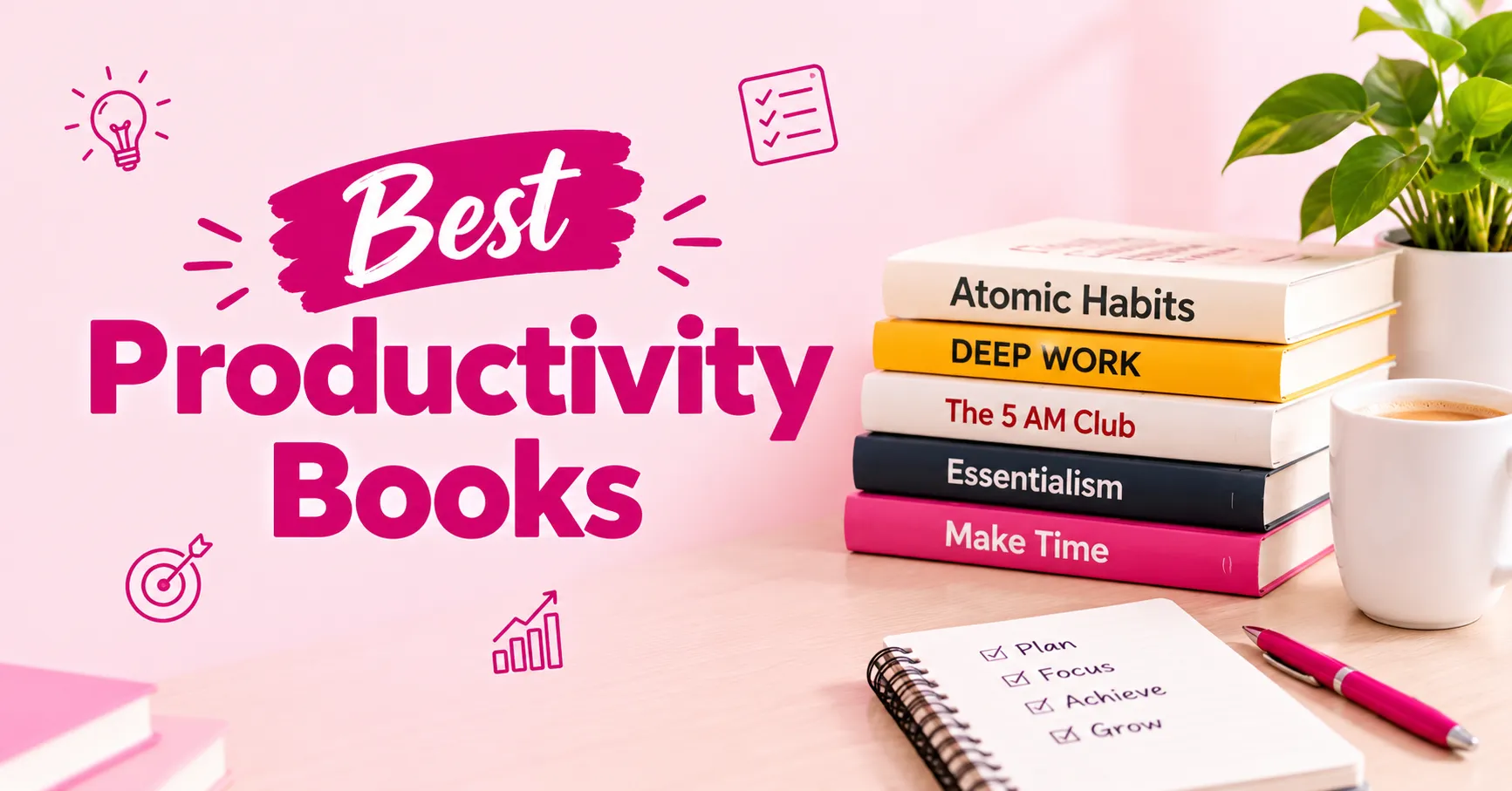
You sit down to study or work. Ten minutes later, you are checking your phone. The day ends, and the one important task is still waiting. Most of us know this feeling well.
The good news is that you do not have to work it out alone. Many smart people have already spent years finding what works, and they have put it into books. The best productivity books explain simple ideas, like how to build a habit, how to focus for longer, or how to plan a day that does not fall apart.
But there are hundreds of books on this topic, and most lists just throw names at you. It is hard to know which one to pick, and reading the wrong one can waste weeks.
You will find the 10 best productivity books, with who each one is for, what it teaches, and how hard it is to read. There are also comparison tables, picks for students and for work, and a simple 30-day plan to put a book into action.
As a sign that people still want this kind of help, Atomic Habits passed 30 million copies sold worldwide in June 2026. Read on, pick the book that matches your problem, and start with just one.
Why Productivity Books Still Matter in 2026
Phones, apps, chat messages and AI tools give you more things to do every year. But the real problem has not changed. Most people do not lack tools. They lack a clear way to decide what to do, when to do it, and how to stay away from distractions.
Good productivity books teach that thinking. They are cheap, they are tested by millions of readers, and you can finish one in a few days.
A small proof of this: Atomic Habits crossed 30 million copies sold worldwide in June 2026, up from 25 million in July 2025, according to the author’s speaker bureau. It is also translated into more than 65 languages. People clearly still want simple help with habits and time.
How We Picked These Books
Here is what we checked:
- Popularity and staying power: Is the book still widely read years after it came out?
- Simple ideas you can use: Can a beginner try the idea the same day?
- Different problems covered: The list includes habits, focus, to-do systems, priorities and time.
- Matches what readers ask: We also looked at what other well-known book lists, expert blogs, and Reddit productivity discussions keep recommending.
This list is based on research and public information, not on personal claims. We did not copy any book summary. Facts such as author, year, and main ideas are well known, and sales figures are mentioned only where we could verify them.
Best Productivity Books at a Glance (Comparison Table)
| Sr No | Book | Author | First Published | Best For | Main Idea | Difficulty |
|---|---|---|---|---|---|---|
| 1 | Atomic Habits | James Clear | 2018 | Beginners, students | Small habits add up | Easy |
| 2 | Deep Work | Cal Newport | 2016 | Focus at work or study | Protect long, quiet focus time | Medium |
| 3 | Getting Things Done | David Allen | 2001 | Busy professionals | Empty your mind into a trusted system | Medium |
| 4 | The 7 Habits of Highly Effective People | Stephen R. Covey | 1989 | Long-term growth | Put first things first | Medium |
| 5 | Essentialism | Greg McKeown | 2014 | People who say yes to everything | Do fewer things, but better | Easy |
| 6 | Eat That Frog! | Brian Tracy | 2001 | Procrastinators | Do the hardest task first | Very easy |
| 7 | Four Thousand Weeks | Oliver Burkeman | 2021 | People who feel always behind | Accept limits, choose well | Medium |
| 8 | The ONE Thing | Gary Keller, Jay Papasan | 2013 | Goal setting | Find the one task that matters most | Easy |
| 9 | Make Time | Jake Knapp, John Zeratsky | 2018 | Distracted phone users | Pick one daily highlight | Easy |
| 10 | Indistractable | Nir Eyal | 2019 | Anyone who loses focus often | Control triggers and distractions | Medium |
The 10 Best Productivity Books (Detailed Reviews)
1. Atomic Habits
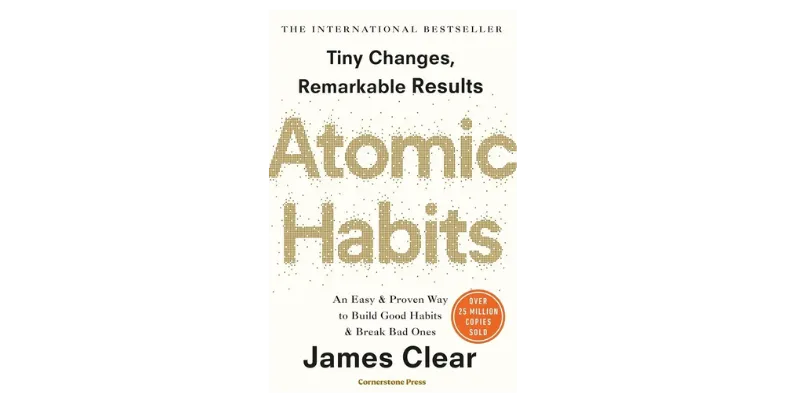
- Author: James Clear | Year: 2018
- Best For: Beginners, students, and anyone who wants to build better daily routines.
Atomic Habits is built on one simple idea. Do not try to change your whole life at once. Improve by a tiny amount every day, and the results will pile up over months and years.
James Clear explains this with four easy steps for any habit: make it obvious, make it attractive, make it easy, and make it satisfying. To quit a bad habit, you do the opposite. For example, if you want to study daily, keep your books on the desk where you can see them. If you want to stop scrolling, keep your phone in another room.
The book is full of short stories and simple examples, so it never feels heavy. That is a big reason it became so popular. By mid-2026 it had passed 30 million copies sold worldwide, making it one of the best-selling productivity books of all time.
Key Takeaways
- Small changes done daily beat big plans that you quit in a week.
- Your environment shapes your habits more than your willpower does.
- Focus on who you want to become, not just on the goal.
- Start so small that you cannot say no, like two minutes of reading.
What You’ll Learn
- The four laws of habit change
- How to link a new habit to an old one (habit stacking)
- How to track progress without stress
- How to stay on track after a missed day
Who Should Read It
Students, first-time job holders, and anyone who has started and quit many routines. If you read only one book from this list, make it this one.
2. Deep Work
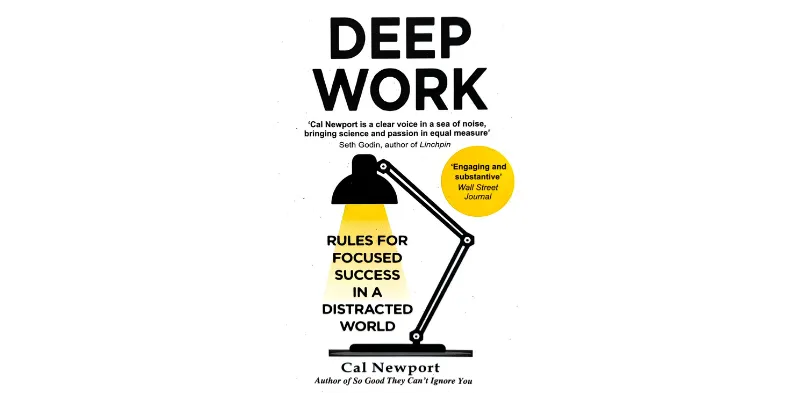
- Author: Cal Newport | Year: 2016
- Best For: People who need to do hard, thinking-heavy work like studying, coding, writing or design.
Deep Work is about doing your most valuable work without distraction. Cal Newport says that the ability to focus is becoming rare, and that makes it valuable. People who can focus deeply learn faster and produce better work.
The book separates two kinds of work. Deep work needs full attention and creates real value. Shallow work is things like replying to messages and small admin tasks. Most people spend too much time on the second kind.
Newport gives clear ways to protect focus: fixed deep work hours, a quiet place, a shutdown routine at the end of the day, and fewer random checks of email and social media. The ideas are practical, though the writing is a little more serious than Atomic Habits.
Key Takeaways
- Focus is a skill, and you can train it.
- Block fixed hours for deep work, like a meeting with yourself.
- Shallow work is fine, but keep it in its own time slot.
- Boredom is okay. Do not grab your phone every time you wait.
What You’ll Learn
- Four ways to schedule deep work
- How to build a daily shutdown routine
- How to reduce social media without feeling left out
- How to measure your focused hours
Who Should Read It
College students, exam takers, developers, writers, designers, and office workers who feel their day disappears in small tasks.
3. Getting Things Done (GTD)
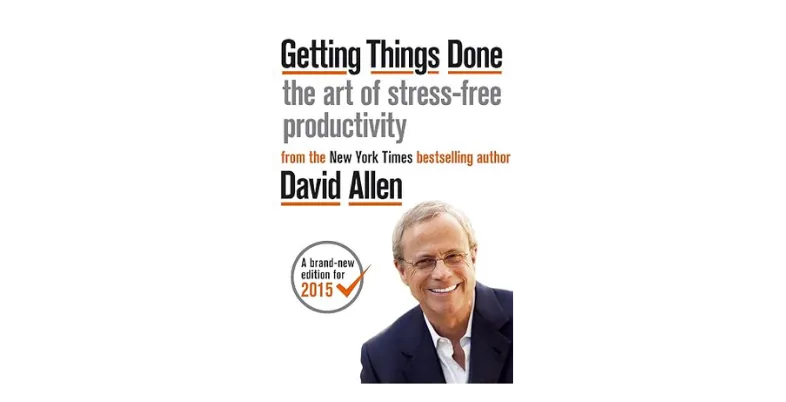
- Author: David Allen | Year: 2001 (updated edition in 2015)
- Best For: Busy people with too many tasks, emails and ideas in their head.
Getting Things Done is one of the most famous time management books and one of the best productivity books for people who want to stay organized. David Allen says your mind is good for having ideas, not for storing them. When you try to remember everything, you feel stressed and forget important things anyway.
His answer is a simple system. Write down everything that has your attention. Decide what each item means and what the next action is. Then keep it all in a trusted place, like a notebook or an app, and review it every week.
The system takes some time to set up, and the book can feel long. But once it is running, many readers say they feel calmer because nothing is stuck in their head.
Key Takeaways
- Capture every task and idea outside your head.
- Always define the very next physical action, like “call the bank” instead of “fix account”.
- If a task takes less than two minutes, do it right away.
- A weekly review keeps the whole system alive.
What You’ll Learn
- The five steps: capture, clarify, organise, reflect, engage
- How to build a simple to-do and project list
- How to handle email and paper clutter
- How to run a weekly review
Who Should Read It
Managers, freelancers, business owners, and working professionals who juggle many projects.
4. The 7 Habits of Highly Effective People
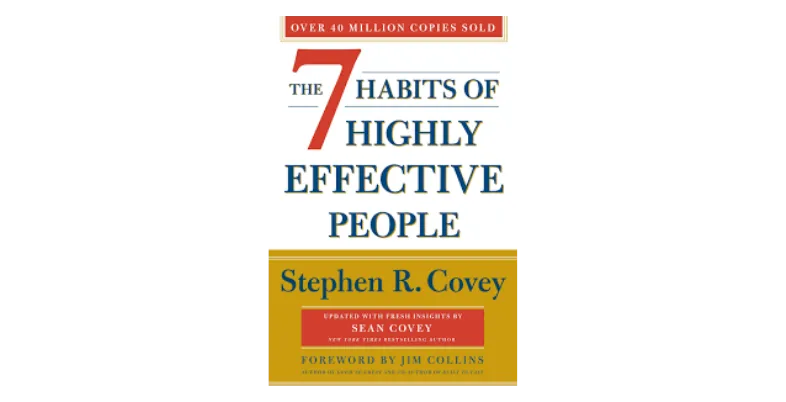
- Author: Stephen R. Covey | Year: 1989
- Best For: Readers who want a lasting base for work and life, not just quick tricks.
This is one of the best-selling and most discussed self-help books ever written. Covey does not give small hacks. He talks about character, values and how to choose what matters before you start doing things. It is also one of the best productivity books for readers who want to build better habits.
The seven habits start with taking responsibility for your own life, and move to planning with the end in mind. The third habit, “put first things first”, is the part most readers use for time management. It uses a four-box grid that sorts tasks by urgent and important.
The language is a little old-style, and some examples feel dated. But the core ideas have lasted for more than 35 years, which is a good sign.
Key Takeaways
- Focus on what is important, not only on what is urgent.
- Plan your week around your top priorities first.
- Think about the long-term result before you act.
- Listen first, then speak, especially at work.
What You’ll Learn
- How to use the urgent-important grid (Eisenhower matrix)
- How to write a personal mission statement
- How to take ownership of your time
- How to work better with other people
Who Should Read It
College students, young professionals, team leaders, and anyone who wants a clear sense of direction.
5. Essentialism
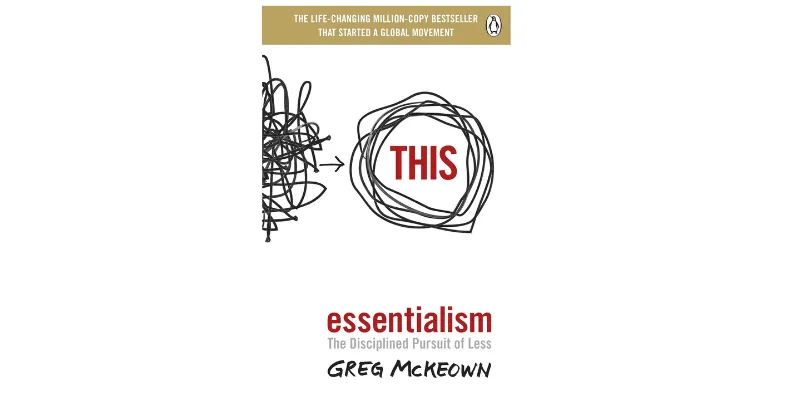
- Author: Greg McKeown | Year: 2014
- Best For: People who say yes to everything and feel burnt out.
Essentialism asks one simple question: what is truly important? McKeown says most of us waste energy on many small things that do not matter. The fix is to do less, but do the right things.
He teaches how to say no politely, how to cut extra commitments, and how to leave space in your day. The book also explains why we keep taking on more work, such as fear of missing out or wanting to please people.
It is a short and easy read. It is more about thinking and choosing than about tools, so it pairs well with a book like Getting Things Done.
Key Takeaways
- “Less but better” is a strong rule for work and life.
- Saying no to small things lets you say yes to big things.
- Leave buffer time because things always take longer.
- Check every commitment: is this a clear yes?
What You’ll Learn
- How to say no without hurting relationships
- How to remove low-value tasks
- How to plan buffers in your schedule
- How to protect your sleep and energy
Who Should Read It
People who feel busy all day but unhappy with what they achieved, and people who find it hard to refuse others.
6. Eat That Frog!
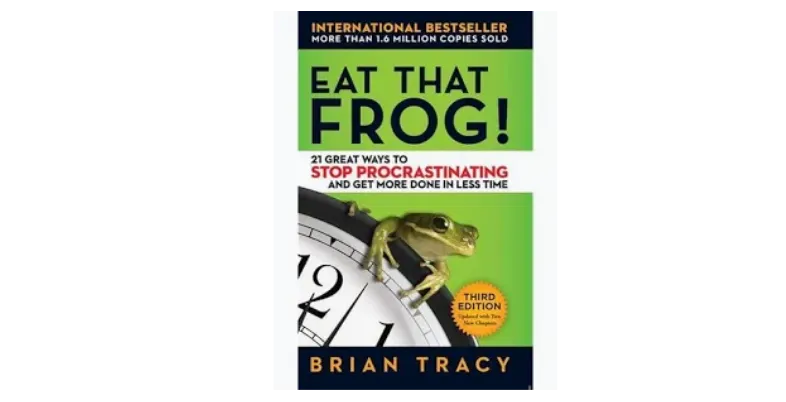
- Author: Brian Tracy | Year: 2001
- Best For: Procrastinators and students who delay hard tasks.
The title comes from an old saying: if you eat a live frog first thing in the morning, the rest of your day will feel easier. In the book, the “frog” is your biggest and hardest task.
Brian Tracy gives 21 short ideas to beat procrastination. Most are simple, like planning the day the night before, doing the most important task first, and breaking big work into small parts.
Each chapter is only a few pages long. That makes it a great book for people who find reading long books hard.
Key Takeaways
- Do your hardest task first, when your energy is high.
- Plan every day in writing before it starts.
- Break big tasks into small steps.
- Rank tasks by how much they matter, not by how easy they are.
What You’ll Learn
- A quick way to sort tasks by priority
- How to start tasks you are avoiding
- How to plan your day in 10 minutes
- How to reduce time wasted on low-value work
Who Should Read It
Students, beginners who do not read much, and anyone stuck in a delay habit.
7. Four Thousand Weeks
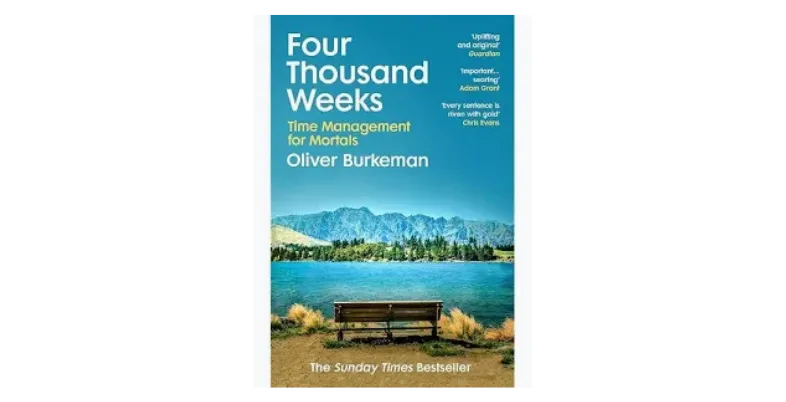
- Author: Oliver Burkeman | Year: 2021
- Best For: People who feel they are always behind, no matter how many tasks they finish.
The title comes from a simple fact. An average life is about four thousand weeks long. That is not much time, and Burkeman asks you to face this honestly.
Most productivity books promise you can do it all. This one says you cannot, and that is fine. The more tasks you finish, the more new tasks arrive. So the better goal is to choose what you will leave undone, and enjoy what you do.
The tone is calm and thoughtful. It does not give a step-by-step system. It changes how you think about time, which can reduce stress.
Key Takeaways
- You will never finish everything, so stop trying.
- Choose a few things to do well and accept the rest will wait.
- Do not use “efficiency” to fill your day with more tasks.
- Enjoy the present moment, not only the future result.
What You’ll Learn
- Why a never-ending to-do list is normal
- How to pick what to neglect on purpose
- How to deal with anxious thoughts about time
- How to focus on a few meaningful things
Who Should Read It
Burnt-out professionals, parents, and readers who have tried many systems but still feel stressed.
8. The ONE Thing
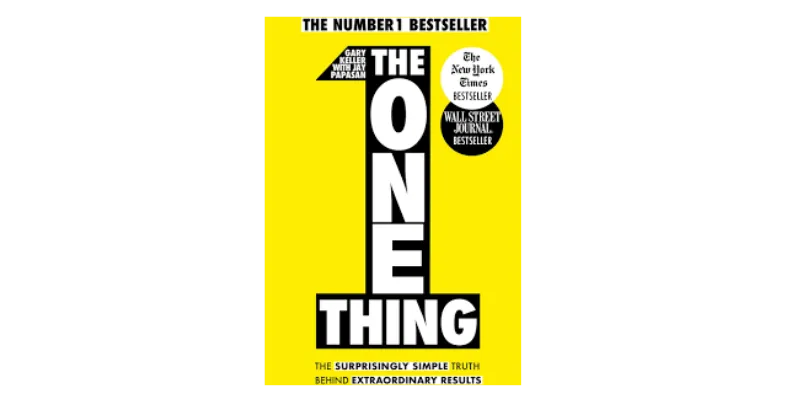
- Author: Gary Keller and Jay Papasan | Year: 2013
- Best For: Goal setting and deciding what to do first.
The ONE Thing is built on one question: what is the one thing I can do such that by doing it, everything else becomes easier or unnecessary? Keep asking this for your year, month, week and day. It is one of the best productivity books for learning how to focus on what matters most.
The authors argue that multitasking does not work and that success comes from deep focus on a few key actions. They also explain how to block time on your calendar for that one task.
The book is easy to read, with short stories and clear examples. Some of the claims about “success” are a bit big, so read it as a focus tool, not a magic formula.
Key Takeaways
- Pick one priority at a time, then protect time for it.
- Multitasking cuts the quality of your work.
- Use the focusing question to cut long goal lists.
- Time-block your most important task early in the day.
What You’ll Learn
- How to turn a big goal into daily action
- How to use the focusing question
- How to schedule your best hours
- How to say no to lower-priority work
Who Should Read It
Students preparing for exams, small business owners, and anyone with too many goals.
9. Make Time
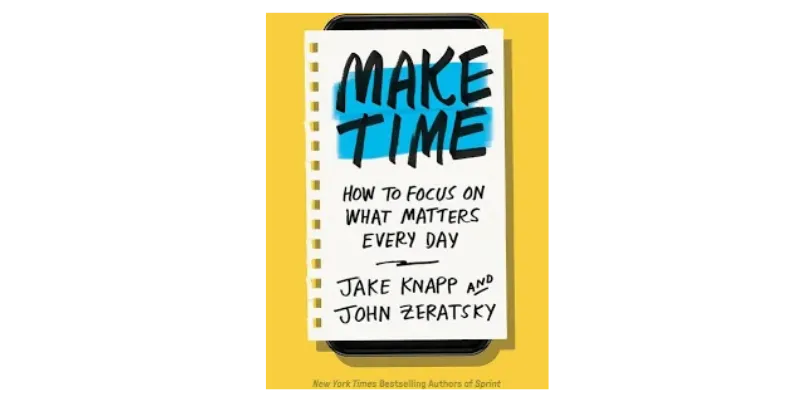
- Author: Jake Knapp and John Zeratsky | Year: 2018
- Best For: People who lose hours to phones, apps and social media.
Make Time is different from many productivity books. It does not ask you to do more. It asks you to choose one “highlight” each day, the one thing you want to remember at night, and build your day around it.
The book gives a menu of more than 80 small tactics in four steps: highlight, laser focus, energise and reflect. You do not need to use all of them. Just pick two or three and try them for a week.
The authors worked in tech and tested these ideas on themselves, so many tips are about phones, email and apps. For example, log out of social apps after each use and keep your phone out of reach while working.
Key Takeaways
- Pick one highlight every morning.
- Make distractions harder to reach, like deleting apps from your phone.
- Sleep, food and movement give you energy for focus.
- Try one small change at a time and test it.
What You’ll Learn
- How to choose a daily highlight
- How to set up your phone for less distraction
- How to build simple energy habits
- How to review your day in a minute
Who Should Read It
Young adults, remote workers, and anyone who picks up the phone without thinking.
10. Indistractable
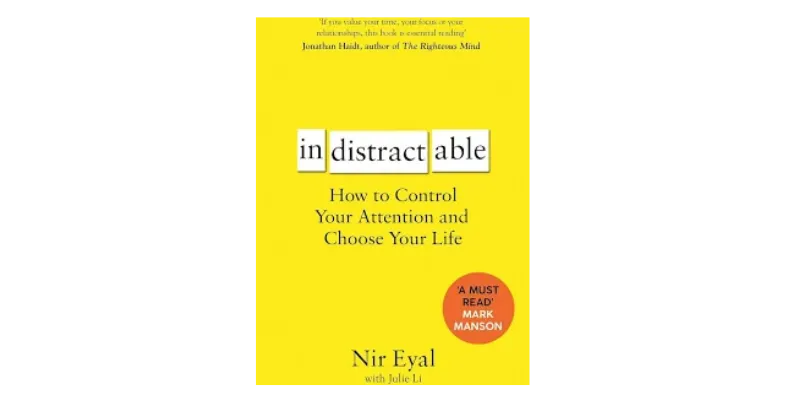
- Author: Nir Eyal | Year: 2019
- Best For: Anyone who knows what to do but keeps getting pulled away.
Nir Eyal says distraction is not only caused by phones. It starts inside us, because we want to escape from discomfort like boredom, stress or fear. If you do not deal with that feeling, you will find a new distraction.
The book gives four parts: master internal triggers, make time for traction, hack back external triggers, and prevent distraction with pacts. In plain words: understand why you get distracted, plan your time, mute extra notifications, and make small promises to yourself.
One useful idea is to plan your time on a calendar, including free time. If you do not plan the time, you cannot say whether you were distracted.
Key Takeaways
- Distraction often comes from wanting to avoid a feeling.
- Plan your day in a calendar, including rest and fun.
- Turn off notifications you do not need.
- Use small pacts, like paying a friend if you skip a task.
What You’ll Learn
- How to find the reason behind your distraction
- How to make a weekly time plan
- How to control notifications and email
- How to use pre-commitments
Who Should Read It
Students, remote workers, and readers who lose time on social media and videos.
Best Productivity Books by Need
Not sure which book solves your problem? Use this quick table.
| Your Problem | Read This Book |
|---|---|
| I want a simple start | Atomic Habits |
| I cannot focus for long | Deep Work |
| My head is full of tasks | Getting Things Done |
| I always say yes to everything | Essentialism |
| I keep delaying work | Eat That Frog! |
| I feel I never have enough time | Four Thousand Weeks |
| I have too many goals | The ONE Thing |
| My phone eats my day | Make Time or Indistractable |
| I want a long-term life plan | The 7 Habits of Highly Effective People |
The biggest mistake is reading five books and using none. Try this plan instead:
Step 1: Read With One Question
Before you start, write one problem you want to solve. For example, “I want to study two hours daily without phone breaks.”
Step 2: Note Only Three Ideas
While reading, write down only three ideas you can use this week. More than that becomes too much.
Step 3: Try One Idea for Seven Days
Pick the simplest idea and use it daily for one week. If it works, keep it. If it does not, drop it and try the next one.
Step 4: Review and Move On
After the week, write what worked in two lines. Only then start the next book.
A Simple 30-Day Reading Plan
| Week | Book | Goal |
|---|---|---|
| Week 1 | Atomic Habits | Start one tiny habit |
| Week 2 | Eat That Frog! | Do your hardest task first each day |
| Week 3 | Deep Work | Add one focused block daily |
| Week 4 | Essentialism | Remove one thing from your to-do list |
Common Mistakes Readers Make
- Reading too many books at once: Pick one and finish it.
- Collecting tips but not trying them: A book only helps if you act on it.
- Copying someone else’s routine: Your life is different. Adjust ideas to fit.
- Setting too big a change: Start with something you can do in two minutes.
- Quitting after one bad day: Missing once is fine. Missing twice in a row is when you need to restart quickly.
Conclusion
You do not need to read all ten books. You only need the one that fits your problem right now. A book that solves today’s problem is worth more than a shelf of books you never finish.
If you are new to this topic, start with Atomic Habits. It is easy to read, and its small-step idea works for study, work and daily life. If phone and social media take most of your day, Deep Work, Make Time or Indistractable will help you take back your attention. If your head is full of tasks, Getting Things Done gives you a system to empty it. And if you feel busy all day but unhappy with what you achieved, Essentialism and Four Thousand Weeks will help you choose better and worry less.
One thing matters more than the book you pick. Do not just read it. Take one small idea, try it for seven days, and see what changes. If it works, keep it. If it does not, try another idea. Most readers who improve do it this way, in small steps, not by changing everything overnight.
So pick one book from this list today. Order it, borrow it from a library, or listen to the audiobook on your next walk. Then come back, tick off your first week, and move on to the next one. That is how a good productivity book really works.
More Like This:
- Most Expensive Cycle in the World
- Most Expensive Perfume in the World
- Most Expensive Coffee in the World
FAQs
What is the best productivity book of all time?
Most readers pick Atomic Habits for beginners because it is easy and practical, and it crossed 30 million copies sold by June 2026. The 7 Habits of Highly Effective People and Getting Things Done are also seen as classics.
Which productivity book is best for beginners?
Atomic Habits is the best first book. It uses simple language, short chapters and real examples.
What are the best productivity books for students?
Atomic Habits, Eat That Frog!, Deep Work and Indistractable are good choices. They help with study routine, delay, focus and phone use.
Which book is best for time management?
Getting Things Done is best for task systems. The 7 Habits is best for setting priorities. Eat That Frog! is best for a quick, simple method.
Which are the best-selling productivity books?
Atomic Habits and The 7 Habits of Highly Effective People are among the biggest sellers in this area. Exact sales numbers change, so check the publisher or author announcements for the latest figures.
Is there a free PDF of these books?
Most of them are copyrighted, so free PDFs on random sites are usually not legal. Use a library, free samples, or an audiobook trial instead.
