

It is pointless to run a business without strategic planning tools just as it is pointless to drive a car without a map. You may go on, but you will be left not knowing whether you are heading in the right direction. Business strategy tools are now considered to be very critical in every business in the year 2026. These strategy management software solutions enable business owners and managers to make intelligent decisions, monitor their progress, and realize their goals within a shorter period.
Corporate strategy tools can revolutionize your business strategy planning and implementation process, regardless of whether you own a small startup or a large corporation. This paper will present you with the 10 best strategic planning tools in the year 2026. Each of the tools has a tool description, and we will present them in a straightforward language so as to be able to understand the tool that best suits your business requirements.
What Are Strategic Management Tools?
Strategic management tools are computer programs or models that assist organizations in making plans, designing, and carrying out their strategies. Consider them to be the digital assistants that assist you in visualizing the big picture of your business. These types of business planning software are used to gather information, process data, and make it available in forms that are easy to comprehend.
Such tools of strategic analysis can assist you in answering such key questions as: Where is your business heading? What are the objectives you need to target? How can you measure success? Are you spending your resources wisely? The process of strategic decision-making simplifies the process of business planning since big objectives are divided into manageable tasks using the tools.
Benefits of Using Strategic Management Tools
1. Formalized Planning Process: Planning was made organized and formal, with all the strategic documents housed in one place.
2. Improved Communication: Teams can be synchronized with the help of common dashboards and frequent reports.
3. Risk Management: Determine which issues may arise in time and find the solution before the crisis.
4. Performance Measurement: Track KPIs are automated to give an easy look at business performance.
5. Competitive Advantage: Be first to respond to the market by adjusting strategies fast.
Read More: Best Data Asset Management Tools
Top 10 Strategic Management Tools
1. Cascade Strategy
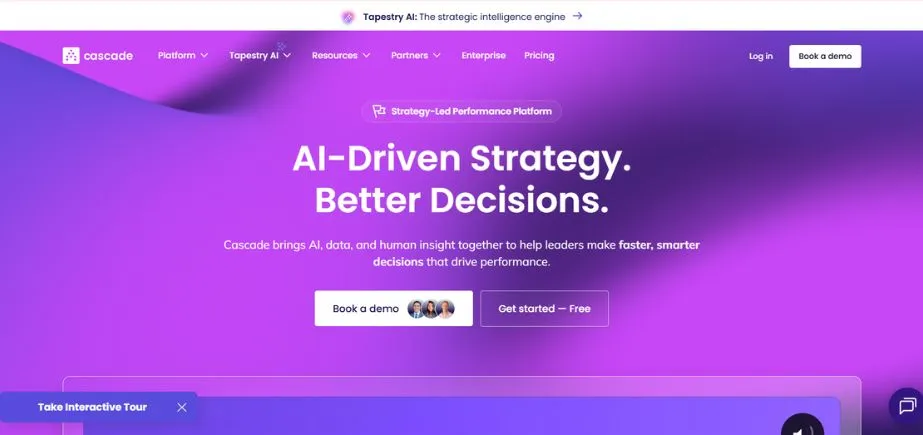
Cascade Strategy is a large-scale strategy implementation platform that is tailor-made for strategic planning and management. This is a cloud-based software that assists organizations in putting their vision into play. It offers visual strategy maps, goal tracking, and reporting progress features. Cascade enables one to have teams aligned to similar goals and track their performance in real time. The platform has been characterized by an easy-to-use platform as well as strong collaboration capabilities.
Key Features
- Mapping tools: Visual strategy mapping.
- Dashboards of real-time progress.
- Combines with popular applications.
Pros
- Very intuitive interface
- Excellent customer support
- Good reporting abilities.
Cons
- Premium pricing structure
- Learning curve initially
- Poor customization capabilities.
Best For: Enterprises
Pricing: Starts at $89/month per user (annual billing)
Website: https://www.cascade.app
2. Asana
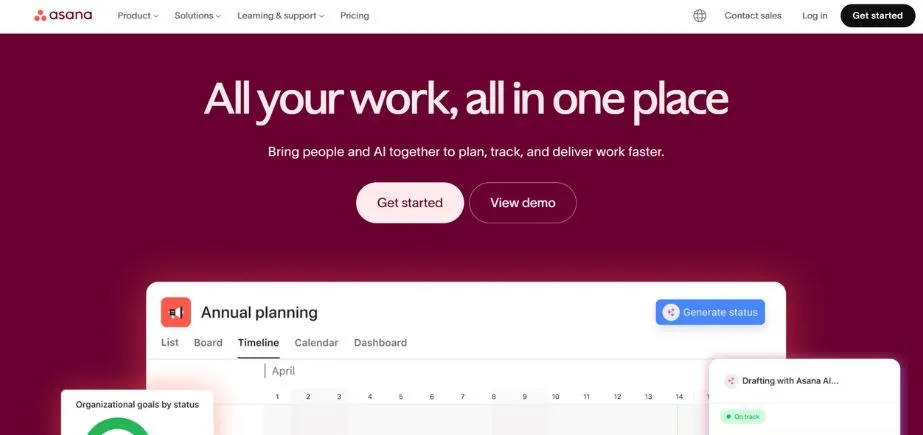
Asana is one of the popular work management tools that assist a team in organizing and monitoring their strategic initiatives. Although it was originally meant to be used in project management, Asana has become an effective business strategy tool. The site enables you to design projects, delegate and assign tasks, deadlines, and visual tracking of progress. The virtue of Asana is that it is flexible and easy to use. Work can be presented in various formats in teams, such as lists, boards, timelines, and calendars. The program helps in setting and tracking goals, hence its application in strategy implementation. Asana integrates with hundreds of other applications, which establish a linked workflow. It is appropriate for both small and large companies.
Key Features
- Multiple project views
- Milestones and dependencies of tasks.
- Workflow automation rules
Pros
- Free plan available
- Easy to use
- Mobile app included
Cons
- Can become overwhelming
- Advanced features costly
- There is a need to improve reporting.
Best For: Teams
Pricing: Free plan; Premium from $10.99/month per user
Website: https://www.asana.com
3. Monday.com
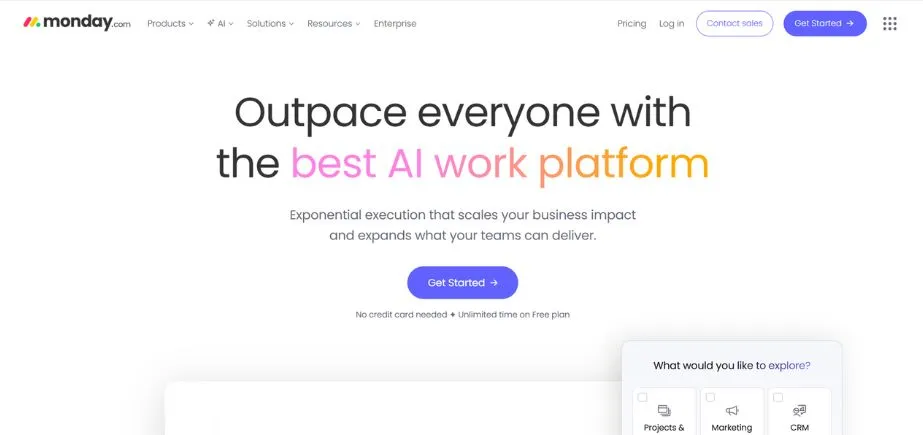
Monday.com is a flexible Work Operating System (Work OS) that fits most types of businesses such as strategic management. It is a visual platform, which enables teams to develop their own workflows without the need to write any code. Monday.com is a great tool that can be used in strategic planning with colorful and easy-to-use boards that will keep track of the projects and objectives. The software has templates of strategic planning, so it can be set up easily and promptly. Users can establish dashboards which give high level s of the strategic activities. The platform facilitates team work with such support features as file sharing, comments, and updates.
Key Features
- Workflow boards can be customized.
- Introductions and integrations.
- Dashboards Visual analytics.
Pros
- Highly visual interface
- Flexible and customizable
- Good mobile experience
Cons
- Expensive for teams
- Steep learning curve
- Limited free version
Best For: Businesses
Pricing: Starts at $9/month per user (billed annually)
Website: https://www.monday.com
4. Smartsheet
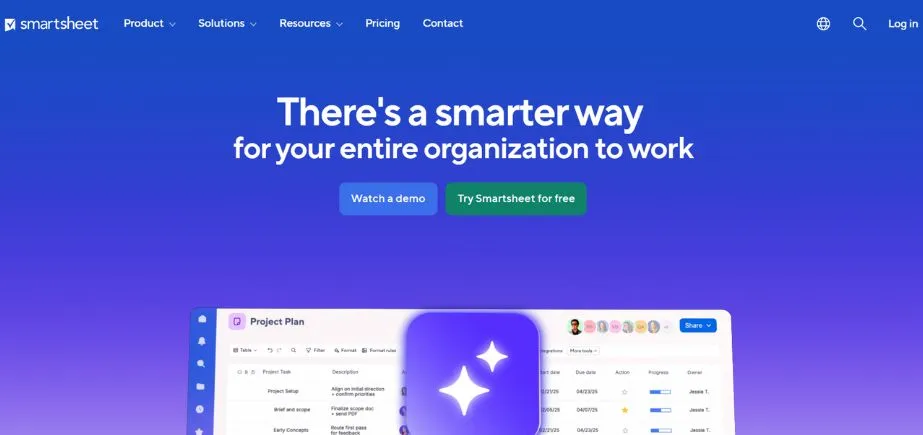
Smartsheet is a spreadsheet with the ability to manage projects and strategies with a powerful tool. This platform is close to those people, who like using grids and tables but cannot find all necessary functions in the traditional spreadsheets. Smartsheet enables the process of strategic planning by facilitating portfolio management, allocation of resources, and automated workflow. The software has a variety of views such as grid, Gantt chart, card, as well as calendar views. Working teams can work simultaneously, share sheets and receive feedbacks. Smartsheet has great reporting and dashboards that are used to visualize strategic metrics.
Key Features
- Spreadsheet-like interface
- Capabilities of portfolio management.
- Advanced reporting tools
Pros
- Familiar spreadsheet feel
- Powerful for enterprises
- Outstanding teamwork characteristics.
Cons
- Complex for beginners
- Higher price point
- Requires training time
Best For: Corporations
Pricing: Starts at $9/month per user (annual billing)
Website: https://www.smartsheet.com
5. ClickUp
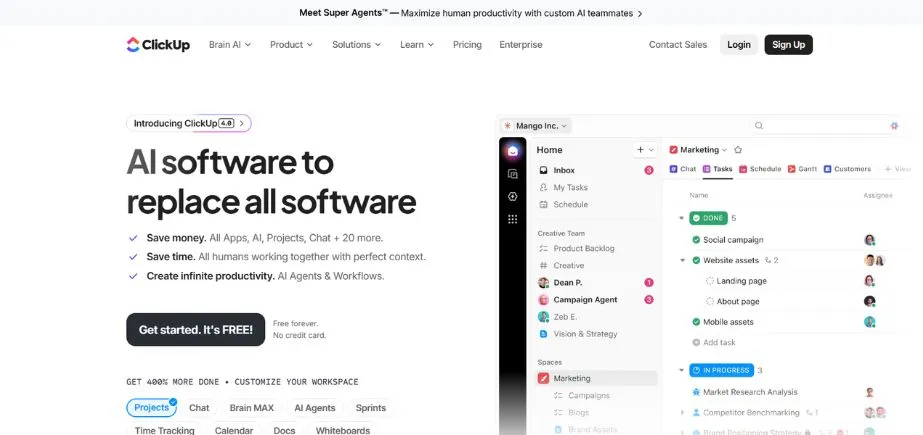
ClickUp presents itself as the one-stop productivity tool that substitutes a variety of tools. This is an all inclusive solution that involves strategic planning, project management, and day to day execution of tasks. Clickup has a tremendous level of flexibility that includes customizable workflows, fields and views. The platform is goal-setting which allows tracking progress and automatic updates. A user is able to modify hierarchies since the top-level strategies are broken down to the tasks. The strategic planning capabilities of ClickUp consist of mind maps, whiteboards, and documents. The software has the ability of time tracking, reporting and resource management.
Key Features
- All-in-one platform
- Customizable everything
- Goals and OKRs
Pros
- Generous free plan
- Highly flexible
- Regular feature updates
Cons
- Can feel overwhelming
- Cluttered interface occasionally.
- Mobile app limitations
Best For: Startups
Pricing: Free plan; Paid from $7/month per user
Website: https://www.clickup.com
6. Wrike
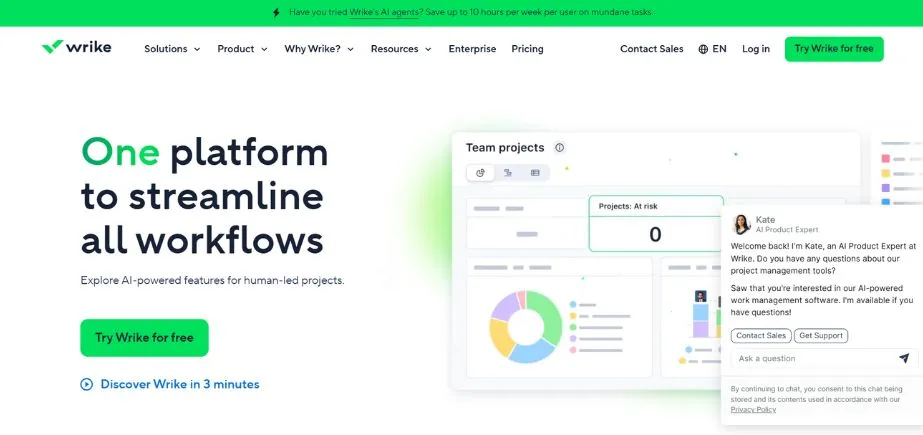
Wrike is a powerful work management tool that is targeted at teams, which require strong strategic planning and execution tools. The software is especially robust in handling intricate projects and cross functional initiatives. Wrike comes with tailor-made workflows, request, and approval forms that facilitate strategic work. The site supports dynamic displays in the form of lists, boards, timelines, and tables. Users are able to build an in-depth dashboard that monitors strategic KPIs and project health. The reporting engine of Wrike offers specific analytics of the resource distribution, schedule, and performance.
Key Features
- It provides high project management.
- Custom request forms
- Portfolio-level visibility
Pros
- Powerful features
- Good for agencies
- Strong security measures
Cons
- Expensive pricing
- Complex setup process
- Steep learning curve
Best For: Agencies
Pricing: Starts at $9.80/month per user (billed annually)
Website: https://www.wrike.com
Know More: Best Test Management Tools
7. Trello
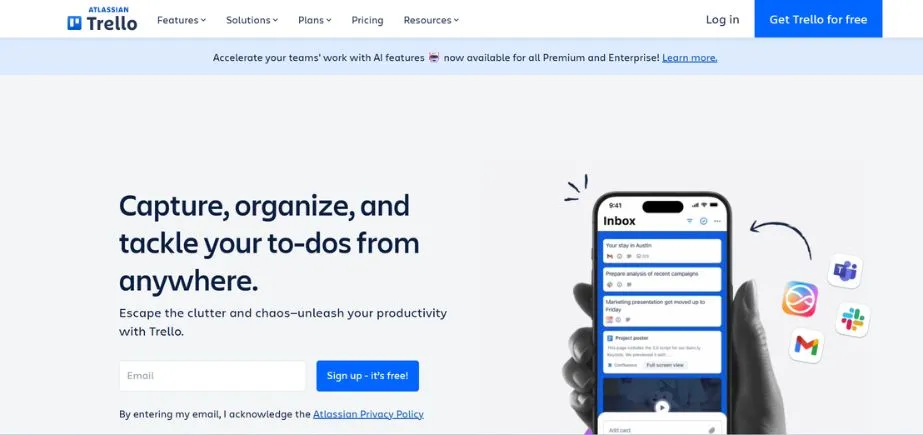
Trello is a visual and easy to use planning strategy based on boards, lists and cards. This is an ideal Kanban-type tool that should be used in groups that do not require complexity in managing their strategies. The easy-to-use nature of Trello is user friendly to users of all technical expertise. A card symbolizes a goal or a task and the boards are a symbol of a strategic initiative. Users can add details, attachments, due dates and checklists to cards. Trello allows teamwork in terms of comments, mentions, and shared boards. It has Power-Ups, such as voting, calendar, and integrations, which can be extended on the platform.
Key Features
- Kanban board interface
- Power-Ups for extensions
- Simple collaboration tools
Pros
- Very easy learn
- Free plan useful
- Clean simple interface
Cons
- Limited advanced features
- Not for enterprises
- Basic reporting only
Best For: Small-teams
Pricing: Free plan; Paid from $5/month per user
Website: https://www.trello.com
8. Airtable
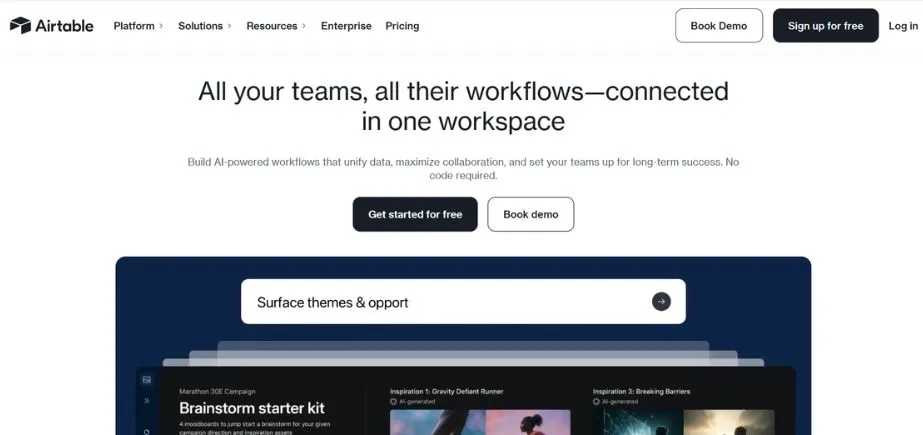
Airtable is an exceptional system that combines database strength with spreadsheet ease, developing a flexible strategic management instrument. The software enables team members to store any strategic information in customizable tabular information. Every base may have various tables that have various views such as grid, calendar, gallery, and kanban. The advantage of Airtable is the possibility to connect records between tables and build relational databases without understanding any technical knowledge. The user has the option of developing strategic planning systems that match his or her requirements.
Key Features
- Database-spreadsheet hybrid
- Multiple view types
- Intense connecting opportunities.
Pros
- Extremely flexible
- Beautiful interface
- Good free tier
Cons
- Can be complex
- Limited reporting
- Pricing increases quickly
Best For: Operations
Pricing: Free plan; Paid from $20/month per user
Website: https://www.airtable.com
9. Jira Align
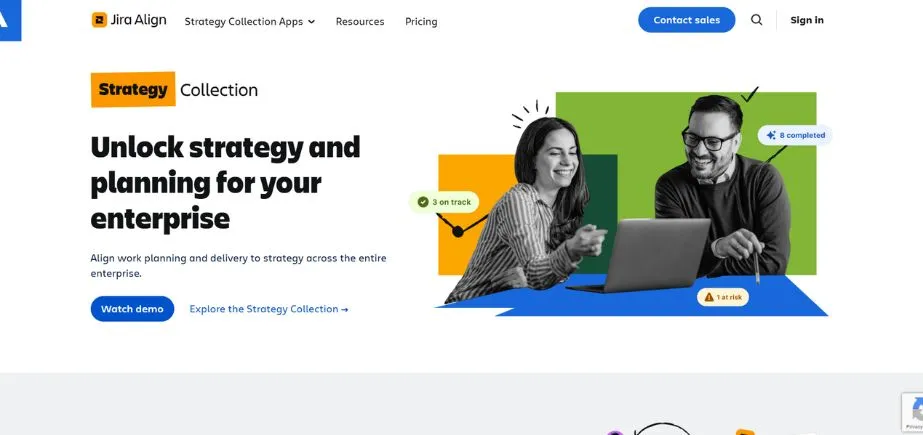
Jira Align (previously AgileCraft) is a strategic planning tool at the enterprise level aimed at companies that have worldwide strategies of Agile practices. This software links Agile execution and strategic planning, which aligns the teams. Jira Align assists companies to manage portfolios, programs, and teams through one platform. The software gives an insight into the daily work to strategic goals. It advocates other frameworks of Agile such as SAFe, LeSS and bespoke models. Jira Align has strong analytics that demonstrate strategic progress, velocity, and dependencies.
Key Features
- Enterprise Agile planning
- Tactical to strategic alignment.
- Sophisticated dashboard of analytics.
Pros
- Built for scale
- Linkage of strategy implementation.
- Comprehensive reporting
Cons
- Very expensive
- Complex implementation
- Requires Agile knowledge
Best For: Enterprises
Pricing: Custom pricing (enterprise-level)
Website: https://www.atlassian.com/software/jira/align
10. Lucidchart
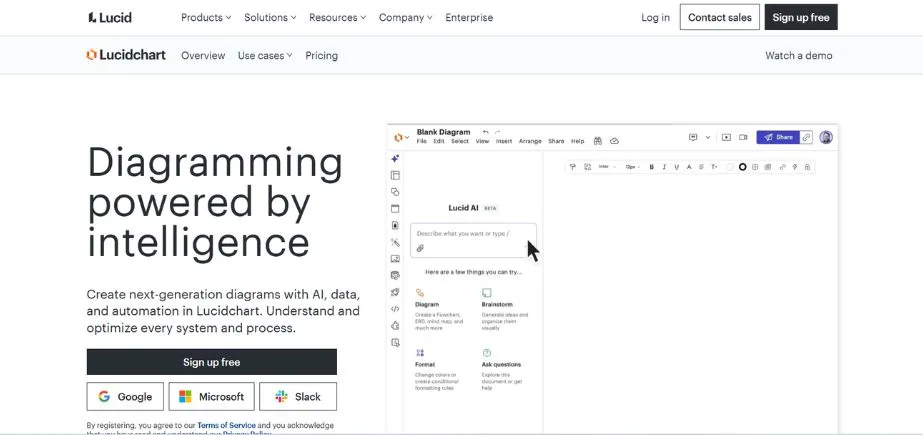
Lucidchart is a web-based diagramming application that is the best when it comes to visualizing business processes and strategic plans. It is a smart diagramming tool that assists teams in drawing strategy map, flowcharts, org charts, and mind maps. Lucidchart is highly important in the strategic planning process where teams have to visualize ideas and relationships. The software can provide a wide library of templates such as strategy framework such as the SWOT analysis and Porters Five Forces. The users can work together in real time thereby making the strategy sessions interactive and productive. Lucidchart is compatible with several business applications such as Google Workspace, Microsoft Office, and Slack.
Key Features
- Visual diagramming tool
- Real-time collaboration
- Extensive template library
Pros
- Excellent for visuals
- Easy to use
- Good integration options
Cons
- Not full management
- Limited to diagrams
- Export options limited
Best For: Planning
Pricing: Free plan; Paid from $7.95/month per user
Website: https://www.lucidchart.com
How to Choose the Right Strategic Management Tools
1. Evaluate your Business Size: Small businesses should have easier tools than large corporations should.
2. Consider Your Budget: Find tool prices To software budgets.
3. Assess Feature Requirements: Requirement List must-have feature versus nice-to-have capabilities are listed ahead of choice.
4. Check Integration Capabilities: Make sure that the tool is integrated with the already established software that is used daily.
5. Test User Experience: Free trials will work to ensure interface corresponds to comfort of team.
Conclusion
A strategic planning tool is not an option anymore: it is a key to business success in 2026. These business strategy tools are useful in planning, executing and performing at a greater rate and scope in both small and large companies. It can be Cascade, a more sophisticated strategy management program, or it can be a more basic program, like Trello; however, the most important thing is to find the one that fits your requirement. The most appropriate corporate strategy tools are clear, aligned and accountable. They change the abstract strategies into tangible activities that can be implemented by the teams daily.
Begin with the need identification, testing free versions, and phasing the application of the tool on your organization. Always keep in mind that strategy implementation tools can only be as efficient as the effort of your team in using it. With these business planning software, make the choice, make it well, and see the light of your strategic plans being implemented.
FAQs
1. Which is the most effective free strategic management tool?
ClickUp has the best overall free plan; goal tracking, multiple views and collaboration features that are ideal with small teams embarking on their strategic planning process.
2. Are strategic management tools beneficial to small businesses?
Yes, such tools as Trello or Asana provide inexpensive solutions that will allow small businesses to plan strategies and monitor goals and coordinate teams without becoming complex.
3. What is the time taken to implement strategic management software?
Depending on the size and complexity of an organization, implementation can take a few days with simple tools such as Trello and several weeks with more complex solutions such as Jira Align.
4. Do strategic planning tools need technical skills?
Generally, smart planning tools come with easy to use and user-friendly interfaces intended for non-techies. However, some enterprise solutions might require training to use advanced features and for obtaining the best result from the tool.
5. Are strategic management tools compatible with current software?
Definitely, the majority of the strategic management tools come with integration options with widely used business applications like Google Workspace, Microsoft 365, Slack, and Salesforce through APIs or built-in connections.
Continue Exploring: Best Wealth Screening Tools