
The General Data Protection Regulation (GDPR) has remained among the most applicable data privacy frameworks worldwide, and the GDPR Services Market has been growing by a huge margin, rising from USD 2.83 billion in 2024 to a projected USD 6.85 billion in 2030. With businesses becoming fully aware of the immense significance of data protection, GDPR compliance software has become increasingly useful when it comes to controlling the risk to privacy, preventing expensive fines, and ensuring customer loyalty.
To data protection officers, data IT managers, and compliance teams, choosing the correct GDPR Compliance Software can result in the former or be the difference between a nightmare experience regarding regulatory compliance policies. By the year 2025, there will be 19 different U.S. privacy laws to which the organization must conform. By 2024, their total noncompliance fines amounted to one billion dollars, which is the highest ever.
When compiling our top 10 GDPR Compliance Software, we have considered factors such as their feature-richness, ease of use, powerful reporting performance, value propositions, scalability to accommodate expanding businesses, integration, and experience in assisting organisations in their GDPR compliance journeys and functions.
Key Features to Look for in GDPR Compliance Software
In the assessment of GDPR compliance software, the focus should be on solutions that have the following core features:
Data Mapping and Inventory:
Full insight into your personal data within your organization, its type and source, as well as use and storage. This is the base that will help you to gain insight regarding your data landscape and your compliance requirements.
Consent Management:
Instruments to record, manage, and maintain the user consent choices, such as the granular options of consent, the mechanisms of consent withdrawal, and the audit trails of all the actions related to consent.
Data Subject Access Request (DSAR) Handling:
Automations of workflows to effectively work on individual rights and respond to them within the regulatory timeframes, such as access, rectification, erasure, and portability requests.
Risk Assessments (DPIAs):
Templates and workflows are built in to perform Data Protection Impact Assessments, which can assist in identifying and containing privacy risks before the risks turn into compliance ones.
Audit Trails and Documentation:
Extensive logging and documentation that create extensive records of every data processing activity, change of consent, and enforcement activity to regulatory examination.
Also Read: Best API Management Software
Top 10 GDPR Compliance Software Tools
1. OneTrust
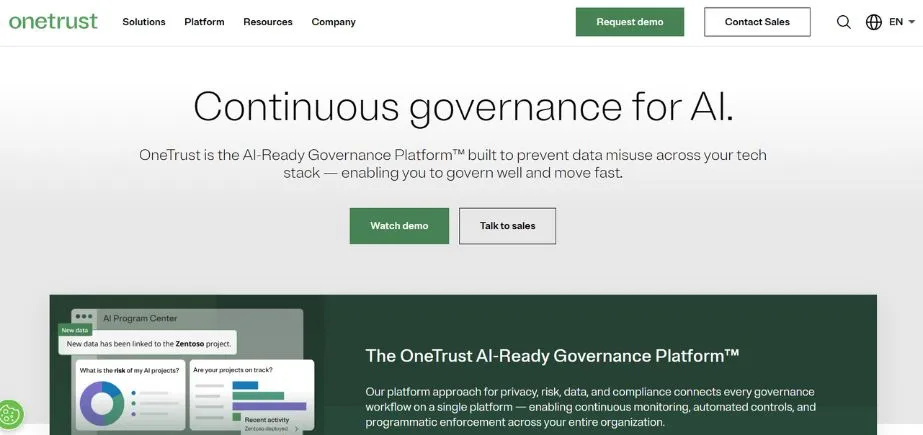
OneTrust is one of the most popular GDPR Compliance Software that enable the automation of privacy, security, and governance processes within companies. It has solutions to consent management, data mapping, subject rights requests, vendor risk, and privacy impact assessment solutions. OneTrust allows regulatory compliance in many jurisdictions using customizable templates and strong integrations. With an unmatchable user-friendly interface and AI-powered functionalities, it has become a favorite management tool among companies that collect personal information in large quantities and want to be responsive and transparent in their data processing policies.
Key Features:
- Comprehensive privacy program management
- Cookie consent management (CookiePro)
- Automated DSAR workflows
- Vendor risk assessments
- Privacy impact assessments
Pros:
- Market leader with extensive feature set
- Strong integration ecosystem
Cons:
- Higher price point for smaller organizations
- Can be complex to implement initially
Ideal For:
Large enterprises and organizations with complex privacy requirements across multiple jurisdictions
Pricing:
Custom pricing based on organization size and feature requirements
2. TrustArc
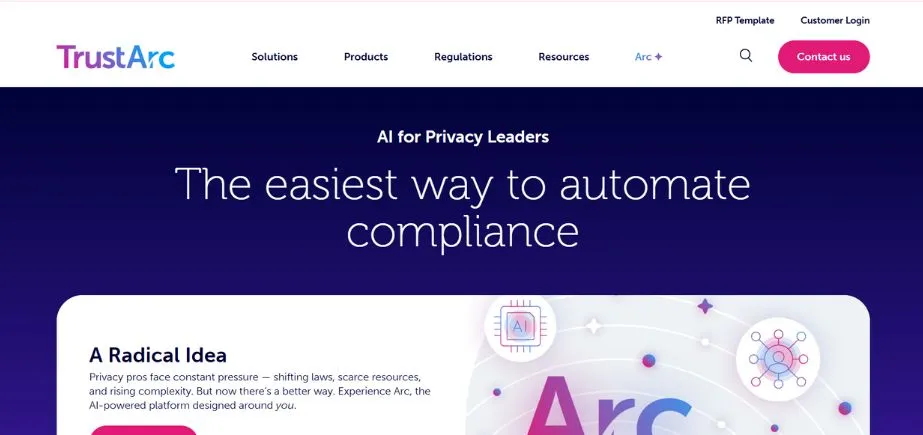
TrustArc also provides a powerful GDPR Compliance Software by leveraging its Privacy Management Platform. It helps companies risk-assess, respond to data subject requests, automate their compliance process, and be accountable. It has cookie consent, data inventory, DPIAs, and vendor tools. TrustArc has excellent reporting features and deployment models and can be used by any organization that wants a scalable, easy-to-integrate solution that it can use to meet its privacy compliance requirements in an environment where regulation is constantly changing.
Key Features:
- Privacy program management
- Risk assessment tools
- Cookie consent management
- DSAR automation
- Vendor management
Pros:
- Strong focus on risk management
- Excellent for multinational compliance
Cons:
- Interface can be complex for new users
- Premium pricing structure
Ideal For:
Multinational corporations and organizations with complex risk management needs
Pricing:
Tiered pricing based on organization size and modules selected
3. BigID
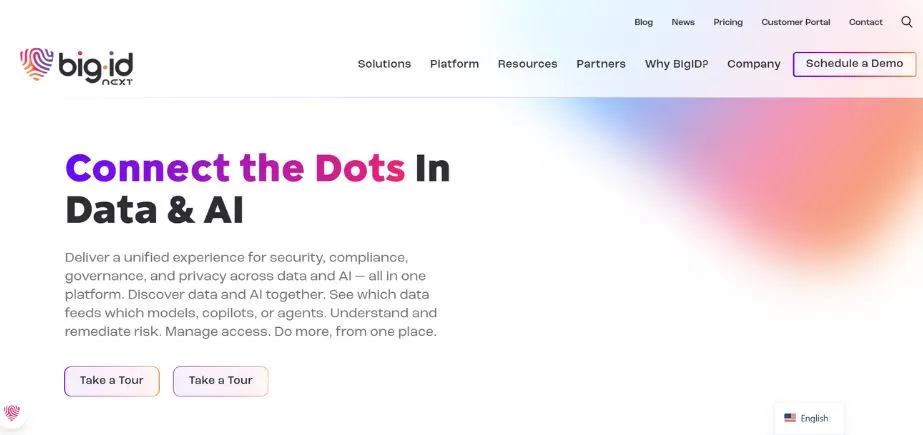
BigID is a data discovery and intelligence company that assists organizations in identifying known and unknown personal data, classifying it, and securing it to meet GDPR Compliance Software requirements. It has advanced machine learning to scan structured and unstructured data in different environments and automatically map data, score risks, and fulfill subject rights. BigID also supports privacy impact assessments and consent governance. It is especially appropriate for large companies that work with various data environments and want to reduce the risks of privacy violations, but at the same time provide effective data management.
Key Features:
- AI-powered data discovery and classification
- Advanced data governance capabilities
- Automated data mapping
- Privacy impact assessments
- Data subject rights automation
Pros:
- Superior data discovery capabilities
- Advanced AI and ML features
Cons:
- Primarily focused on larger enterprises
- Can be technically complex
Ideal For:
Large enterprises with complex data infrastructures and advanced governance needs
Pricing:
Enterprise pricing based on data volume and feature requirements
4. Securiti.ai
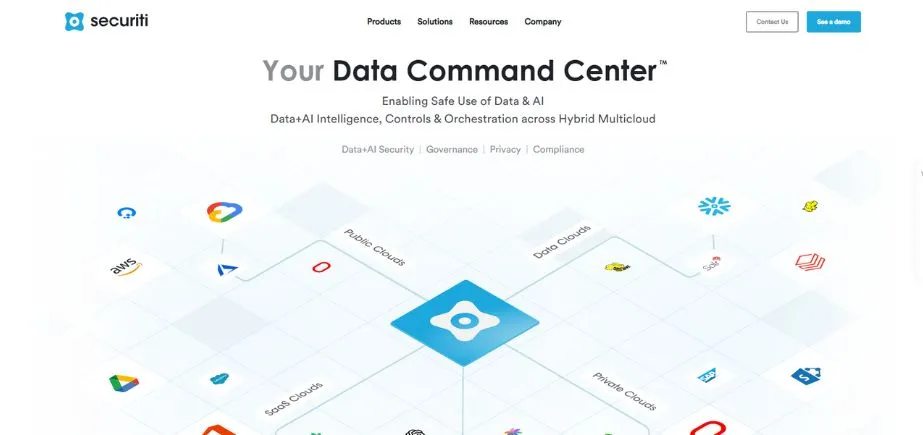
Securiti.ai has an AI-based GDPR Compliance Software with PrivacyOps solution that helps automate GDPR compliance. It supports smooth data search, categorization, and mapping in multi-cloud and on-premises. The platform does not require manual processes since the data subject requests processing, consent management, and risk assessments are automated. Securiti.ai allows enterprises to safeguard personal data and ensure their compliance with regulatory standards because it has robust data intelligence and unified security provisions. It is highly scalable and promotes an intelligent model; hence, it ranks highly among contemporary data-driven organizations.
Key Features:
- Unified privacy and security platform
- AI-powered data discovery
- Automated DSAR workflows with Slack/Jira integration
- Vendor risk management
- Consent management
Pros:
- Integrated privacy and security approach
- Strong automation capabilities
Cons:
- Newer player in the market
- May require technical expertise
Ideal For:
Cloud-first organizations and companies requiring integrated privacy-security solutions
Pricing:
Custom enterprise pricing
5. LogicGate Risk Cloud
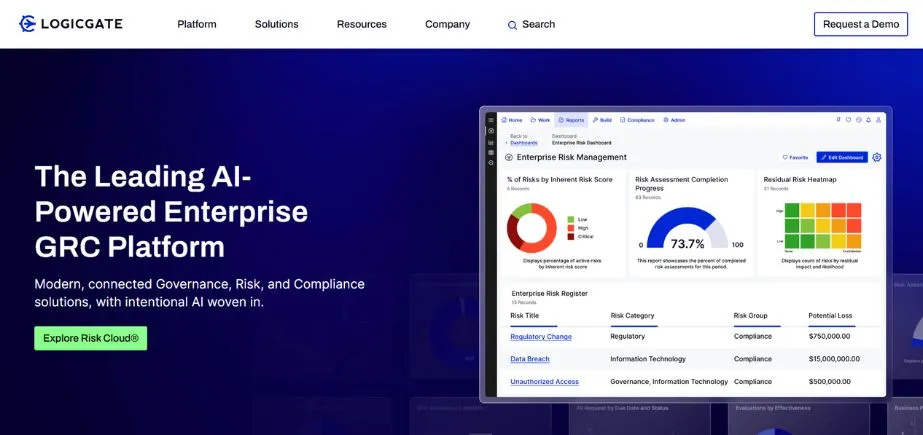
LogicGate Risk Cloud is an adaptable governance, risk, and compliance platform that enables the achievement of GDPR Compliance Software via customizable apps. It enables an organization to automate privacy processes, monitor data processing, and evaluate third-party risks. Impact assessment template customizability, subject access request management, and compliance documentation may be used by the user. LogicGate has a simple interface and integration possibilities that can assist businesses in developing a transparent, traceable, and adjustable GDPR compliance program based on the individual risk profile.
Key Features:
- Configurable GRC workflows
- Risk assessment automation
- Policy management
- Incident management
- Audit trail capabilities
Pros:
- Highly configurable platform
- Strong workflow automation
Cons:
- Requires configuration expertise
- Less specialized for privacy compared to dedicated tools
Ideal For:
Mid-market organizations seeking configurable GRC solutions with privacy capabilities
Pricing:
Subscription-based pricing with multiple tiers
6. Osano
Osano is a compliance platform in the field of privacy management (concentrated on consent management and GDPR Compliance Software). It makes it easier to collect the cookie consent and offers a real-time observation of the data vendor’s privacy. It is also through Osano that the fulfillment of data subject rights is automated so that companies can easily respond to access or deletion requests. Osano is particularly useful to small- and medium-sized businesses, as well as smaller firms that want to implement and manage the GDPR quickly and simply without heavy technical investments.
Key Features:
- Cookie consent management
- Privacy policy generation
- DSAR handling
- Vendor assessments
- Dedicated privacy representative
Pros:
- User-friendly interface
- Dedicated support representative
Cons:
- Less comprehensive than enterprise solutions
- Limited advanced features
Ideal For:
Small to medium businesses seeking straightforward privacy compliance with strong support
Pricing:
Transparent, tiered pricing starting from basic plans
Explore More: Essential Project Management Tools
7. DataGrail
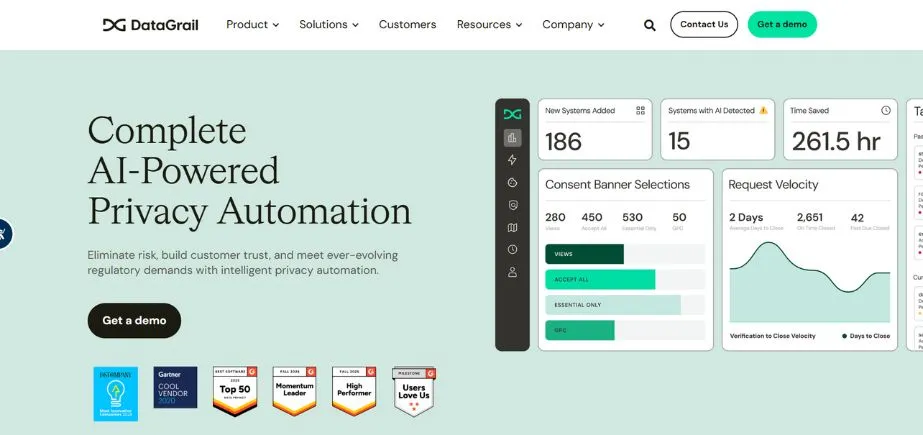
DataGrail assists companies in achieving GDPR compliance through automation of the data discovery, data mapping, and data subject rights request tasks. It has integrations with hundreds of applications and systems, allowing them to see the personal data in real-time across the organization. DataGrail assists in the tracking of consent and eases the deletion or exporting of user data. It is easier to know when it is in compliance and auditable because of its privacy dashboard and audit trail capabilities. It is perfect when the accuracy, promptness, and automation of data privacy processes are a priority to the business.
Key Features:
- Automated data discovery
- DSAR automation
- Cookie consent management
- Privacy request fulfillment
- Data mapping capabilities
Pros:
- Strong automation capabilities
- Good integration ecosystem
Cons:
- Limited enterprise-level features
- Newer in the market
Ideal For:
Growing businesses and mid-market companies seeking automated privacy operations
Pricing:
Subscription-based with transparent pricing tiers
8. Collibra
Collibra is a data governance platform that strengthens GDPR control by means of full-fledged data cataloging and lineage monitoring along with stewardship resources. It provides an organizational shift towards comprehension and mapping of personal data flows as well as ownership and fulfillment of compliance policies. Collibra encourages the privacy-by-design principles due to its effective metadata governance-related and workflow automation. With enterprise-level features, it is best suited to larger organizations that require centralized control of their data, regulatory compliance, and integration among privacy, compliance, and data management teams.
Key Features:
- Comprehensive data governance
- Data lineage and mapping
- Policy management
- Data quality monitoring
- Privacy impact assessments
Pros:
- Market-leading data governance
- Strong enterprise features
Cons:
- High complexity and cost
- Requires significant implementation effort
Ideal For:
Large enterprises with comprehensive data governance and privacy requirements
Pricing:
Enterprise licensing based on users and data volume
9. PrivIQ
PrivIQ is a user-friendly GDPR compliance tool that fits SMEs. It has data mapping, risk assessment, DPIAs, and policy tools. The platform offers ready-made templates, preparing an audit, and subject rights requests. The dashboard keeps an organization up to date regarding its compliance status, which is monitored and updated in real time by PrivIQ. It is intuitive and easy to use, making it practical and effective to guide even companies that have little legal or IT resources to deal with privacy duties with relative ease.
Key Features:
- Privacy program management
- Risk assessments and DPIAs
- Policy template library
- Training and awareness tools
- Vendor management
Pros:
- Privacy-focused approach
- Good template library
Cons:
- Limited automation features
- Smaller market presence
Ideal For:
Organizations seeking dedicated privacy program management tools
Pricing:
Subscription-based pricing with multiple service levels
10. VeraSafe
VeraSafe offers end-to-end GDPR Compliance Software solutions. It offers a mix of consultant-quality advice and data inventory, privacy policymaker, risk-evaluation, and DSR tools. The site is a perfect fit for organizations that require practical advice as well as digital solutions to make the process of implementing privacy easier. VeraSafe would also offer the provisions of a GDPR representative to non-EU companies. It is a good option for any company that requires not only strategic legal help but also operational tools to manage the privacy of its operations.
Key Features:
- GDPR representative services
- Privacy compliance consulting
- Policy and notice generation
- Compliance monitoring
- Training services
Pros:
- Strong legal expertise
- Excellent for EU representative needs
Cons:
- More service-oriented than software-focused
- Higher cost for full-service approach
Ideal For:
Non-EU organizations requiring GDPR representative services and compliance guidance
Pricing:
Service-based pricing with custom quotes
Also Read: Best Executive Recruiting Software
Comparison Table
| Tool | Key Strengths | Ideal User Type | DSAR Handling | Integration Capabilities | Pricing Model |
| OneTrust | Comprehensive features | Large enterprises | Advanced automation | Extensive | Custom enterprise |
| TrustArc | Risk management | Multinational corps | Automated workflows | Good | Tiered subscription |
| BigID | Data discovery | Data-heavy enterprises | AI-powered | Cloud-focused | Enterprise custom |
| Securiti.ai | Unified privacy-security | Cloud-first orgs | Automated with integrations | Excellent | Custom enterprise |
| LogicGate | Configurable GRC | Mid-market | Workflow-based | Business systems | Subscription tiers |
| Osano | Simplicity + support | SMBs | Basic automation | Standard web tools | Transparent tiers |
| DataGrail | Automation focus | Growing businesses | Strong automation | Good SaaS tools | Subscription based |
| Collibra | Data governance | Large enterprises | Governance-integrated | Extensive | Enterprise license |
| PrivIQ | Privacy-focused | Privacy programs | Standard workflows | Basic integrations | Subscription |
| VeraSafe | Legal services | Non-EU organizations | Service-based | Consultation-focused | Service-based |
How to Choose the Right GDPR Software for Your Business
To choose the best GDPR compliance software, we should take into consideration the peculiarities of your organization and its limitations.
Assess company size and complexity:
Bigger businesses can require some powerful options, such as OneTrust or BigID, whereas the smaller ones tend to get some basic services, such as Osano or DataGrail.
Consider data volume and systems:
Businesses that deal with bulk personal data that is spread between the systems must choose highly developed tools such as BigID or Securiti.ai. Simpler operations can be managed with streamlined tools.
Factor in industry-specific needs:
Some platforms may include such features as HIPAA compliance or other templates out of the box, as they may be required based on a regulated industry such as healthcare or finance.
Budget beyond licensing:
Include costs for training, maintenance, and implementation. Such an extensive solution can save money in the long-term perspective compared to having to use numerous basic tools.
Prioritize vendor support and scalability:
Seek suppliers that have good customer support, frequent regulatory changes, and a scalable solution that would cost you expensive migrations in the future.
Common Mistakes to Avoid in GDPR Compliance
Most companies fall on their implementation of GDPR efforts by engaging in some foreseeable errors that can easily be prevented through planning and choosing the right tool.
Ignoring third-party risks is a major oversight:
All vendors, partners, and service providers that have access to personal data on your behalf have to comply with GDPR. Ensure your software includes strong vendor risk management features. Never assume third parties are compliant by default.
Incomplete data mapping weakens all compliance efforts:
Other organizations concentrate either on consent or DSARs and have no idea which personal data is being collected and where it will be stored. Use data discovery and mapping as the most significant points of compliance tool implementation before others.
Delayed DSAR responses can lead to penalties:
GDPR mandates responses within one month. Late responses can damage trust and result in fines. Employ the software that automatically deals with DSARs and has workflow tracking so that it is possible to respond in a timely manner.
Manual compliance processes increase risk and inefficiency:
There should be supervision, but standard procedures such as data discovery, consent tracking, and request routing should be automated. Manual forms of calculation are prone to errors and do not scale with business growth.
Future Trends in GDPR Compliance Software and Data Privacy Tools
The privacy technology landscape continues evolving rapidly, driven by regulatory changes, technological advances, and growing consumer awareness of data rights.
| Trend | Description |
| AI-Powered Compliance | AI is driving automated data discovery, risk assessment, and policy enforcement. Advanced tools predict privacy threats, group data types, and suggest compliance actions based on trends and regulatory updates. |
| Cross-Border Regulation Support | Modern platforms handle multiple privacy laws like GDPR, CCPA, CPRA, and LGPD. Multi-regulatory integration is becoming standard, not optional, for global compliance. |
| Real-Time Monitoring & Continuous Compliance | Real-time tools replace periodic checks by continuously monitoring data flows, identifying gaps instantly, and providing immediate alerts to improve efficiency and reduce risks. |
| Automated DPIAs & Consent Management | AI will automate privacy risk evaluation and DPIA generation. Consent management will evolve beyond banners, offering detailed, user-friendly privacy controls to ensure compliance. |
Conclusion
GDPR compliance software is no longer a luxury but a must-have among organizations that process personal information. The tools that are mentioned in this guide are the leaders in the market at the moment, and each of them has unique benefits that can be used in the specific needs of the organizations based on their maturity.
To get the best out of a GDPR compliance solution, it is important to choose the solution that is relevant to your data strategy, compliance constraints, and business capability. And whether you want the full functionality of OneTrust, the data discovery capabilities of BigID, or the usability and assistance of Osano, the title product is what can turn the compliance nightmare into a competitive asset.
The abundance of choices should not freeze you in your resolve. When dealing with the most credible providers, you can get free demos or free trials so that you can test their services with your data and such aspects as use cases. Use these opportunities to make sure that your selected solution suits your particular needs and can be integrated with the ones that you already have.
It is important to bear in mind that being GDPR compliant is not a total project; it is a continuous task. There are different vendors and platforms to choose from that will accommodate you on your journey to privacy as the regulations change, as your company develops, and as consumers rise in their expectations. The money spent on correct privacy management tools today is not only insurance against regulatory punishment, but it is also a URL to a future and relationship-based customer relationship in our privacy-sensitive time.
FAQs
1. What is GDPR Compliance Software?
GDPR compliance software is a computerized program that guides organizations to manage and automate procedures necessary to conform to the General Data Protection Regulation. It has data mapping, consent, data subject request management (DSARs), risk, and vendor management tools.
2. What is the role of GDPR Compliance Software regarding data subject requests (DSAR)?
The software standardizes the process of intake, tracking, and fulfillment of DSARs to guarantee correct responsiveness at the right time. It usually comes with templates, workflow, and status monitoring to receive requests in one month or less, as required by GDPR.
3. Does GDPR Compliance Software only benefit EU-based companies?
No. GDPR applies to any corporation that processes the personal records of the inhabitants of the EU—no matter in which part of the world the company is established. Thus, GDPR compliance software can be of use to international entities that deal with EU data.
4. Is managing third-party vendor compliance possible with GDPR Compliance Software?
Yes. The vendor risk management aspect is available in many tools. The organization using them can accurately gauge and review the privacy practices of the service providers with whom data is shared and hence ensure end-to-end supply chain compliance.
5. What GDPR compliance software characteristics do I need?
Among GDPR Compliance Software, mention can be made of automated data discovery, data mapping, DSAR management, consent, risk assessment tools (such as DPIAs), audit trails, multi-regulatory support (such as CCPA and LGPD), and effective customer service.